
"Raising the National Pension's Income Replacement Rate Even 0.1 Percentage Points Above 40% Would Be a Change for the Worse" (May 28, 2024)
- #연금특위
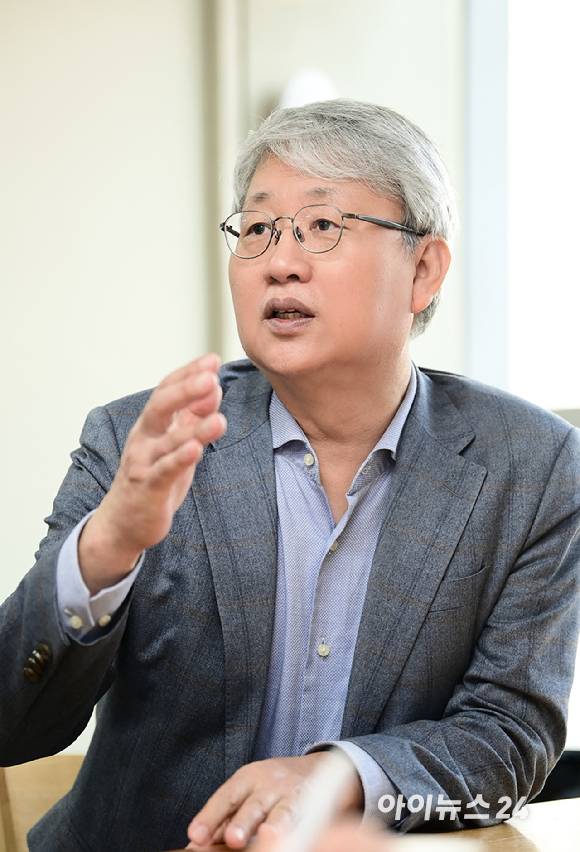
(In May 2024, when the majority of South Korean media outlets and political circles were pressing for passage of the amendment to the National Pension Act—an amendment that was, in reality, a change for the worse masquerading as reform—the Pension Future Forum convened a seminar at the Franciscan Education Center in Jeong-dong to expose its true nature.
The seminar was held at a time when the People's Action for Strengthening Public Pensions and members of the National Assembly had gathered on the steps of the main National Assembly building to pressure legislators into passing the retrograde bill.
At that time, the Pension Future Forum stood virtually alone in Korea in appealing against passage of the regressive bill.
It was precisely because of these efforts that the Speaker of the National Assembly became involved, and that even after the leader of the major opposition party proposed a ruling-opposition summit to advance passage of the National Pension Act amendment, the bill ultimately failed to pass the 21st National Assembly!
The following press coverage documents the activities of the Pension Future Forum during that period.)
The argument has been made that, for genuine pension reform, the income replacement rate must not be raised even 0.1 percentage points above the current level of 40%.
This position directly counters the ruling and opposition parties' final negotiations in the 21st National Assembly over a proposal of a 13% contribution rate (the amount paid in) and a 44% income replacement rate (the amount paid out).
Yun Suk-myung, Honorary Research Fellow at the Korea Institute for Health and Social Affairs (KIHASA), stated this position at the "Pension Future Forum Seminar" held on May 28 at the Franciscan Education Center in Jung-gu, Seoul, declaring that "the National Pension's income replacement rate should be maintained at the current level of 40%, with only the contribution rate increased."
(Excerpt omitted)
He also rebutted the contention of some quarters that the National Assembly's bipartisan agreement on raising the contribution rate (9%→13%) represented a "historic achievement" and that the pension reform package should not be derailed over a mere 1 percentage point difference in the income replacement rate.
Yun stated that "'a 13% contribution rate and a 44% income replacement rate,' currently under discussion in the National Assembly's special committee, constitutes a change for the worse rather than genuine reform," adding that "at a 44% income replacement rate, a contribution rate of not 13% but 21.8% would need to be collected in order to avoid shifting the burden of debt onto future generations."
Since the reform is intended to reduce the burden on future generations, a proposal that instead exacerbates that burden does not constitute reform but rather a change for the worse.
Yun proposed "a contribution rate of 12%–15% and an income replacement rate of 40%" as the alternative. He explained that "even if the income replacement rate is maintained at 40% (as currently), a contribution rate of 19.8% would need to be collected to avoid transferring debt to future generations," and that "the National Pension's income replacement rate should be held constant while only the contribution rate is raised."
He also rebutted the contention of some quarters that the National Assembly's bipartisan agreement on raising the contribution rate (9%→13%) represented a "historic achievement" and that the pension reform package should not be derailed over a mere 1 percentage point difference in the income replacement rate.
Yun stated that "'a 13% contribution rate and a 44% income replacement rate,' currently under discussion in the National Assembly's special committee, constitutes a change for the worse rather than genuine reform," adding that "at a 44% income replacement rate, a contribution rate of not 13% but 21.8% would need to be collected in order to avoid shifting the burden of debt onto future generations."
Since the reform is intended to reduce the burden on future generations, a proposal that instead exacerbates that burden does not constitute reform but rather a change for the worse.
Yun proposed "a contribution rate of 12%–15% and an income replacement rate of 40%" as the alternative. He explained that "even if the income replacement rate is maintained at 40% (as currently), a contribution rate of 19.8% would need to be collected to avoid transferring debt to future generations," and that "the National Pension's income replacement rate should be held constant while only the contribution rate is raised."
https://v.daum.net/v/20240528113549003![(Report on the Pension Future Forum Statement, Nocut News) [Column] Holding the 'Pension Fund Casino' to Account?… It May Be the Result of Choosing the 'Easy Way' (October 20, 2026)](/_next/image?url=%2Fuploads%2Feditor%2F2026%2F10%2Fc6f13b0799b440d0874a9f72413c6f58-0004200449_003_20261020063615439-1.jpg&w=128&q=75)

![(Report on the Pension Future Forum Statement, JoongAng Ilbo) [Reporting Diary] The National Pension Protected the KOSPI Rather Than the Public's Retirement (October 19, 2026)](/_next/image?url=%2Fuploads%2Feditor%2F2026%2F10%2F7e92f70b0ec843bbb869a4cf46b01f72-0003558751_001_20261019052229249.jpg&w=128&q=75)