
Lee Young, President of KIPF, Proposes Public Pension Fiscal Stabilization Plan: "Securing 30 Trillion Won Annually" (2026-02-01)
- #연금특위
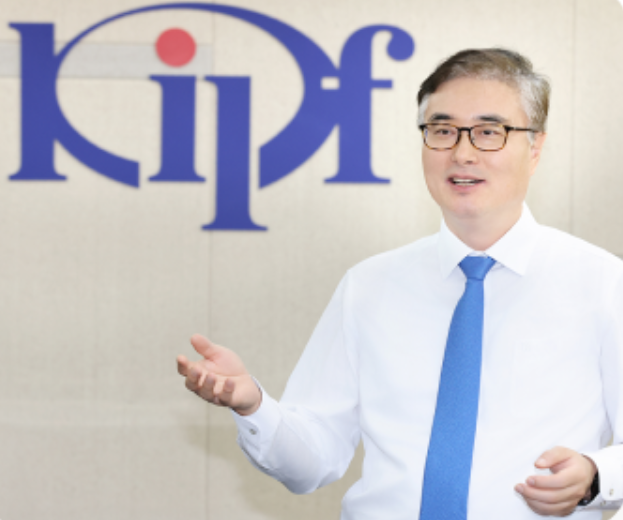
(Note: The proposal by President Lee Young of the Korea Institute of Public Finance (KIPF) focuses on financing measures aimed at achieving fiscal stability. There are aspects worth examining positively from the perspective of revenue mobilization.
However, the assumption that the pension benefit rate would be maintained at its current level appears problematic. The Government Employees Pension and the Private School Teachers Pension, which currently bear an 18% contribution burden, would struggle to achieve fiscal stability even if that burden were doubled to 36%. This means that the system cannot become sustainable unless the pension benefit rate itself is addressed!
The argument that pension income tax revenue collected from private pension subscribers should be channeled into subsidizing the accrued pension entitlements of special occupational pension participants — such as those in the Government Employees Pension — could give rise to serious distortions in the linkage between contributions and benefits. Far more deliberation appears to be needed on the benefit side of the pension system, not merely on the financing side.
The original article by President Lee Young, published in the KIPF Fiscal Forum, has been attached as a file.)Lee Young, President of the Korea Institute of Public Finance (KIPF), proposed that income tax revenue generated from both public and private pensions be credited to the respective pension funds — rather than to the general account — in order to expand pension finances and achieve fiscal stabilization of public pensions such as the National Pension and the Government Employees Pension, while simultaneously raising employer (corporate) contributions to the National Pension alongside a corresponding reduction in the corporate tax rate.
He further proposed introducing a future-generation pension inheritance (gift) scheme to promote intergenerational transfers of private-sector resources. Under this arrangement, it was estimated that each measure could secure annual revenues of 1–10 trillion won, 14 trillion won, and 4–5 trillion won, respectively.
(Excerpt)
President Lee presented three principles and measures for public pension fiscal stabilization that he has been deliberating.
The first principle put forward by President Lee is to prioritize intergenerational equity in any improvement to public pensions — particularly in the case of the National Pension, where the anticipated depletion of the fund driven by the rapid rise in life expectancy is causing the expected return ratio for future generations to decline, making it necessary to narrow the intergenerational gap in return ratios.
The second principle is that any newly introduced pension elements should adopt a defined contribution (DC) structure to ensure future fiscal sustainability. The third principle states that resources for pension stabilization should be financed through intergenerational transfers of current tax revenues and private-sector funds, rather than through increased taxation on future generations.
In accordance with these three principles, President Lee proposed three specific public pension fiscal stabilization measures. The first measure is to credit income tax revenue derived from public and private pensions to the respective pension funds rather than the general account, thereby expanding pension finances. Taxes levied on income from public pensions — including the National Pension, the Government Employees Pension, the Military Pension, and the Private School Teachers Pension — would be allocated to the respective pension fund, and tax revenue from private pension receipts would also be directed to serve as a source of public pension financing.
President Lee wrote that "while the National Pension Fund is projected to be depleted in approximately 40 years, private pension funds are expected to continue growing, making income tax revenue from private pensions an important resource for enhancing the stability of public pension funds."
The second measure is to raise employer contributions to the National Pension while lowering the corporate tax rate. He proposed increasing the corporate contribution rate — currently equal to the workers' rate of 6.5% (assuming the 2025 revised standard, with a contribution rate of 13% by 2033) — by 3.0 percentage points to 9.5%.
The additional 3.0 percentage points of contributions would be managed in defined contribution form, and the pension income generated therefrom would be taxed in aggregate with private pension income, with the resulting tax revenue credited to public pension funds. President Lee simultaneously argued for the necessity of reducing the corporate tax rate in order to ease the burden on corporations, citing a study titled "Measures for Securing Pension Finances, Including Future-Generation Pension Inheritance," published in June of the preceding year by KIPF researcher Oh Jong-hyeon, and proposed a corporate tax rate reduction of 2.5–3.0 percentage points.
The third measure is to introduce a future-generation pension inheritance (gift) scheme in order to promote intergenerational transfers of private-sector resources. The proposal is to exempt inheritance tax when assets bequeathed or gifted to children take the form of pension benefits rather than cash, thereby expanding public pension funds. The inherited pension amounts would be managed on a defined contribution basis, and a 30% tax would be levied at the point of receipt and credited to the public pension fund.
Regarding this measure, President Lee stated that "while a tax exemption is granted at the time of inheritance, the 30% tax collected at the time of receipt has the effect of transferring inheritance tax resources into pension funds in practice."
President Lee estimated that the three public pension fiscal stabilization measures he proposed could secure annual revenues of 1–10 trillion won, 14 trillion won, and 4–5 trillion won, respectively. In aggregate, he explained, it would be possible to secure 20–30 trillion won in annual revenue.
President Lee noted that a study titled "National Pension Structural Reform Plan," published in February 2024 by Korea Development Institute (KDI) researchers Lee Kang-gu and Shin Seung-ryong, estimated the funding required to repay the unfunded pension liability necessitated by National Pension structural reform at 26.9% of gross domestic product (GDP), and he anticipated that implementing his proposed measures over approximately 30 years could cover this amount.
President Lee stated that "if public pension funds are maintained at a level comfortably above the amount required for benefit payments and the fund investment return rate is improved, the long-term fiscal soundness of Korea's public pensions will be dramatically enhanced," and
"through this, the National Pension can function as a genuine basic income for retirees," he added.
https://www.viva100.com/article/20260201500027
![(Report on the Pension Future Forum Statement, Nocut News) [Column] Holding the 'Pension Fund Casino' to Account?… It May Be the Result of Choosing the 'Easy Way' (October 20, 2026)](/_next/image?url=%2Fuploads%2Feditor%2F2026%2F10%2Fc6f13b0799b440d0874a9f72413c6f58-0004200449_003_20261020063615439-1.jpg&w=128&q=75)
![(Report on the Pension Future Forum Statement, JoongAng Ilbo) [Reporting Diary] The National Pension Protected the KOSPI Rather Than the Public's Retirement (October 19, 2026)](/_next/image?url=%2Fuploads%2Feditor%2F2026%2F10%2F7e92f70b0ec843bbb869a4cf46b01f72-0003558751_001_20261019052229249.jpg&w=128&q=75)