Pension Future Forum's Position on the Sealing of the Minutes of the National Pension Fund Management Committee Meeting (Held on January 26)
- #국민연금법
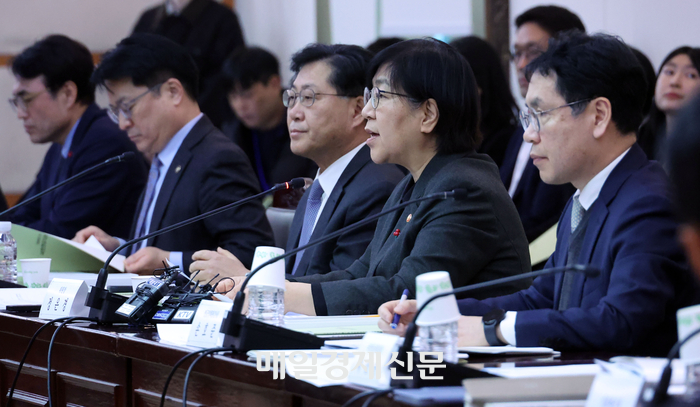
The recent conduct of the government and the ruling party with respect to the National Pension Fund is wholly inconsistent.
The asset allocation of the National Pension, which had until now been set with at least some reflection of expert opinion, has been partially reversed through political intervention.
Although the figure may appear modest, the reduction in the overseas asset allocation of the National Pension Fund announced on January 26 is estimated to amount to approximately 20 billion dollars — the scale of annual U.S. investment tied to tariff negotiations.
While the media's immediate attention has focused exclusively on equities, the increase in the proportion allocated to domestic bonds appears to carry equally significant implications.
In recent months, the yield on 10-year Korean government bonds — which reflects the medium- to long-term outlook for the Korean economy — has risen to approximately 3.65%, meaning that it has climbed more than 1.1 percentage points above the Bank of Korea's benchmark interest rate, producing what may be characterized as a bond market convulsion.
This reflects market signals that investors require a higher interest premium before they are willing to purchase Korean government bonds.
With the expansion of the allocation to the domestic bond market, this pressure may be alleviated for the time being.
With local elections approximately five months away, should a supplementary budget be enacted for one reason or another prior to those elections, this development means that additional capacity to absorb government bonds in the market has been created.
Reflecting this, 10-year government bond yields appear to have begun declining toward a more stable level since yesterday.
The gravity of the problem lies in the fact that these developments are not the product of market mechanisms at work, but rather the result of political forces intervening in the management of the National Pension Fund.
Of even greater concern is the fact that the proceedings and deliberations of the irregularly convened Fund Management Committee have been sealed until 2030, meaning their contents will not be accessible until near the end of the current administration's term.
The National Pension Fund is being managed with even less transparency than in the past.
In stark contrast, the government has made its intention unmistakably clear to intervene more actively in corporate governance through the use of the National Pension Fund itself.
This is to be achieved through what is called the "stewardship code enhancement."
As a result of this Fund Management Committee decision, the National Pension Fund's investment concentration in major domestic corporations has increased further. This effectively means that the National Pension is now more likely to become the first or second largest shareholder in major corporations.
The stated rationale for "strengthening the stewardship code" is to enhance corporate value by promoting transparent corporate governance.
While the minutes of the National Pension Fund Management Committee — the body that determines the most critical investment directions of the Fund — are sealed until 2030,
that is, while they themselves intervene politically in an ever more opaque manner,
the purported effort to drive "stewardship code enhancement" — in which the government and ruling party are actively investing their political capital — appears to be an attempt to intervene even more extensively in corporate management, using the National Pension Fund as the instrument, under the banner of demanding transparency from corporations.
These recent government policies pursue courses of action that are wholly self-contradictory.
They may achieve certain short-term political objectives,
but in the medium to long term, adverse consequences appear unavoidable.
This is precisely why the Pension Future Forum — which places "intergenerational equity" and "the sustainability of the pension system" at the forefront of its mission — intends to convene its 12th seminar on February 9 with the "stewardship code enhancement" issue as the central topic.
(We attach an exclusive report by Maeil Business Newspaper on the sealing of the National Pension Fund Management Committee minutes until 2030. We encourage readers to review the comments on this article.)