The National Pension, a Major Market Player, to Increase Domestic Equity Investment by 0.5 Percentage Points While Reducing Overseas Equity Holdings (January 26, 2026)
- #국민연금법
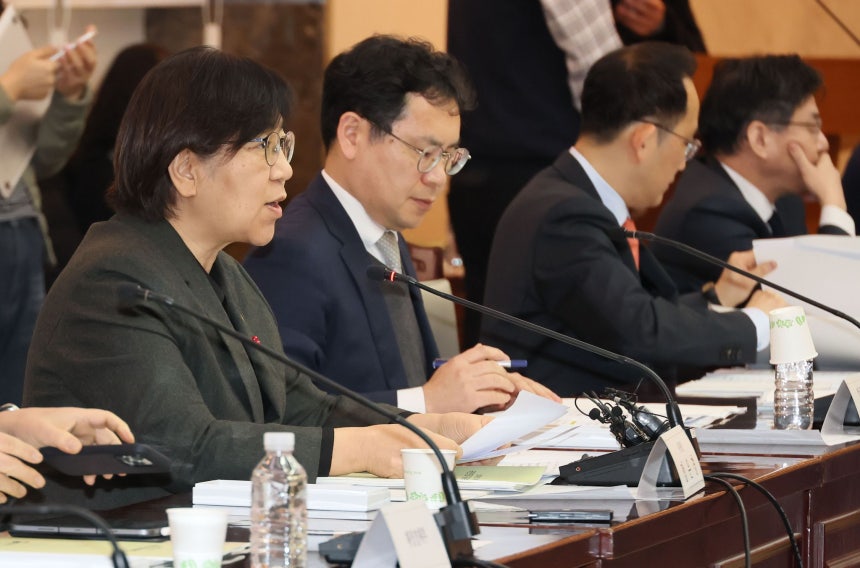
The National Pension, a major market player, is adjusting its asset allocation this year to expand domestic equity and bond investments while reducing overseas equity exposure.
This measure is interpreted as being aimed at alleviating pressure in the foreign exchange market amid the continued depreciation of the won, while simultaneously reducing the risk of forced mechanical selling triggered by the sharp surge in domestic stock markets.
The Ministry of Health and Welfare convened the first National Pension Fund Management Committee meeting of the year on the 26th at the Government Seoul Building to deliberate on and approve an improvement plan for the National Pension Fund's portfolio. This is the first time the Fund Management Committee meeting has been held in January since 2021, five years ago.
(Excerpt)
Under normal circumstances, taking into account the permissible investment range of ±5 percentage points by asset class (strategic asset allocation ±3%p, tactical asset allocation ±2%p), the fund could have held domestic equities at up to 19.4%. However, as of the end of October last year, the domestic equity ratio was already 17.9%.
Given that the KOSPI recently reached the 5,000 level, the pressure for forced selling to comply with the permissible upper limit has effectively materialized.
With the upward adjustment of 0.5 percentage points under these circumstances, approximately 7 trillion won in additional investment headroom has opened up in domestic equities (based on the estimated fund size of 1,454 trillion won as of the end of last year).
The domestic bond allocation was also raised by 1.2 percentage points to 24.9%. In contrast, overseas equities were adjusted to 37.2%, a reduction of 1.7 percentage points from the original target of 38.9%.
(Excerpt)
Criticism has also emerged that public retirement funds—which must simultaneously pursue returns and stability—are being drawn upon as policy instruments.
Yun Suk-myung, Honorary Research Fellow at the Korea Institute for Health and Social Affairs (KIHASA), stated that "this adjustment is a signal of excessive government intervention in the public's assets," and that "expanding the proportion of domestic equities carries a very high risk of undermining the value of the National Pension."
https://n.news.naver.com/article/025/0003499132?sid=103![(동아일보. 유럽 청년 시위) [횡설수설/우경임] (입력 2026.10.21.)](/_next/image?url=%2Fuploads%2Feditor%2F2026%2F10%2Fba49256960d346bfb3f36249f19c291f-1792541429278.png&w=128&q=75)
![(Report on the Pension Future Forum Statement, Nocut News) [Column] Holding the 'Pension Fund Casino' to Account?… It May Be the Result of Choosing the 'Easy Way' (October 20, 2026)](/_next/image?url=%2Fuploads%2Feditor%2F2026%2F10%2Fc6f13b0799b440d0874a9f72413c6f58-0004200449_003_20261020063615439-1.jpg&w=128&q=75)