
(MBC News) Clash over Pension Reform Plans — “Raise the Income Replacement Rate” vs. “Raise Contributions First” (January 23, 2025)
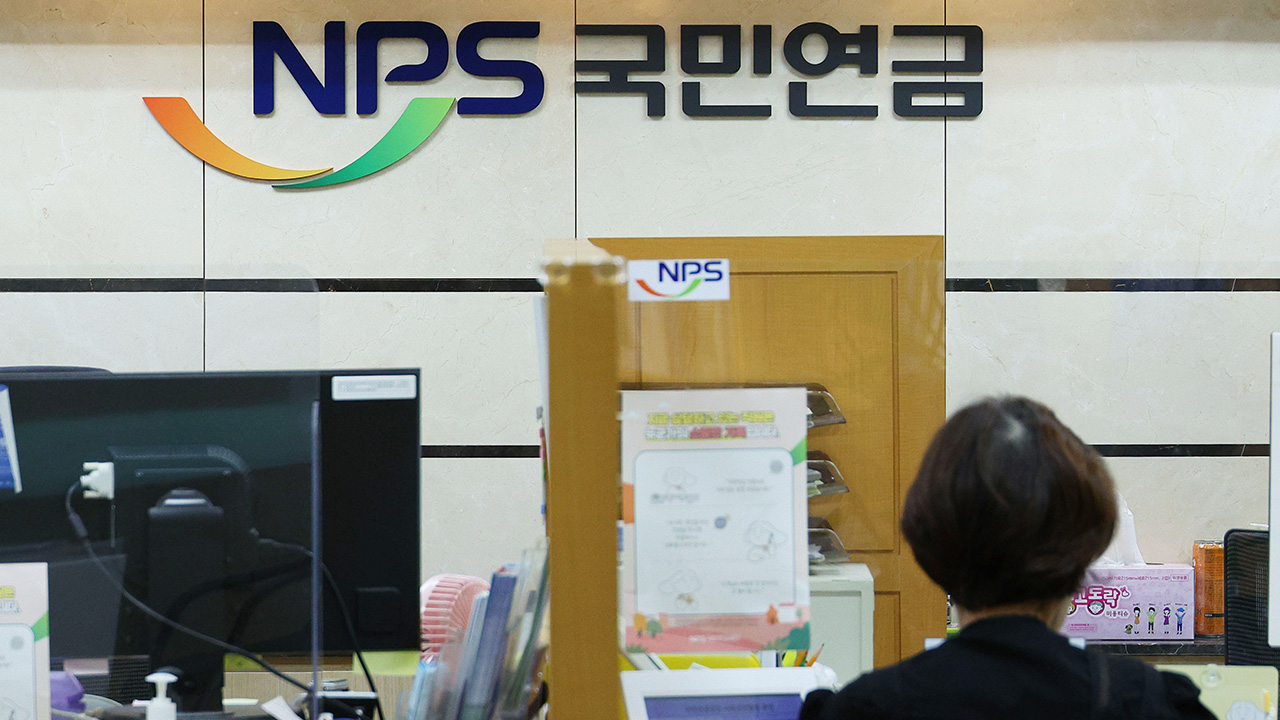
Over the National Pension reform plan, experts were divided between the view that the income replacement rate should be raised to secure old-age income and the view that it is time to raise the contribution rate for fiscal stabilization.
Joo Eun-sun, Professor of Social Welfare at Kyonggi University, argued today at a public hearing on amendments to the National Pension Act held by the National Assembly Health and Welfare Committee that “National Pension reform must set a clear goal of guaranteeing adequate income,” and that the income replacement rate should be raised to around 50%.
Professor Joo
stressed, “The National Pension’s income replacement rate and benefit level rank at the very bottom from an international comparative perspective, whatever international indicator one looks at,” adding, “The public pension income replacement rate for an average-wage earner is 31.2%, only 74% of the OECD average of 42.3%.”
Nam Chan-seop, Professor of Social Welfare at Dong-A University, also
said, “In the pension reform public deliberation survey pursued by the National Assembly last year, the plan to strengthen benefit adequacy won a dominant 56% of support,” adding, “People in their 20s also favored the plan to strengthen benefit adequacy, so there was little difference of opinion between generations.”
In particular, he noted that the National Pension Fund ranks first in the world relative to gross domestic product and third in absolute terms, and is by no means insufficient.
By contrast, Yun Suk-myung, Research Fellow Emeritus at the Korea Institute for Health and Social Affairs (KIHASA), who is classified as an advocate of fiscal stabilization, pointed out, “At the very least, we need a plan that can keep the system going,” adding, “Even if the income replacement rate is kept at 40%, the unfunded pension liability will reach 383.9% of GDP by 2093.”
He also said, “According to an International Monetary Fund report, Korea’s national debt will reach 200% of GDP in 2070 because of population aging and the pension system,” adding, “The IMF analyzed that even if the income replacement rate is kept at 40%, the contribution rate must be raised from the current 9% to 22.8% to keep national debt from growing further.”
Oh Gun-ho, Chair of the Policy Committee of Welfare State I Make,
said, “Korea’s nominal income replacement rate, or accrual rate, is not low compared with the international average,” adding, “The reason the National Pension’s income security effect is weak lies in the contribution period; benefit adequacy can be enhanced by extending the mandatory contribution age and strengthening the Basic Pension received by lower-income groups.”
He went on, “While other countries took strong fiscal stabilization measures, Korea never once touched its contribution rate of 9%,” adding, “What is more important is raising the contribution rate to 13%.”
Meanwhile, before the hearing began, ruling and opposition lawmakers had a round of sparring over the pension reform hearing being held in the Health and Welfare Committee.
Representative Kim Mi-ae of the People Power Party, the ruling party’s secretary on the Health and Welfare Committee, argued, “Because the ministries and standing committees responsible for pension reform vary by program, it is not appropriate to discuss it in one particular standing committee.”
In response, Representative Nam In-soon of the Democratic Party of Korea countered, “Since the ruling and opposition parties both argued for the need for National Pension reform, it should be discussed in the standing committee even if a special committee is formed later.”
Unlike standing committees, which are composed in proportion to the number of lawmakers in each negotiating group, special committees are usually composed of equal numbers from the ruling and opposition parties, so the People Power Party, the minority ruling party, has preferred creating a special committee, while the Democratic Party, the majority opposition party, has preferred discussions in the standing committee.
https://imnews.imbc.com/news/2025/society/article/6680249_36719.html


