(KBS TV, Economy Time) [Economic Inside] The “Give It and Take It Back” Controversy over the Basic Pension for Low-Income Older People (January 9, 2019)
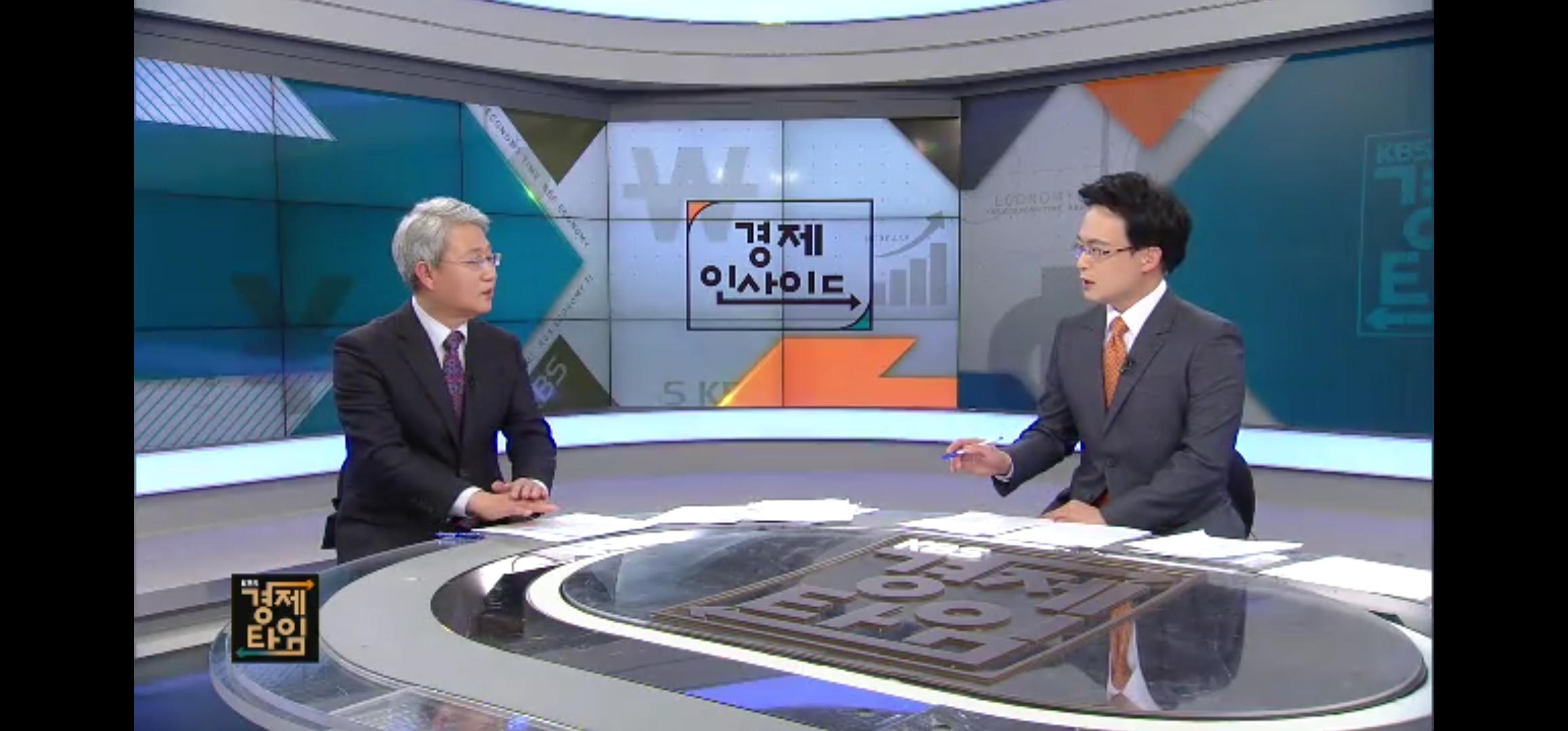
Anchor
From April this year, the Basic Pension paid to low-income older people in the bottom 20% by income will rise to as much as 300,000 won.
The problem is that the Basic Pension is counted as income, so the livelihood benefit is cut.
In other words, even if the Basic Pension goes up, it is of no use.
That is why a controversy has arisen that it is a pension that is “given and then taken back.”
We take a closer look with Research Fellow Yun Suk-myung of the Korea Institute for Health and Social Affairs.
Who receives the Basic Pension, and why is it paid?
Answer
The National Pension is a social insurance system that the insured can receive only if they themselves have paid contributions for 10 years or more, whereas the Basic Pension is a system in which the state raises the funds through taxes and pays them to the bottom 70% by income among older people aged 65 and over.
Basic Pension beneficiaries must meet the so-called recognized income condition in order to receive it.
The Basic Pension eligibility threshold, that is, the recognized income, is a reference amount set so that 70% of older people aged 65 and over become Basic Pension beneficiaries, and it is the sum of an older household’s various incomes and assets converted into income.
As of this year, a single older household must have recognized income of no more than 1.37 million won a month, and a couple household no more than 2,192,000 won a month, to receive the Basic Pension.
As of the end of 2017, 4.9 million of the 7.35 million older people aged 65 and over were receiving the Basic Pension.
It is a system introduced in 2014, in view of Korea’s high elderly poverty rate, after much debate over the past ten-odd years about the need for the system and its nature.
On one side, some argue for expanding Basic Pension eligibility to 100% of older people and developing it into a truly universal system, while on the other, some argue for reducing the number of Basic Pension beneficiaries but paying larger pension amounts to older people exposed to poverty; the two positions remain mixed.
This is because the high elderly poverty rate has not come down even since the Basic Pension was introduced.
Anchor
The controversy that this Basic Pension is a pension that is “given and then taken back” keeps arising.
Why is this being said?
Answer
The Basic Pension is included in the recognized income applied in the eligibility criteria for beneficiaries of the National Basic Living Security System.
Recognized income includes not only the Basic Pension but also various kinds of public transfer income, such as unemployment benefits.
Beneficiaries of the National Basic Living Security System thought they could receive more by the amount of the Basic Pension increase, but because it is deducted from the livelihood benefit, they end up not receiving the Basic Pension.
For example, if someone is supposed to receive a livelihood benefit of 500,000 won and a Basic Pension of 250,000 won is paid, the Basic Pension is counted as income, so 250,000 won is excluded from the livelihood benefit.
Then that person can receive only 250,000 won in livelihood benefit, and even with the Basic Pension added, receives 500,000 won.
This phenomenon is described with the somewhat provocative expression “give it and take it back.”
Anchor
Then, from April this year, the Basic Pension for the bottom 20% by income rises by 50,000 won to 300,000 won; seen this way, there will be no change in the income of the poorest older people?
Answer
Yes, that is right.
As long as the principle of supplementarity of the National Basic Living Security System is maintained, there will be no change in the income of the poorest older people.
Anchor
The Basic Pension is treated as income and deducted from the livelihood benefit, and experts say this is faithful to the principle of supplementarity, do they not?
Answer
Under the “principle of supplementary benefits,” the National Basic Living Security System provides support so that the minimum guaranteed level for livelihood benefit recipients, the sum of the livelihood benefit amount and the recipient household’s recognized income, reaches at least the livelihood benefit eligibility threshold.
However, the Basic Pension is included in the recognized income applied in the eligibility criteria for beneficiaries of the National Basic Living Security System.
Recognized income includes not only the Basic Pension but also various kinds of public transfer income, such as unemployment benefits.
Under the principle of supplementarity, the Basic Pension amount is included in the livelihood benefit calculation, and when the livelihood benefit amount exceeds the eligibility threshold, the excess is deducted, so livelihood benefit recipients do not receive the Basic Pension.
Anchor
In that case, older people other than the lowest tier see their lives improve by the amount of the Basic Pension, but the lives of the poorest older people stay tied to the level of the livelihood benefit.
Some point out that this raises a problem of equity.
What do you think about this?
Answer
This is because, if beneficiaries of the National Basic Living Security System received the Basic Pension, their real income would increase, producing an income reversal relative to non-beneficiaries such as the near-poor, which could create a problem of equity.
In other words, the income of livelihood benefit recipients under the National Basic Living Security System could become higher.
When recognized income is calculated, there are provisions for earned income deductions, asset deductions, and financial asset deductions.
When actual income is compared with recognized income, recognized income tends to be counted lower than actual income.
Low recognized income does not necessarily mean that actual income is low, and if the Basic Pension is added on top of this, an income reversal is very likely to occur among older people with middle-to-low incomes.
In that case, other problems arise, such as equity in selecting beneficiaries.
From a long-term perspective, the direction in which the Basic Pension should develop is still unclear.
Those who argue that it is a universal or quasi-universal system based on an age criterion are locked in a tight standoff with those who believe that, considering the system’s sustainability from a long-term perspective, it cannot be maintained as a quasi-universal system.
The OECD, the Organisation for Economic Co-operation and Development, has also issued a recommendation that Korea reduce the number of Basic Pension beneficiaries and instead pay more to vulnerable older people.
Anchor
To address the backlash over the Basic Pension that is “given and then taken back,” it was decided to provide older people receiving basic living security benefits with an additional 100,000 won a month separately, but this budget item ultimately foundered at the National Assembly plenary session.
Should we not at least expand this kind of support to solve the problem of the poor?
Answer
The problem of financing the Basic Pension must be considered from a medium- to long-term perspective.
If the Basic Pension amount is raised to 300,000 won a month in 2021, annual Basic Pension expenditure is projected to reach 28.5 trillion won around 2028.
The Nordic countries that operated universal basic pensions abolished them and completely changed the way they run the system, toward a minimum income guarantee.
That is, they separated pension policy, under which people receive benefits from the contributions they pay themselves, from social policy financed through taxes.
We too must clarify the nature of the Basic Pension and, taking long-term sustainability into account, clarify the nature and direction of development of the Basic Pension and the National Basic Living Security System; only then, it seems, will it be possible to find a solution to this problem.
Rather than unconditionally expanding the Basic Pension, our society needs to pool its wisdom on developing a minimum income guarantee system centered on vulnerable older people, that is, one that enables them to escape absolute poverty.