(Chosun Ilbo) [Policy Insight] Putting National Pension Money into Public Housing? How Singapore Does It (December 21, 2025)
Kim Sung-joo, Chairman of the National Pension Service,
in his inaugural address:
“Look to the Singapore Case”
Kim Sung-joo, the new Chairman of the National Pension Service, said at his inauguration ceremony on the 17th that “the National Pension should take on the role of a funding source for supplying housing at appropriate, reasonable prices.”
The logic is that if a supply of inexpensive public housing eases the housing difficulties of young people and newlyweds and encourages marriage and childbirth, it could also be positive for pension finances in the long run. Chairman Kim cited Singapore’s Central Provident Fund (CPF) as an example.
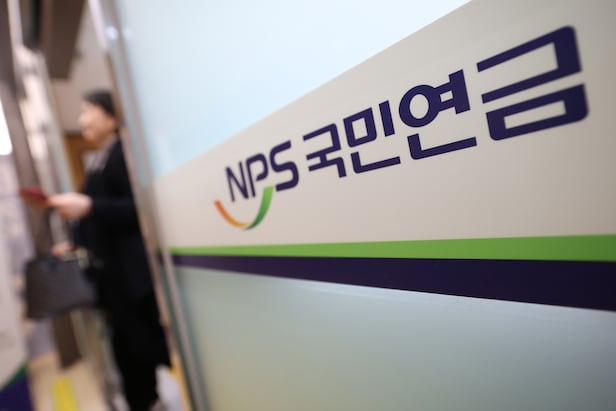
The Seoul Northern Regional Headquarters of the National Pension Service in Seodaemun-gu, Seoul. /News1
◇ 90% of Singapore Households Are “Owner-Occupiers”… A Structure in Which People Draw on Their Provident Fund Early to Buy Homes
Nine out of ten households in Singapore are said to live in homes they own. In addition, 77% of all resident households live in public housing built by the Housing and Development Board (HDB). When buying an HDB flat, the usual structure is to pay part of the purchase price up front and repay the rest through a long-term mortgage loan. CPF individual account savings can be used for both the down payment and the loan repayments. It is a structure that allows people to own a home without having to put up a large sum all at once, as buyers in Korea must.
Suppose, for example, that a couple in their 30s has a CPF balance of S$80,000 (Singapore dollars) and, as first-time home buyers, receives a S$60,000 credit from the government. To buy an HDB flat priced at S$420,000, they pay 25%, or S$105,000, from their CPF and finance the remaining 75%, or S$315,000, with a 25-year loan. The monthly repayment then comes to about S$1,430 (about 1.64 million won). The principal and interest can also be deducted from the CPF account. However, if CPF savings were used for the home, then when the home is sold, the owner must put back into the account not only the CPF principal used but also “the accrued interest that would have been earned had the money been left in the account.”

Singapore households’ home-ownership rate as of last year (left) and the share of households, by type of dwelling, living in Housing and Development Board (HDB) flats. /Screenshot from the HDB website
This structure is possible because the CPF is designed as individual account savings that can be withdrawn and used for set purposes. The fact that about 90% of Singapore’s land is state-owned, making it easy to secure sites for public housing and to supply it on a large scale, also underpins the system.
In Korea, by contrast, the National Pension manages its fund as a pool and most land is privately owned, so simply transplanting the Singapore model would be difficult.

Minister of Health and Welfare Jung Eun-kyeong (right) and National Pension Service Chairman Kim Sung-joo talk at the 7th meeting of the National Pension Fund Management Committee, held on the 15th in the international conference room of the annex of the Government Complex Seoul in Jongno-gu, Seoul. /News1
◇ Experts: “Public Housing Is a Job for Public Finance”… Ministry of Health and Welfare: “Merely Chairman Kim’s Personal Opinion”
One realistic way for the National Pension to invest in public housing that has been mentioned is “bond investment”: the state or local governments issue special-purpose bonds for public rental housing and the like, and the National Pension buys them.
But this could in effect amount to financing fiscal projects indirectly through the National Pension. There are also concerns that it could undermine not only profitability, the first principle of fund management, but also the principles of independence and stability. Another problem is that if returns fall or risks grow in the course of pursuing policy goals, the burden falls on the insured.
Regarding Chairman Kim Sung-joo’s inaugural address, the Ministry of Health and Welfare said, “It is merely Chairman Kim’s personal opinion and was not discussed with the Ministry.”
Yun Suk-myung, Research Fellow Emeritus at the Korea Institute for Health and Social Affairs, also
said that “supplying housing is a job the government should do with public finances,” adding that “if we truly want to help young people, the priority is to reform the pension so that it is not depleted by the time they retire.”
Earlier, the debate over using the National Pension for public investment recurred in political circles in the 2010s as well, but it fell through each time amid concerns that the fund could become “the government’s slush fund.”
https://biz.chosun.com/policy/policy_sub/2025/12/21/NL4N4V3FRRFFRHDI4MFMKWDLOI/