
(Maeil Shinmun) [Issue Debate] What Will Become of the Government Employees Pension Cuts? (May 30, 2014)
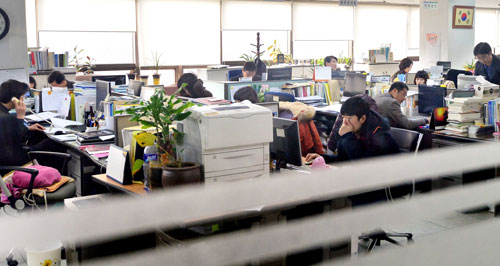
As moves to cut the Government Employees Pension emerge in parts of the government, civil servants are pushing back, vowing to block a change in the pension structure. Civil servants in a lounge at Daegu City Hall. Maeil Shinmun DB
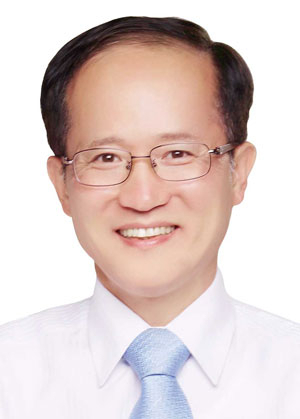
Kim Do-hyung, Chairman of the Daegu City Government Employees’ Union
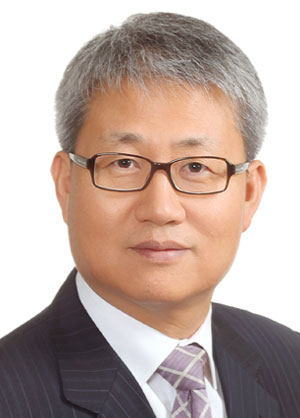
Yun Suk-myung, Research Fellow, Korea Institute for Health and Social Affairs
After some media outlets recently reported “up to 20% cut in the Government Employees Pension,” the government moved to draw a line, saying “nothing has been discussed,” but within the civil service, the mood is that a pension cut is a foregone conclusion.
Reactions are poles apart. Outside, the mainstream reaction is that “since (the Government Employees Pension) records a deficit every year, it needs fixing,” while civil servants hold firm to the position that “first, we must block it,” and the two sides are in a tense standoff.
The government employees’ union also recently issued a commentary sharply criticizing the reports, arguing that “the media reports are specific, saying the annual accrual rate of the Government Employees Pension will be reduced and its contribution rate gradually raised.” We looked into civil servants’ positions along with the social mood surrounding the Government Employees Pension.
◇“The low government contribution rate has caused the pension shortfall”—Kim Do-hyung, Chairman of the Daegu City Government Employees’ Union
-What is the mood in the civil service regarding the recent media reports of a 20% cut in the Government Employees Pension?
▶Regarding the media reports of a 20% cut in the Government Employees Pension, the Ministry of Security and Public Administration explained on the 21st of this month that there had been no discussion at all, but the prevailing mood in the civil service is that the ministry’s explanation cannot be trusted.
We cannot shake off the perception that it is trying to leak the matter to the media in advance in order to push it through by gauging the situation (whipping up public opinion).
-Government Employees Pension reform is expected to move in the direction of “paying more and receiving less.” What do you think of this?
▶Beyond its character as a pension for old-age security, the Government Employees Pension carries the character of deferred pay in keeping with responsibilities and authority—compensating for low pay while in service and a retirement allowance far smaller than under the Labor Standards Act, for the ban on profit-making activities and concurrent jobs while in service, and for the maintenance of a high ethical spirit and morality.
For example, depending on their duties, civil servants must disclose their assets, and even in cases such as traffic accidents they are subject to internal disciplinary action separate from criminal penalties, which restricts their promotion; they must accept such disadvantages of status. Even after retirement, they bear the responsibility of strict confidentiality.
I think there are many problems with simply comparing a Government Employees Pension of this character with the National Pension. Above all, unilaterally pushing through a deterioration without agreement with civil servants, the stakeholders concerned, can never be tolerated.
I think it is wrong for Government Employees Pension reform to be pursued only in the direction of “paying more and receiving less” on simplistic logic, while the government’s responsibility is kept hidden. First, there must be sufficient discussion with civil servants themselves, and social consensus must be a precondition.
-Where do you think responsibility for the Government Employees Pension deficit lies?
▶First of all, the expression “deficit” is not correct for the Government Employees Pension. Under the “principle of cost burden” in the Government Employees Pension Act, the government is required to recalculate every five years so that fiscal balance is maintained. Therefore, it is correct to call it “the fiscal imbalance of the Government Employees Pension” rather than a deficit. The term deficit risks giving the public a wrong perception.
From this perspective, the fiscal imbalance of the Government Employees Pension is entirely the government’s responsibility. First, there is the government’s improper use of the Government Employees Pension Fund. Restructuring of the civil service at the time of the IMF crisis and the 2005 conversion of the Korea National Railroad into a public corporation produced some 150,000 pension beneficiaries. At that time, 4.9 trillion won in pensions was additionally spent all at once; this was the share that the state or local governments should have borne, and it is a case of the government improperly using the Government Employees Pension Fund.
Second, it is due to a government contribution rate that is far too low compared with OECD countries. For example, compared with 1% of GDP in Japan, 2.1% in the United States, and 3.4% in France, Korea’s low government contribution rate of 0.5% is causing the pension shortfall. The government contribution rate must be raised, as in OECD countries.
-What is the desirable direction for Government Employees Pension reform?
▶Civil servants are by no means seeking discriminatory, special benefits over the general public. The government has a duty to bear unlimited responsibility for the Government Employees Pension. It must provide the public with correct information so that the structure and character of the Government Employees Pension can be judged accurately. It should refrain from the current practice of feeding information to the media through leaks and denouncing civil servants who have served in public office all their lives as a shameless group that feeds on the people’s taxes. It should accurately understand the purpose of the Government Employees Pension and, if necessary, take measures to make the government contribution rate realistic. Reform of the Government Employees Pension must also be premised on sufficient discussion with civil servants themselves and on social consensus through the provision of correct information.
Reporter Choi Byung-go [email protected]
◇“Can civil servants properly reform their own pension?”—Yun Suk-myung, Research Fellow, Korea Institute for Health and Social Affairs
-Voices calling for reform of the Government Employees Pension are loud. What is the background to the Government Employees Pension issue coming under scrutiny again?
▶Korea needs pension reform more urgently than any other country. That is because, among the member countries of the Organisation for Economic Co-operation and Development (OECD), Korea is aging the fastest. As the elderly population surges, the pension system is rapidly entering its mature phase.
But our society’s capacity to support pensions is weakening day by day. The bigger problem is that there is not enough time to break through the crisis. At the center of it sits the Government Employees Pension. The Government Employees Pension has so far failed to carry out system reform at a level that members of our society can accept. Some civil servants argue that it is by no means a more generous system than the National Pension, citing far higher contributions than the National Pension and the various attributes built into the Government Employees Pension, such as severance pay and industrial accident insurance, but they have not won public sympathy.
-What is wrong with the Government Employees Pension?
▶It pays excessive amounts as pensions relative to the contributions paid in. It is a structure favorable to its members beyond comparison with the National Pension. The bigger problem is the attitude of those who manage the Government Employees Pension, because their will to reform is weak. Although the National Pension was introduced later than the Government Employees Pension, it carried out reform preemptively before fiscal instability became a reality. The National Pension’s income replacement rate, which was 70% at its introduction, is scheduled to be cut to 40% by 2028. Some 43% of the benefit rate promised at its introduction has been cut. The reason is simple: the National Pension, introduced in 1988, was designed on the premise of the society of the 1970s, with its high economic growth and fertility rates and its low share of elderly people.
Yet the income replacement rate of the Government Employees Pension, which started at an average of 40% in 1960, followed an upward curve and rose to 77% (based on 33 years of membership) in the 1980s. Converted to the same 40-year basis as for National Pension members, it was a benefit rate of over 90%. Although the benefit rate was adjusted to 76% (on the National Pension’s 40-year membership basis) through some slight tinkering in 2009, given the scale of benefit payments, it is hard to be sure of fiscal stabilization even if Government Employees Pension contributions were doubled from current levels.
-What prescription is needed?
▶When considering prescriptions for the pension problem, one must keep firmly in mind that the funds used come from the public. This means that the public’s perspective can be an important standard for reform. Right after the 1997 foreign exchange crisis, the World Bank called for strong reform of the Government Employees Pension. (Its 2000 report on Korea)
Despite such recommendations, however, instead of strong reform, the Government Employees Pension introduced a government pension payment guarantee provision. In addition, instead of experts who take an objective stance on pension issues, Government Employees Pension stakeholders are leading the pension reform proposals.
The purpose of pension reform is to reduce the burden on future generations and thereby secure the sustainability of the system. If a sound reform proposal is set aside simply because it costs more money right now, the burden on future generations will inevitably increase. Right now, those who can look at the National Pension objectively must carry out the work of reform from the public’s perspective.
Some civil servants argue that properly fixing the Government Employees Pension would cost much more money right away and is therefore unrealistic, but this reflects a misunderstanding of the basic purpose of pension reform. A system that has become hard to sustain because the social and economic environment has changed cannot be left to civil servants who tell the state to take responsibility for it.
Compiled by Reporter Yu Kwang-jun [email protected]

![(KBS TV. 이슈&뉴스] 공무원 연금, '세금 먹는 하마'?...'사회적 합의' 절실 (2013년 10월 23일)](/_next/image?url=%2Fuploads%2Feditor%2F2026%2F11%2Fcfe4824d207e450c8cad3a7c73e2fb04-Screenshot_20261122_221550_Samsung-Browser.jpg&w=128&q=75)