[Dong-A Op-Ed / Yun Suk-myung] Pension Reform Starts with Disclosing the ‘Naked Truth’ of Its Finances (February 16, 2022)
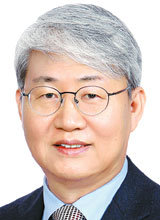
Yun Suk-myung, Research Fellow, Korea Institute for Health and Social Affairs; former President of the Korean Pension Association
Germany and Japan reformed their pension systems 18 years ago
and succeeded in keeping pensions from adding to national liabilities
Korea does not even disclose its pension data
Once the unsound finances are disclosed, reform can no longer be put off
Germany and Japan, from whom we learned our pension systems, carried out real reform, not reform in name only.
That is because both countries introduced an automatic adjustment mechanism 18 years ago.
An automatic adjustment mechanism is a device that automatically cuts pensions when negative factors arise. It is a path toward depoliticizing pension management.
Germany’s reform, carried out by Social Democratic Chancellor Gerhard Schröder, who had been elected with workers’ support, even as he was called a traitor, was painful, but its fruits are clear. That is because it secures sustainability under any circumstances. Japan carried out a similar reform as well.
In public employees’ pensions, too, Germany kept only core federal civil servants in place and overhauled the rest into the same system as private-sector workers.
Japan’s government employees’ pension, which had been run as the onkyu system, that is, a scheme financed entirely by the state, has also been operated since 2015 under the same pension system as that of ordinary citizens.
Two-thirds of the member countries of the Organisation for Economic Co-operation and Development (OECD) have already introduced an automatic adjustment mechanism for pensions. It is no longer an option but the rule.
Two-thirds may sound like a mere figure, but the heart of the problem is that most of the countries actually competing with us have introduced one.
And they did so some 20 years ago.
This came up at a symposium with Japan organized by the Korean Pension Association last November.
One question asked whether, since the concepts of the two countries’ automatic adjustment mechanisms in the 2004 German and Japanese pension reforms were nearly identical, experts and officials from the two countries had consulted each other in advance on the direction of reform.
The answer from Junichi Sakamoto, who led Japan’s 2004 reform as then Director of the Actuarial Affairs Division at the Ministry of Health, Labour and Welfare, was startling. They had never discussed it with each other.
His answer was that, as each country thought seriously about the right direction for reform, they seem to have arrived at similar reforms by coincidence.
Comparing the fertility rates and the speed of population aging in the OECD’s Pensions at a Glance 2021, published in 2021, shows that we must carry out reform several times more intensive than other countries to secure a similar level of system sustainability.
Yet at present we pay far less and receive far more.
In Finland, which pays far smaller pensions than our Government Employees Pension and starts paying them at age 63, if things are left as they are, the contribution rate needed right now would exceed 30%, and it is projected to approach 47% around 2080.
Germany, which pays pensions similar in size to ours, already had a contribution rate of around 18% in 1980, and it exceeded 20% around 1997.
These are data recently sent to me by Finnish scholars with whom I am conducting joint research.
Even with other countries in this situation, over the past five years we pushed an absurd pension overhaul plan that promised to pay out more in pensions in the name of strengthening public pensions.
When a president with so much to do is given wrong information, this is the kind of disastrous result that follows.
The national liabilities from the Government Employees Pension and the Military Pension grew by more than 100 trillion won in 2020 alone. For reference, Germany and Japan, thanks to their automatic adjustment mechanisms, have seen no further increase in pension-driven national liabilities since their 2004 reforms. That is because they carried out proper reform.
We show no interest in reforming even the Private School Teachers Pension, the most hopeless of all our domestic pension schemes.
And this despite the fact that, although state money is being put into it, there is no proper government body managing it, so that employees of the Private School Teachers Pension Service who had been enrolled in the National Pension quietly turned themselves into Private School Teachers Pension members.
Pension reform is a task that can no longer be delayed.
My first request to the presidential candidates is that they agree to disclose all pension-related data.
That is because, despite such a dismal situation, not even the financial projection reports for the Government Employees Pension and the Military Pension are being made public.
This contrasts with other countries, where anyone interested in who said what during pension deliberations can easily find it on the internet.
Once the naked truth of the state of pension finances is laid bare, pension reform discussions can proceed far more smoothly.
That is because no vested interest group would be brazen enough to oppose reform after seeing the shocking figures right before its eyes.
It is also necessary to dispel the distrust of the financial projection results that some have raised.
It would be the icing on the cake if the presidential candidates agreed to have our pension financial projections verified by foreign experts, just as Canada and Finland have their financial projection reports verified by other countries.
Yun Suk-myung, Research Fellow, Korea Institute for Health and Social Affairs; former President of the Korean Pension Association