
(Yonhap News, Report on the Pension Future Forum’s Position) Pension Future Forum: “To Ensure Sustainability, the National Pension Contribution Rate Should Be Raised to 15%” (April 3, 2024)
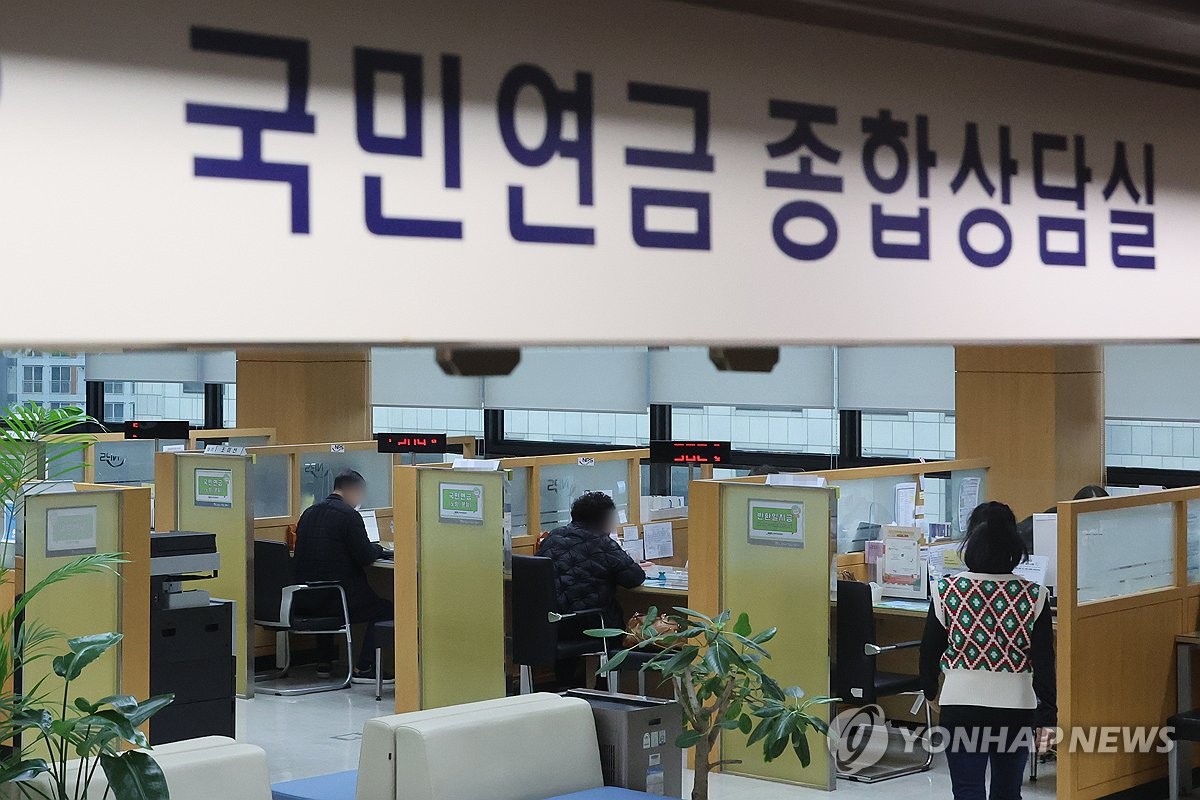
(Pension Future Forum position:
Backlash against the pension reform proposals
of the National Assembly Special Committee’s Public Deliberation Committee…
“Doubts about the advisory group’s fairness”
“If the contribution rate is raised to 15%,
the cumulative deficit would shrink by 3,700 trillion won”)
Enlarge image
Pension reform proposals narrowed to two: ‘pay more, receive more’ and ‘pay more, receive the same’
(Seoul = Yonhap News) Reporter Kwon Ji-hyun =
Pension researchers from the “fiscal-stability camp” raised an objection to the two reform proposals put forward by the Public Deliberation Committee of the National Assembly’s Special Committee on Pension Reform (the Special Committee), saying that “the option preferred by most experts was excluded.”
They said that “the Public Deliberation Committee’s advisory group was made up mainly of members who had long argued for ‘strengthening income security,’ while experts focused on ‘sustainability’ were excluded,” questioning the fairness of the advisory group.
The Pension Future Forum, a group of pension researchers, journalists, and others, including Yun Suk-myung, former President of the Korean Pension Association, held a press conference in front of the National Assembly building on the morning of the 3rd and called on the Public Deliberation Committee to state its position.
The Pension Future Forum is a group of experts who prioritize “fiscal sustainability.” Such fiscal-stability advocates oppose raising pension benefits, citing the burden that fund depletion would place on future generations.
By contrast, the “benefit-adequacy camp” argues that the income replacement rate (the ratio of the pension to be received to average income over the contribution period) must be raised to resolve old-age poverty.
Experts who prioritize benefit adequacy see a need to “receive more,” citing Korea’s high elderly poverty rate and National Pension benefit levels that are lower than the average of the Organisation for Economic Co-operation and Development (OECD).
Last year, as the National Pension Financial Estimation Committee, a government advisory body, was producing its report, their positions diverged sharply, and scholars of the “benefit-adequacy camp” even resigned from the committee.
Last month, after discussions by the agenda deliberation panel, the Public Deliberation Committee presented two options: one raising the contribution rate from the current 9% to 13% and the income replacement rate from 40% to 50%, and one raising the contribution rate to 12% while keeping the income replacement rate at 40%.
Enlarge image

[Graphic] Two National Pension Reform Proposals Narrowed Down
(Seoul = Yonhap News) Reporter Lee Jae-yun
The Pension Future Forum claimed that in the first-term Special Committee’s vote, 10 of its 15 advisory committee members preferred the option of “a 40% income replacement rate and a 15% contribution rate.”
The Forum pointed out that “given that this option had the support of most pension experts and was the most effective option for fiscal stabilization, we question whether the agenda deliberation panel’s agenda-setting rules were fair, and whether this was not a ‘tilted playing field.’”
They said that “when the Public Deliberation Committee’s advisory group was formed, social welfare scholars who argued for strengthening income security were brought in, while experts who held a fiscal-sustainability perspective on the Financial Estimation Committee and the Special Committee were excluded,” and demanded: “Disclose the principles and procedures by which the advisory group’s membership was decided.”
They went on to say that “the two reform proposals currently put forward by the Public Deliberation Committee only delay the fund’s depletion by a mere seven to eight years, so it is doubtful whether they can even be called a ‘reform,’” and argued that “the option preferred by experts, ‘a 40% income replacement rate and a 15% contribution rate,’ should be added so that the citizen representatives can study it.”
According to the Pension Future Forum, if Option 1 proposed by the Public Deliberation Committee (a 50% income replacement rate and a 13% contribution rate) is chosen, an additional cumulative deficit of roughly 702 trillion won is expected to accrue in the latter half (2093) of the National Pension’s 70-year financial evaluation period.
Option 2, “a 40% income replacement rate and a 12% contribution rate,” was projected to reduce the cumulative deficit by 1,970 trillion won.
“The excluded option of ‘a 40% income replacement rate and a 15% contribution rate’ appears likely to reduce the cumulative deficit by about 3,700 trillion won,” the Forum said,
arguing that “a decision by the agenda deliberation panel made without properly knowing such key information was not reached through proper deliberation.”


