
(2015 Government Employees Pension Public Hearing, SBS News) Heated Debate over the Government Employees Pension — “Unsustainable” vs. “A Government Promise” (February 26, 2015)
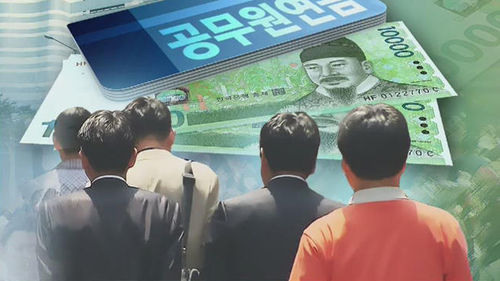
(This is an SBS News report
on Government Employees Pension reform
that re-quotes a Yonhap News article.
Who, in the name of expertise,
is defending the vested interests
of civil servants
can probably be judged from it.)
The first public hearing at the National Assembly level on Government Employees Pension reform was held, with sharp exchanges over the current pension system.
The National Assembly’s Special Committee on Government Employees Pension Reform and the National Grand Compromise Body for Government Employees Pension Reform held a public hearing on the 26th titled “Evaluation of the 2009 Government Employees Pension Reform.”
The core of the 2009 reform was to lower the pension accrual rate from 2.1% to 1.9%, change the reference salary for calculating pensions from the average of the three years before retirement to the entire period of service, and raise the pension eligibility age from 60 to 65 for new civil servants.
The hearing presenters recommended by the ruling party
argued for tough additional reform, calling the Government Employees Pension system in force since the 2009 reform “a system no one in their right mind could maintain.”
Yun Suk-myung, Research Fellow at the Korea Institute for Health and Social Affairs, who took part in drawing up the 2009 reform plan,
revealed, “I opposed the reform plan drawn up at the time on the view that it would collapse in less than five years,
and Dr. Moon Hyung-pyo of the Korea Development Institute (now Minister of Health and Welfare) also took a position against it.”
The point is that the reform plan drawn up at the time was so flawed that researchers at government-funded research institutes opposed the government’s own plan.
Research Fellow Yun said, “Accordingly, the Government Employees Pension system now in force cannot be maintained by anyone in their right mind,” stressing that it has no sustainability whatsoever.
Kang Sung-ho, Research Fellow at the Korea Insurance Research Institute,
pointed out that the accrued liability — the pension amounts to be paid in the future to the 360,000 current pension recipients and 1.07 million serving civil servants — reaches 484 trillion won,
and took issue with the equity between the two public pensions, whose income replacement rates are 40% for the National Pension on the basis of 40 years of contributions and 62.7% for the Government Employees Pension on the basis of 33 years of service.
Research Fellow Kang
said, “Most of the public, lacking cohesion, did not raise their voices much even over changes to the National Pension system such as the downward adjustment of the income replacement rate, but civil servant organizations are different,”
adding, “If things go on like this, the backlash from the many citizens who look to the National Pension could create an uncontrollable situation for the country as a whole.”
By contrast, the hearing presenters on the opposition side countered that, since the 2009 Government Employees Pension reform rested on considerable concessions by civil servants, the government must keep the promise it made as “employer.”
Bae Jun-ho, Dean of the Graduate School at Hanshin University, who led the drafting of the 2009 reform plan,
assessed that “as a result of the 2009 reform, the government’s subsidy (the support provided to cover shortfalls in pension payments), which would have reached 16.6 trillion won over 2010–2014, fell to 8.8 trillion won,” and stressed that “the reform at the time was the government’s promise to civil servants.”
Jin Jae-gu, Professor in the Department of Public Administration at Cheongju University,
said, “The idea that equity will be secured by comparing the Government Employees Pension with the National Pension and matching the absolute amounts of the pensions is utterly ignorant,”
adding, “The decision must not be made in a direction that forces sacrifices only on future generations of civil servants.”
Meanwhile, Lee Chung-jae, Chairman of the Korean Government Employees’ Union, who attended the hearing as a discussant,
claimed, “I am the representative of the Joint Struggle Headquarters (the Joint Struggle Headquarters for Strengthening Public Pensions) taking part in the Grand Compromise Body on Government Employees Pension reform, and I recently received an order from the Ministry of the Interior to return (by leaving the Joint Struggle Headquarters),” adding, “Pressure came from the official in charge, along the lines of ‘So you want to have a go at this?’”
In response, Representative Cho Won-jin of the Saenuri Party, co-chair of the Grand Compromise Body, replied, “We will investigate the matter and review whether it hinders the Grand Compromise Body’s activities.”
(Yonhap News)
Copyright Ⓒ SBS. All rights reserved.

![(KBS TV. 이슈&뉴스] 공무원 연금, '세금 먹는 하마'?...'사회적 합의' 절실 (2013년 10월 23일)](/_next/image?url=%2Fuploads%2Feditor%2F2026%2F11%2Fcfe4824d207e450c8cad3a7c73e2fb04-Screenshot_20261122_221550_Samsung-Browser.jpg&w=128&q=75)