(Korea Economic Magazine) [Economic Stroll] Korea as Seen from Taipei (November 28, 2013)
(Just as a wise decision in the past created today’s Incheon Airport, building a social security system that will serve as a model for the world some 20 years from now requires an accurate grasp of reality.)
A few weeks ago I went to Taiwan, where I gave a special lecture to civil servants from government ministries, including what in Korean terms would be the Ministry of Security and Public Administration. I had visited Taiwan many times, but this visit was especially meaningful.
That is because it was a special lecture for Taiwanese civil servants on Korea’s old-age income security system. Since it was a lecture attended by a large number of officials, including the minister, it was also something I will remember for a lifetime.
Like Korea, Taiwan shares the hard-to-solve problems of low fertility and rapid population aging, so it seemed to be very interested in our old-age income security system.
They were curious how Korea’s National Pension reform, which cut benefits by 43% only some 20 years after the scheme was introduced, had been possible, and how the Government Employees Pension is run.
The Korean government’s concern about low fertility is deepening, but Taiwan’s situation seems far more serious than ours. Its total fertility rate (TFR) once fell below 1. It has since recovered to above 1, but that is still far below the 2.1 needed to maintain the current population level.
With China’s economy faring poorly of late, Taiwan’s economic growth rate this year is reportedly likely to fall below 2%. Under these circumstances, with its pension fund expected to run dry in 10 years, the Taiwanese government cannot help but be deeply worried. Its fiscal capacity is beginning to reach its limits, while its spending needs keep growing.
Taiwan is a country once frequently cited as a role model for Korea because of its solid small and medium-sized enterprises. Since every country faces strong resistance to reform, they asked many questions about how Korea’s reform had been possible and whether further reforms would follow.
On the way back to Korea, I recalled the untold story behind the construction of Incheon International Airport. Incheon Airport is said to have begun with an idea from two or three civil servants. When they first raised it, they were called madmen with no sense of reality, and today’s Incheon Airport is the result of pushing ahead tenaciously despite fierce opposition.
Had Incheon Airport not been built, Gimpo Airport, constrained by a lack of space to expand to meet growing demand, would most likely have been expanded to the scale of Taoyuan Airport.
Taiwan’s Taoyuan Airport is 1.5 times the size of Gimpo Airport and 20% the size of Incheon Airport. Had Incheon Airport not been built in time, we would be struggling mightily with growing demand and with conflicting views over choosing a site for a new airport.
We now stand at a crossroads in building old-age income security, with the introduction of the Basic Pension, the fiscal stabilization of the National Pension, and the need for Government Employees Pension reform. We are at the point where we must introduce or reform policies that will determine the fate of the nation.
Whether the direction of the overhaul is right will be decided in less than 20 years.
Just as a wise decision some 20 years ago created today’s Incheon Airport, building a social security system that will serve as a model for the world some 20 years from now must begin with an accurate grasp of reality. These are the reasons our society’s key decision-makers need a cool head and firm conviction.
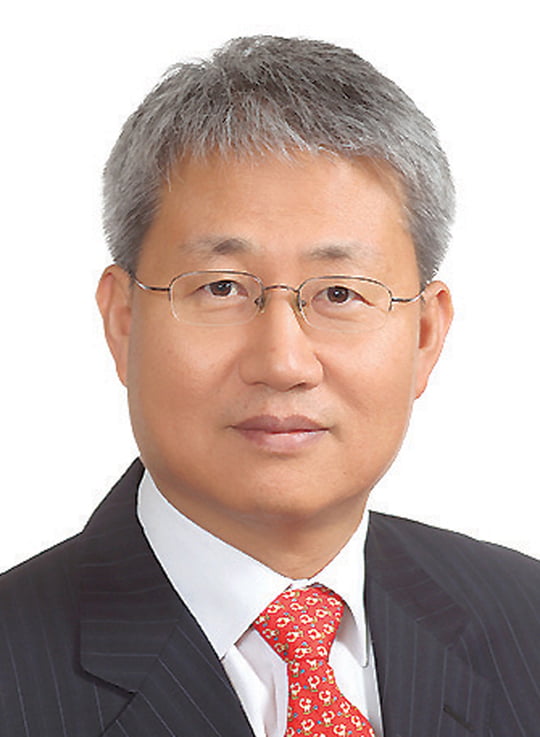
Yun Suk-myung, Director of the Pension Research Center, Korea Institute for Health and Social Affairs
Born in 1961.
1988: M.A. in Economics, Korea University.
1997: Ph.D. in Economics, Texas A&M University.
2004: Director of Research Coordination, National Pension Research Institute.
2009: Adjunct Professor of Economics, Korea University (current).
2013: Director of the Pension Research Center, Korea Institute for Health and Social Affairs (current).