
(Korea Economic Daily) Pension Spending Will Exceed Revenue in Three Years — If Reform Is Delayed, Contributions Must Rise Even Further (November 14, 2024)
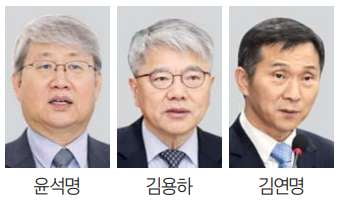
“Tough Talk” from the Architects of Pension Reform
With the National Pension reform debate stalled, pension experts warned, “If this year goes by, the pension reform debate could be pushed back indefinitely,”
and urged that “the ruling and opposition parties must put their heads together as soon as possible and produce an agreement.”
The experts said, “In three years, National Pension spending will exceed contribution revenue,”
and voiced concern that “if that happens, reform will have to be far more drastic than it would be now.”
Kim Yong-ha, Professor in the Department of IT Finance and Management at Soonchunhyang University, who chaired the Private Advisory Committee of the Special Committee on Pension Reform in the 21st National Assembly, said in an interview at the Korea Economic Daily building in Jungnim-dong, Seoul, on the 13th,
“If we miss this opportunity, pension reform will be pushed back by at least five years,”
adding, “Before the baby-boom generation retires, we must build up as much of the fund as possible by raising the contribution rate.”
Kim Yeon-myeong, Professor in the School of Social Welfare at Chung-Ang University, who served as co-chair of the Private Advisory Committee alongside Professor Kim, also said in a phone call the same day,
“Because pension spending will exceed contribution revenue by 2027, we must give the system room to breathe through parametric reform (raising the contribution rate, adjusting the income replacement rate, and so on) in order to dispel anxiety.”
Yun Suk-myung, Research Fellow Emeritus at the Korea Institute for Health and Social Affairs, said in a telephone interview,
“Right now we need only raise the contribution rate to 13%, but in five years it will have to be raised to 14–15%,”
warning, “Because the number of beneficiaries is exploding every year with population aging, reform could become even harder.”
On the specifics, the experts’ views diverged somewhat.
On the automatic adjustment mechanism, under which pension amounts are adjusted according to changes in the population structure such as the number of contributors and life expectancy, Professor Kim Yong-ha
acknowledged its necessity as “a last resort” but said, “This is not a situation in which institutionalizing it is urgent.”
Yun said, “Many countries, including Japan, Finland, and Sweden, have introduced it, and there is no reason Korea alone should be unable to,”
adding, “Even the 2036 introduction the government is currently considering is too late.”
Views also diverged on the income replacement rate.
Professor Kim Yong-ha said, “With the opposition controlling the National Assembly, there has to be flexibility on the income replacement rate if agreement on pension reform is to be reached.”
Yun, by contrast, said, “Raising the income replacement rate by even 1 percentage point is deterioration,”
adding, “If a strong Finnish-style automatic adjustment mechanism were introduced from next year, an income replacement rate of 42% could also be considered.”
Reporter Heo Se-min [email protected]

