(Korea Economic Daily) “The Government Takes Pension Fiscal Stability Lightly — It Will Only Add to the Burden on Future Generations” (February 19, 2020)
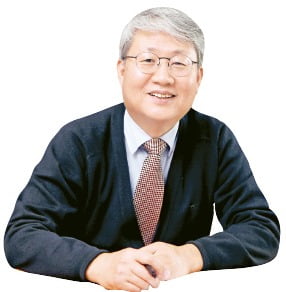
Yun Suk-myung, Research Fellow, Korea Institute for Health and Social Affairs
The U.S. set principles for its public pension system
and blocked it from intervening in the private economy
“The most urgent task facing the National Pension is to reduce the burden on future generations through pension reform.
The government should concentrate its efforts on this rather than on the secondary issue of intervening in corporate management through the National Pension.”
Yun Suk-myung, Research Fellow at the Korea Institute for Health and Social Affairs (pictured), made these remarks in an interview with the Korea Economic Daily on the 18th,
adding, “The officials in charge of the government’s National Pension policy seem to take the problem of pension fiscal stability lightly, saying, ‘When the fund is depleted, we can simply switch to pay-as-you-go at that point.’”
Government officials, including Kim Yeon-myeong, Senior Secretary to the President for Social Affairs at the presidential office, have stated in interviews, seminars, and elsewhere that “because the National Pension Fund is bound to be depleted one way or another, the system must ultimately be converted into one in which pension contributions are collected every year from the younger working generation and paid straight out to that year’s older retirees.”
Research Fellow Yun, however, pointed out that “a pay-as-you-go system is not easy to apply in practice.”
He explained, “If the baby-boom generation of 7.2 million people all retire without appropriate fiscal stabilization measures, the future burden on the younger generation and the generations after them will rise sharply and become hard to bear.”
Regarding government officials’ citing of Germany as an example of a country that adopted pay-as-you-go, he said, “Germany removed sources of fiscal instability in advance by operating its system flexibly, so that pension benefits adjust automatically in line with the economic growth rate, the fertility rate, the rate of increase in average life expectancy, and other factors.”
Research Fellow Yun said, “To strengthen the sustainability of the pension system, we must concentrate on the pension overhaul right now,”
adding, “Yet the government seems more interested in how to use the fund, for instance by expanding public investment with it and becoming deeply involved in exercising shareholder rights.”
Research Fellow Yun said that because the pension overhaul debate was pursued through “social dialogue” at the Economic, Social and Labor Council, no proper discussion took place, and in the end the right moment was missed.
His point is that, in a situation where a suitable point of agreement is hard to find, the government or the National Assembly should have taken the lead and pushed it through, but they only dragged things out, and in the end passage of the overhaul plan fell through in the 20th National Assembly.
On the government’s strengthening of its exercise of shareholder rights through the National Pension, he stressed that National Pension members must first secure representation in fund management.
Research Fellow Yun said, “The public pension systems of major countries, including the United States, have structural safeguards that prevent the government from interfering in the private economy on its own through pensions,”
explaining, “By contrast, at the National Pension, the members, including labor and management, do not hold enough seats to fully reflect their own positions, so in effect the government holds the decision-making power.”
Senior Writer Choi Jong-seok [email protected]