
(Seoul Sinmun) “Pension Reform Has Gone Off Course — Wanting to Receive More Is Typical Populism” [Choi Kwang-suk’s Inside] (June 5, 2024)
Lee Geun-myeon, Former Minister of Personnel Management
Pension reform falls through in the 21st National Assembly
Raising the income replacement rate is deterioration, not reform
No help to finances, and a burden on future generations
Raising only “what you pay” would have been the first step of reform
Why pension reform failed
“Political wrangling” crept into the debate
The government failed to lead a swift push
Elderly poverty should be addressed through welfare
The direction of pension reform
A plan to “pay more, receive less, and receive later”
The income replacement rate must be cut below 40%
A reform plan that looks at least 30 years ahead
Pension reform has fallen through in the 21st National Assembly.
In the National Assembly Special Committee on Pension Reform, the ruling and opposition parties agreed to raise the contribution rate (what you pay) from 9% to 13%, but they remained apart on the income replacement rate (what you receive).
The Democratic Party of Korea, which had insisted on an income replacement rate of 45%, said just before the National Assembly’s term ended that it would accept the People Power Party’s conditional compromise (44%), but the ruling camp refused, saying that “structural reform that changes the National Pension, the Basic Pension, the Government Employees Pension, and other schemes together must be carried out.”
Seoul Sinmun met Lee Geun-myeon, former Minister of Personnel Management, who led the Government Employees Pension reform under the Park Geun-hye administration, and talked with him about the direction of pension reform.
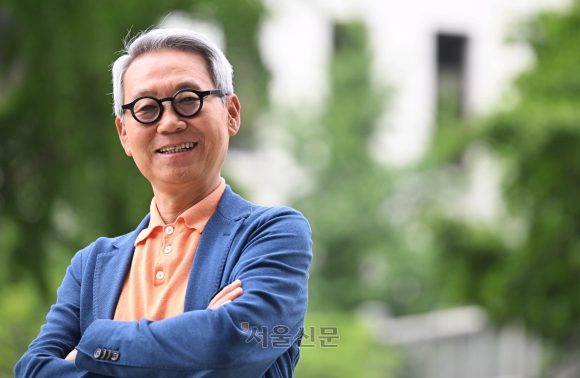
View original In an interview with Seoul Sinmun on the 30th of last month, former Minister of Personnel Management Lee Geun-myeon said, “For the older generation to refuse to share the pain and instead to demand more pension is not pension reform but deterioration,” and added pointedly, “That pension reform fell through in the 21st National Assembly is, if anything, a good thing.” Reporter Hong Yun-gi-Pension reform has fallen through in the 21st National Assembly.
“If anything, it is a good thing. Rather than mishandling it in the 21st National Assembly and making it worse, it is better not to touch it at all and to try again in the 22nd National Assembly.”
-Why is it deterioration?
“Raising the income replacement rate in the name of pension reform is not reform but deterioration. To keep the current 40% income replacement rate without shifting the burden onto future generations, the contribution rate would have to rise to 19.5%. Yet if the contribution rate is raised from 9% to 13% and the income replacement rate is raised correspondingly, it does nothing at all to improve pension finances.”
-So raising the income replacement rate is itself a mistake?
“Yes. We are pursuing pension reform precisely because even the current National Pension benefits will not be payable in the future as the finances run dry, so proposing to pay out even more is a sin against history, because it increases the burden on future generations. The overriding goal of National Pension reform is to prevent the depletion of the fund. The call to raise the income replacement rate is unrealistic and typical populism.”

View original Former Minister of Personnel Management Lee Geun-myeon said, “Pension reform must go in the direction of ‘paying more, receiving less, and receiving later,’” adding, “In pension negotiations in the 22nd National Assembly, the government must take the lead actively and push ahead swiftly, for instance by setting a precise target, drawing up a government plan, and setting out to persuade the public.” Reporter Hong Yun-gi
● Income replacement rates in advanced countries are lower than Korea’s
-Since even the parties’ agreement on raising the contribution rate was hard to reach, some argue that the reform plan, including the higher income replacement rate, should be accepted for now and reformed again in the 22nd National Assembly.
“Politics is about reconciling differing views. But on pension reform, proposing to raise not only the contribution rate but also the income replacement rate is a bad compromise. If the income replacement rate is to be raised, it would be better not to reform at all.”
-Should the 40% income replacement rate be kept as it is?
“If anything, it should be lowered below the current 40%. Japan, for example, has an income replacement rate of only about 33% while charging contributions of 18.3%. Advanced countries thus have lower income replacement rates than we do, and the trend is to keep lowering them in order to strengthen the sustainability of their pensions.”
-Some argue that the income replacement rate must be raised to deal with elderly poverty.
“Elderly poverty should be solved through welfare; trying to solve it through pensions changes the very nature of pension reform. Welfare and pensions must be discussed separately. Poor older people mostly have short National Pension contribution periods and therefore small monthly benefits. In this situation, raising the income replacement rate does not solve the problem of elderly poverty.”
-The government’s position is to pursue not only parametric reform, such as adjusting the contribution rate, but also structural reform encompassing the Basic Pension, the Government Employees Pension, and other schemes.
“Discussing them together blurs the essence of National Pension reform. Once National Pension reform is achieved first, reform of the Government Employees Pension and the others will inevitably follow. National Pension reform should come first, and then the Government Employees and Military Pensions can be reformed using the National Pension as the benchmark.”
-What do you see as the fundamental reason this pension reform failed?
“To carry out pension reform, there must first be a benchmark. But neither the government nor the National Assembly had any goal of delaying fund depletion by 30 years or by 70 years. If, for example, they had set the goal of delaying depletion by 30 years, they should have taken a step-by-step approach, such as drawing up a reform road map in stages one to four to get there. But because the Special Committee on Pension Reform deliberated without any goal, it merely listed a number of reform plans and had no sense of direction.”
-So the National Assembly’s Special Committee on Pension Reform was run without any reform goal?
“Yes. Since there was no goal from the outset, it ended in a foreordained failure. The fund will be depleted in 2055, yet the reform plans put forward by the Public Deliberation Committee only delayed depletion by a mere seven to eight years. That is not reform. Japan is said to have enough money to pay pensions for 100 years. Even if we cannot go that far, a reform that looks at least one generation, 30 years, ahead must be achieved.”
-Surely delaying the depletion date cannot be the only goal of pension reform?
“There was also no goal of lowering what people receive from the pension, that is, the benefit-to-contribution ratio. The current pension, which works on a ‘pay little, receive a lot’ basis, has an excessively high benefit-to-contribution ratio. Had the parties agreed only on raising the contribution rate and left the income replacement rate alone, it could have been seen as a success in the sense that the first step of reform had been taken. But once the debate on raising the income replacement rate got under way, the whole effort went off course.”
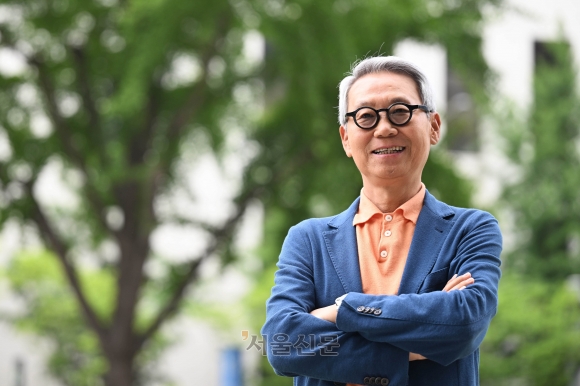
View original Former Minister of Personnel Management Lee Geun-myeon said, “If parametric reform, such as adjusting the National Pension contribution rate, and structural reform encompassing the Basic Pension, the Government Employees Pension, and other schemes are discussed together, the essence of National Pension reform is blurred,” adding, “National Pension reform should come first, and then the Government Employees and Military Pensions should be reformed using the National Pension as the benchmark.” Reporter Hong Yun-gi
● The government must present an intergenerational compromise
-What do you think lay behind Democratic Party leader Lee Jae-myung’s abrupt announcement, a few days before the end of the 21st National Assembly, that he would accept the ruling party’s plan, suddenly pressing for an agreement?
“I do not know the political background, such as whether he approached pension reform in good faith. But since the Democratic Party steered the debate toward raising the income replacement rate and came very close to its own position of 45%, it was a political success.”
-It seems the ruling camp was caught off guard when the Democratic Party accepted the ruling party’s plan at the last minute.
“The government should have drawn up a reform plan based on principles, explained it to the public in detail, and persuaded them of the necessity of pension reform, but that was lacking. It also should have presented an intergenerational compromise and sought the cooperation of the opposition, but that process was missing as well.”
-The Yoon Suk-yeol administration presented pension reform as one of its three key national policy agenda items, but did it hesitate because of the April 10 general election?
“President Yoon Suk-yeol should have pushed pension reform swiftly at the start of his term. But things got going far too late; the National Assembly’s Special Committee on Pension Reform was not formed until 2022. That pension reform took on a political coloring was also one of the causes of its failure.”
-By pension reform taking on a political coloring, do you mean that it became an obstacle because it is the current administration’s policy agenda item?
“The pension reform debate ended up becoming a political decision. Before the ruling and opposition parties began their political battle over the National Assembly Public Deliberation Committee’s plans, progress was needed at the working level, such as building consensus in advance on the direction of reform.”
-In pension reform, which bears more responsibility, the government or the National Assembly?
“The government must have the momentum for pension reform and take the lead.”
-With the President’s low approval ratings, can the government really lead pension reform from here on?
“If it practices responsible administration, the government should naturally lead pension reform. Above all, sincerity matters in pension reform.”
● Parents’ generation wanting more is a “moral hazard”
-What does sincerity mean in pension reform?
“It means pension reform is not a matter of partisan strife but a matter of moral conscience. The current pension system is neither sustainable nor stable. We must carry out a substantive reform of the pension system, not one that merely delays depletion by a few years. We must share the pain for the sake of future generations, yet for the parents’ generation to step forward demanding larger pensions is a serious moral hazard.”
-What should be the direction of pension reform?
“It must go in the direction of ‘paying more, receiving less, and receiving later.’ Real reform means not stopping at raising the contribution rate but lowering the income replacement rate below 40%. Pensions should also be paid at a reduced amount in proportion to the gains in life expectancy.”
-Can National Pension reform be taken up again in the 22nd National Assembly?
“With the opposition controlling the National Assembly, it cannot happen without the Democratic Party’s cooperation. If pension reform does not happen, the responsibility lies not only with the ruling party; the greater share lies with the opposition, which as the majority party effectively runs the National Assembly.”
-With the 2026 local elections and the 2027 presidential election approaching, pension reform looks even harder from here on.
“Pension reform is the present generation’s responsibility to future generations and the calling of our time. It must be pursued with a view reaching far beyond the next 30 years. Pension reform is not a choice but a necessity.”
■ Who is Lee Geun-myeon?
A human resources expert who handled personnel work at the Samsung Group for some 30 years, he was appointed the first Minister of Personnel Management under the Park Geun-hye administration and achieved, within a year and a half, the Government Employees Pension reform of “paying more, paying longer, and receiving less.”
Together with Yun Suk-myung, Research Fellow Emeritus at the Korea Institute for Health and Social Affairs, and others, he founded the Pension Future Forum, an expert research group that speaks out on pension reform and is leading public opinion.
He currently serves as an adviser to Solidarity for Jobs, chair of the Ministry of Gender Equality and Family’s Policy Advisory Committee, and a special appointment professor at Sungkyunkwan University.
Senior Journalist Choi Kwang-suk

