(Pension Future Forum Statement. On a KBS Article) Why the Anti-Government Protests in France Are Not Someone Else’s Problem [Structural Pension Reform]⑨ (October 25, 2026)
[We ask that KBS, which is run on the license fees paid by the public,
cover the pension issue from an objective perspective.
From what the Pension Future Forum has observed so far,
KBS, a public broadcaster,
appears to have been reporting only the positions
of figures with a particular leaning.
Regarding the KBS report below,
the Pension Future Forum puts the following questions publicly.
We do so because the article is titled “Structural Pension Reform.”
As the Pension Future Forum has already stated on several occasions,
the reason the income replacement rate of Korea’s National Pension
is calculated at around 33%
is that, unlike other OECD member countries,
the National Pension incorporates
an income redistribution function.
If, like France, the country the KBS article uses for comparison,
the National Pension
were structurally reformed into a 100% earnings-related pension,
the National Pension income replacement rate would immediately become 43%.
And that is even before counting the Basic Pension
paid to 70% of older people.
France’s pension contributions
currently stand at around 27%.
A public broadcaster should provide not only the pension amounts received
but also, at the same time, the rate of contributions borne
when it reports.
Once again, we put a question publicly to KBS.
Do you think Korea’s National Pension contributions
could be raised to 27% right now?
There is one more thing.
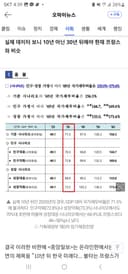
In the materials the French Ministry of the Economy and Finance submitted to EU headquarters,
the income replacement rate of the French pension system
is around 56% on a 40-year contribution basis.
(annual accrual rate of 1.4 × 40 years = 56%)
A public broadcaster
should first properly check the facts
before reporting.
We request a public answer from KBS
to the Pension Future Forum’s public questions.
For reference,
from the materials the French Ministry of the Economy and Finance
submitted to the EU,
we attach a capture of the relevant section.]
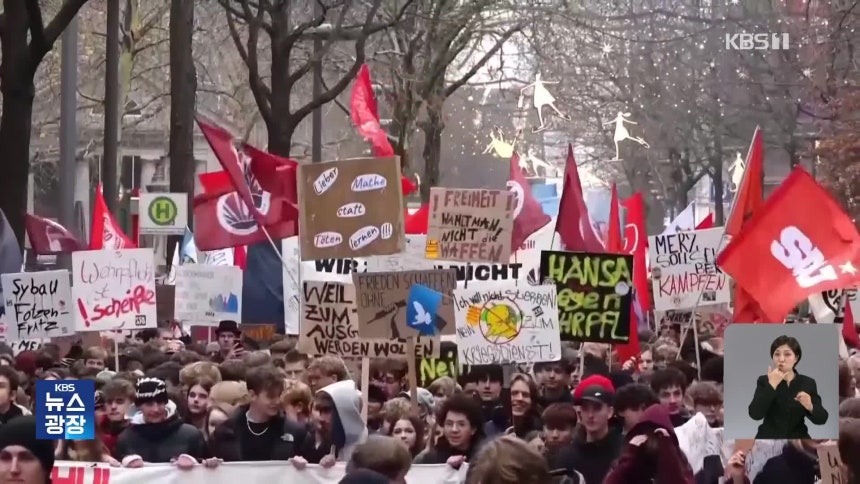
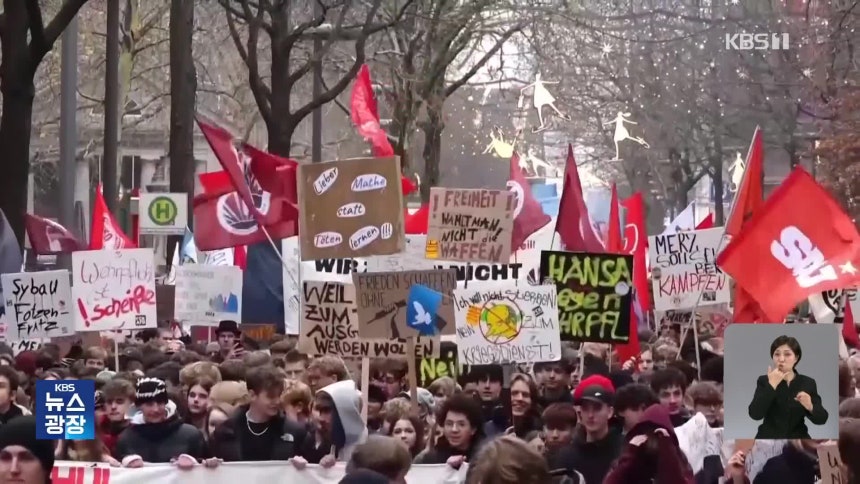
Protests that French high school students began, demanding better school conditions, have now spread into anti-government protests joined by ordinary citizens. Moreover, these protests are spreading beyond France to various parts of Europe, including Italy, Spain, and Belgium. With the immigration controversy added on top of this, some analysts even suggest that the fallout from these protests could bring a seismic shift to the political sphere.
The reasons France has fallen into this situation are highly complex. It is a problem in which multiple causes are tangled together: the enormous fiscal outlays during COVID-19, the surge in energy prices caused by the Russia-Ukraine war, a high national debt ratio and low growth, and prices driven up by the U.S.-Iran war. It also includes discontent over the rising housing costs of young people and low-income households, who were already struggling, as rentals for tourists have become popular.
The causes are varied, but put simply, the core of the problem is this. The younger generation is anxious and dissatisfied that the asset-building opportunities and pension welfare benefits the older generation enjoyed will shrink. Ordinary people and low-income households demand that the government provide more support, saying that life is getting harder and harder while the burden of living costs keeps growing. The government, conversely, protests that with national debt exceeding 100% of GDP, fiscal austerity is unavoidable.
■ A Bill Sent from the Past — The Fiscal Burden of Welfare and Pensions
Why is it that, while citizens clamor for more fiscal support, the most advanced countries find it hard to raise additional fiscal resources? It is because social security spending is very large in these countries’ public finances. Half of welfare spending goes to paying public pensions. Welfare spending is a classic rigid budget item that is hard to cut once set. The advanced European countries have already sunk into a quagmire of debt.
View original In France, which entered the aged-society stage long ago, the pension reform debate is considered to have begun heating up in 1991. But France ran into political conflict and public resistance and failed to achieve proper reform. The ever-growing national debt was passed on to the next generation, and the conflict was clumsily papered over. What is exploding now is, in effect, the result of having failed to solve the problem in time for nearly 30 years and simply putting it off for the time being. Caught between the younger generation, the retired generation, and low-income citizens, the French government finds itself unable to move either way.
■ What Lies Ahead for Korea, the World’s Fastest-Aging Country?
What about Korea, then? Korea currently maintains very healthy public finances. This year in particular, so much tax was collected that a Future Response Fund of over 100 trillion won was even created. Korea’s national debt-to-GDP ratio is about 50%, which places it in a very sound group worldwide.
Social security spending is about 15% of GDP (half of France’s 30%). In European countries (France 24.3%, Italy 32.8%, Spain 26.7%, Greece 32.7%), spending on public pensions takes roughly 30% of the total national budget. In Korea it is only 9.7%.

View original OECD Pension Report 2023
The problem, however, is speed. Korea and France currently have similar shares of older people (aged 65 and over), in the low 20% range. But in 2040, just 14 years from now, Korea’s share of older people will reach about 34% (France about 26%), far surpassing European countries. Korea is aging about twice as fast as France.
There is good reason why, despite Korea’s fiscal soundness and the astronomical reserves of the National Pension Fund, future generations distrust the National Pension so much that they liken it to a “Ponzi scheme.” For a public pension system to be well sustained, there must be trust in the system among members of society, and that trust is breaking down. Responsibility for restoring trust in the pension system lies with the government, yet the Korean government, too, has been doing nothing but research and review for more than ten years.
■ How Will Korea’s Future Governments Deal with Pension Liabilities?
It is hard to predict the economic conditions that will unfold decades from now. Koreans may work hard at having children and the low fertility problem may disappear; the pension fund may earn returns of more than 10% every year and the fund depletion problem may be solved without raising contributions; or AI may boost productivity and sharply lower future generations’ burden of supporting older people. But such rosy assumptions do nothing to help the system earn trust.
Therefore, if the Korea of the future is not to be saddled with social problems that fester and burst as in France today, it must manage the risks well starting now. The solutions put forward so far boil down to two. One is for the government to preemptively inject national treasury funds into pension finances to eliminate the fund depletion problem; the other is to maintain the soundness of pension finances by raising contributions further or by introducing an automatic adjustment mechanism or the like to partially cut retirees’ pension benefits.
The net income replacement rate (Net replacement rate) of France’s public pensions, after taxes and the like, is about 70%, twice Korea’s 35%.
If a crisis truly severe enough to ruin the country were to come, France would have some room to lower its income replacement rate a little, but that would not be easy for Korea, which records the world’s highest elderly poverty rate.
This is why the automatic adjustment mechanism proposals that the Ministry of Health and Welfare put forward several times under the Yoon Suk-yeol administration were not adopted in the course of deliberations among experts and in the National Assembly.
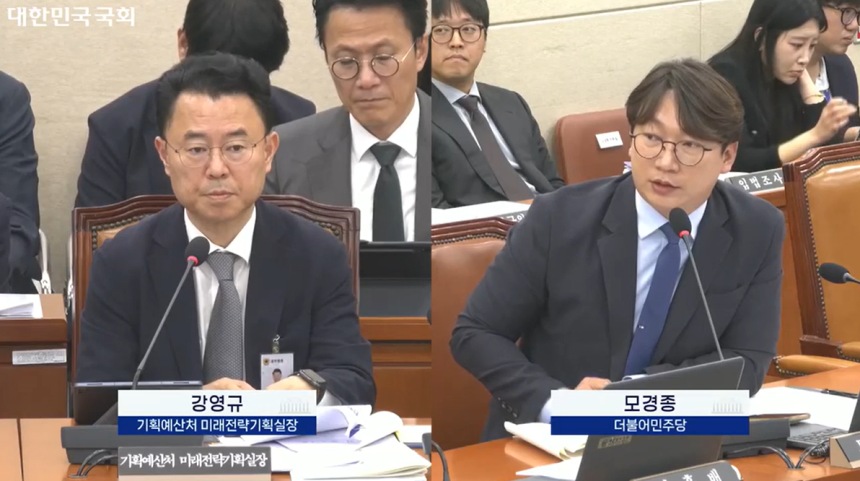
View original 8th Meeting of the National Assembly Special Committee on Pension Reform (26.9.29)/National Assembly video minutes
■ National Treasury Funds for the National Pension — “Please Consider Using the Future Response Fund”
At the National Assembly Special Committee on Pension Reform at the end of September, several lawmakers asked the government about the option of preemptively injecting fiscal resources to dispel concerns about fund depletion. In response, Director Kang Young-kyu of the Ministry of Planning and Budget took a negative stance, saying, “To support pension finances, government bonds would have to be issued, and government bonds are likewise a burden on future generations.”
Won Jong-hyun, former Vice President of the National Pension Research Institute, said it is clear that “many countries use national treasury funds for public pension finances.” Even “assuming the government issues government bonds to support National Pension finances, government bond interest rates are around 3%, far lower than the National Pension’s average annual return of about 8% (as of the end of 2025), so the burden on future generations can be lowered,” Won diagnosed.
Representative Mo Kyoung-jong of the Democratic Party of Korea, who represents the younger generation on the Special Committee on Pension Reform, also urged the government to review the matter, saying, “Given how great the younger generation’s anxiety over the depletion of the pension fund is, is supporting the National Pension with the Future Response Fund, built from excess tax revenue, not precisely a sure response to the problems of young people?”
Korea’s fiscal authorities, having gone through the IMF crisis, seem to have set the nation’s fiscal soundness as their top priority. However, analyses have emerged that, considering the pace of aging and the burden rates of the welfare system, if the current government does nothing now, future governments will be saddled with enormous debt. The debt of future governments is a burden that future generations must bear.
What must the current government do to reduce the enormous fiscal pressure that future governments will face? The current crisis in France offers a glimpse of the uneasy future approaching our society.
Yoo Won-joong ([email protected])
Attachments
- Screenshot_20261025_131625_Samsung Notes.jpg(241.3 KB)
- Screenshot_20261025_130353_Samsung Notes.jpg(308.9 KB)
- Screenshot_20261025_130937_Samsung Notes.jpg(488.7 KB)
- Screenshot_20261025_131100_Samsung Notes.jpg(433.3 KB)
- Screenshot_20261025_131139_Samsung Notes.jpg(413.2 KB)
- Screenshot_20261025_131318_Samsung Notes.jpg(450.1 KB)
- Screenshot_20261025_131416_Samsung Notes.jpg(703.9 KB)
- Screenshot_20261025_131525_Samsung Notes.jpg(507.8 KB)
- Screenshot_20261025_201930_Samsung Browser.jpg(681.5 KB)
- Screenshot_20261025_201944_Samsung Browser.jpg(654.7 KB)
- Screenshot_20261025_201954_Samsung Browser.jpg(892.5 KB)
- Screenshot_20261025_202001_Samsung Browser.jpg(561.8 KB)
- Screenshot_20261025_202009_Samsung Browser.jpg(595.5 KB)
- Screenshot_20261025_202020_Samsung Browser.jpg(714.5 KB)
- Screenshot_20261025_202028_Samsung Browser.jpg(757.5 KB)
- Screenshot_20261025_202036_Samsung Browser.jpg(641.4 KB)
- Screenshot_20261025_202048_Samsung Browser.jpg(370.1 KB)