
Interview with French Economist Philippe Aghion (2025 Nobel Laureate in Economics) (Interlocutor: Yun Suk-myung, Advisory Committee Member, 21st National Assembly Special Committee on Pension Reform)
- #국민연금법
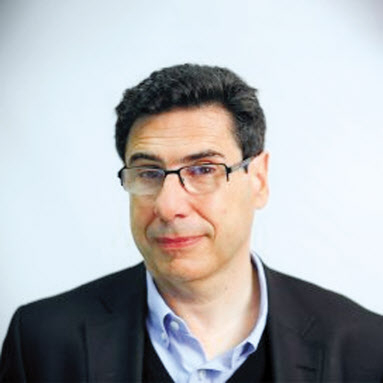
Philippe Aghion (age 66; photo), Professor at the Collège de France and renowned for establishing the Schumpeterian growth theory that transcends both Keynesian and neoliberal frameworks, gave an exclusive interview to the Herald Economy on the 27th of last month as part of a New Year special series marking the paper's 70th anniversary. In that interview, he argued that President Emmanuel Macron pursued pension reform because "as life expectancy rises and the population ages, the working-age population is bound to shrink." Professor Aghion previously served as an economic advisor to President Macron.
The centerpiece of France's pension reform is raising the statutory retirement age from the current 62 to 64, thereby deferring the age at which individuals become eligible to receive pension benefits by two years—effectively expanding France's working-age population.
Professor Aghion acknowledged that "Macron's achievements in reducing France's unemployment rate through tax reform, unemployment benefit reform, and education system reform deserve recognition," and explained that "France's pension reform is yet another means of raising the employment rate."
Citing one of the reasons French citizens oppose the pension reform, Professor Aghion noted that "companies in France rarely hire older workers," adding that "(if the pension eligibility age is extended by two years,) older workers will have no choice but to remain employed, and the government will provide strong incentives for companies to continue hiring them." His argument is that if France's employment rate among workers aged 55–64—currently far below the OECD average—rises as a result of pension reform, this will serve as a driver of growth in France's gross domestic product (GDP).
(Excerpt omitted)
The private advisory committee of the National Assembly Special Committee on Pension Reform, in which interlocutor Yun Suk-myung serves as a member, reached consensus on raising the contribution rate and extending the mandatory contribution period, but opinions remain divided on the income replacement rate. The voices of civic organizations and labor groups opposed to pension reform are also growing louder. While it is clear that, as President Yoon Suk-yeol stated, "reform is an unpopular undertaking," Professor Aghion concurred with the view that "pension reform is not an option but a necessity."
The following is a summary of the main points of the dialogue between Professor Aghion and advisory committee member Yun Suk-myung.
(Please refer to the attached transcript of the Herald Economy dialogue.)
![(연금연구회 성명서 보도. 노컷뉴스) [칼럼] 연기금 카지노 책임론?…'쉬운길' 선택의 결과일 수 있다 (2026.10.20.)](/_next/image?url=%2Fuploads%2Feditor%2F2026%2F10%2Fc6f13b0799b440d0874a9f72413c6f58-0004200449_003_20261020063615439-1.jpg&w=128&q=75)
![(연금연구회 성명서 보도. 중앙일보) [취재일기] 국민 노후보다 코스피를 지킨 국민연금 (2026.10.19. )](/_next/image?url=%2Fuploads%2Feditor%2F2026%2F10%2F7e92f70b0ec843bbb869a4cf46b01f72-0003558751_001_20261019052229249.jpg&w=128&q=75)