(Chosun Ilbo, October 13, 2026) [Editorial] 181 Trillion Won of National Pension Assets 'Evaporate' in a Month — A Warning Against Hasty Stock-Price Policy
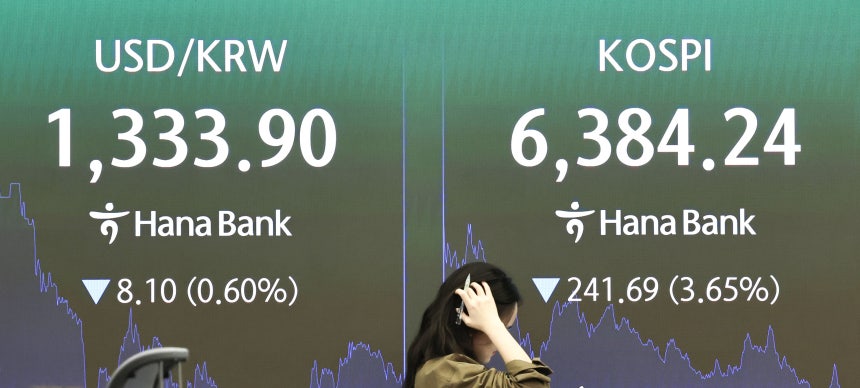
The KOSPI fell for a fourth straight trading day, collapsing to the 6,400 level.
Its decline from the peak above 9,000 four months ago is approaching 30%. Foreign investors unleashed a barrage of sell orders worth more than 2 trillion won on the 12th alone.
The bigger shock rattling the market was Samsung Electronics' earnings paradox. Despite the record-breaking feat of third-quarter operating profit topping 107 trillion won, its share price fell for four straight trading days. Foreign ownership of Samsung Electronics dropped to 46.4%, the lowest in 18 years and nine months, since January 2008, when the financial crisis was spreading. That even record earnings are being shrugged off shows that the stock market is not determined by earnings figures or stimulus measures alone, but reflects a complex mix of factors, including future uncertainty and intrinsic value.
When the KOSPI hit a record high on June 22, four months ago, the political sphere and others touted "KOSPI 10,000" and urged people to "buy stocks instead of real estate."
While prices rose, they claimed the credit and poured out hasty stimulus slogans, but while everyone was carried away by the slogans, foreign investors pocketed their gains and left.
This year alone, foreign net selling has reached 199 trillion won, and about 150 trillion won of that was concentrated in the market's rising phase, when the political sphere was egging people on to invest in stocks.
The side effects of the KOSPI's violent swings are also leaving scars on the public's retirement funds. As domestic share prices soared, the Fund Management Committee raised the ceiling on the domestic equity share from 14.9% to 20.8% in May.
As a result, the fund met the sharp downturn still holding shares it should have trimmed at the peak, and 181 trillion won of fund assets evaporated in the single month of July.
That is more than three years' worth of total annual pension payments, and valuation losses on domestic equities alone reach 125 trillion won.
Even amid the crash, the National Pension's domestic equity share stood at 24.9% at the end of July, more than 4 percentage points above its target.
The fund is caught in a dilemma: bringing the share back to target at the year-end review would require selling tens of trillions of won in shares, while putting it off would undermine the principles of pension fund management.
Individual investors, who had been filling the gap left by foreign investors, also sold nearly 6 trillion won of domestic stocks in the third quarter alone while buying more than 10 trillion won of U.S. stocks.
The political sphere and the authorities must first stop treating the stock index as a policy report card.
The National Pension, too, must uphold "profitability and independence" without bowing to political pressure. The stock market will keep going up and down.
If they cannot shake off the temptation to take credit when prices rise and to meddle when they fall, the price will come back as an even costlier lesson.
https://n.news.naver.com/article/023/0004003398?cds=news_edit