(Pension Future Forum Commentary. The Hankyoreh, 2012. Article on the Power of France's Left-Wing Government) The Power of a Left-Wing Government? Hollande Rolls the Pension Eligibility Age Back from 62 to 60 (Reported June 7, 2012)
(French President Hollande's measure
rolling the retirement age back from 62 to 60
came to the attention of
Committee Member Yun Suk-myung
while attending an OECD meeting in Paris at the time,
just before the June 7, 2012
Hankyoreh report on it
appeared.
To OECD officials at the time,
Committee Member Yun Suk-myung said:
France seems to have
lost its senses.
In the end, France will likely find it hard
to avoid a fiscal crisis.
Rolled back by the power of a left-wing government,
the retirement age of 60
is now, 14 years later,
shaking not only France
but the entire eurozone.
Committee Member Yun Suk-myung's view is as follows: in 2007
the Roh Moo-hyun administration, with great difficulty, reformed
the National Pension income replacement rate to 40%,
and from 2026
it was immediately raised to 43%,
up 3 percentage points
(7.5% in percentage terms).
That increase,
which, just as French President Hollande did,
rolled the reform back,
was the March 20, 2025
deterioration of the National Pension.
The forces that led it
have done something that, for as long as Korea exists,
will be remembered long in history.
That is the Committee Member's firm conviction.
Its aftershocks
will exceed all imagination.)
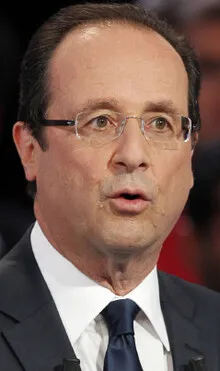
Ahead of the first round of legislative elections on the 10th (local time), France's left-wing government has rolled the pension eligibility age for some workers back from 62 to 60.
The move fulfills a key campaign pledge of President François Hollande, but the opposition and the markets are already stoking public fears of a fiscal crisis, and it has emerged as the biggest issue of the elections.
On the 6th, President François Hollande's Socialist government approved a draft decree bringing forward the retirement age for some workers. As the Hollande government once again "reforms" part of Sarkozy's "pension reform," workers who began working at 18, women workers with three or more children, the unemployed, and others will be able to receive a pension from age 60.
The decree will be finalized at the end of this month and take effect in November this year. In 2013, about 110,000 people are expected to benefit.
Marisol Touraine, Minister of Social Affairs and Health, said, "This is about restoring justice for those, such as low-income and unskilled workers, whose pension benefits were cut to their disadvantage in 2010."
The government also stressed that the additional funding required would be covered by a small increase in income tax and would therefore pose no problem for fiscal soundness.
Minister Touraine told the cabinet meeting that the additional cost is estimated at 1.1 billion euros (about 1.6 trillion won). The minister also added that it is expected to rise by 3 billion euros every year through 2017.
The decision came as the European Union warned that France may fail to meet the debt-ratio reduction criteria without further austerity, and it is drawing particularly fierce backlash from the opposition and the markets.
The opposition in particular claims that the actual cost is double the government's estimate and criticizes the decision for having been made without consulting parliament.
Jean-François Copé, leader of the conservative Union for a Popular Movement (UMP), criticized the move, saying, "Hollande has buried his head in the sand (avoided reality)."
The reform of Hollande's predecessor, former President Nicolas Sarkozy, had been welcomed by financial markets and credit rating agencies as a way to reduce France's debt and fiscal deficit.
Sarkozy raised the minimum retirement age for a "partial pension" from 60 to 62, and raised the age at which a "full pension" can be received regardless of the length of one's working career from 65 to 67.
The aim was to reform a pension system struggling with rising life expectancy and chronic fiscal deficits.
In 2010, however, it also provoked a national backlash, with millions of public-sector workers pouring into the streets in protests that grew into a nationwide strike.
Reporter Jeon Jeong-yun [email protected]
https://www.hani.co.kr/arti/international/europe/536576.html