Pension Reform — Japanese Politicians Were More Capable Than Koreans
[Hankook Ilbo · Opening the Morning · December 29, 2022]
Yun Suk-myung, Research Fellow at the Korea Institute for Health and Social Affairs (KIHASA) and former President of the Korean Pension Association
I have long introduced Japan's pension reforms and stressed that we must hurry to catch up with Japan. This is because Japan introduced an automatic adjustment mechanism in 2004 and has operated all public pensions in a truly 100% identical manner since 2015. It is also because Japan's Employees' Pension Insurance, which through painstaking efforts covers ordinary workers and civil servants in one integrated scheme, will still have money to pay benefits 100 years from now.
Based on the 2023 financial projection of the National Pension, the earliest possible time to push for pension reform is 2024. In terms of the timing and intensity of reform, it is virtually impossible to achieve a level of pension reform like that achieved by Japan in 2004. Even if a miracle occurred and we achieved a Japanese-level reform in 2024, we would already be 20 years behind. If we continue to delay reform, our community could collapse.
We operate both the National Pension and the Government Employees Pension as systems that provide more benefits while requiring lower contributions than those in Japan. The tax-financed Basic Pension has become a symbol of populism, with its monthly amount raised by 100,000 won during every presidential election. How can we break this vicious cycle?
From the 18th to the 21st of this month, the pension team of the Ministry of Health and Welfare—First Vice Minister Lee Ki-il, Pension Policy Division Director Park Jae-man, Basic Pension Division Director Bang Young-sik, and Deputy Director Kim Seong-cheol—visited Japan. Since this week, the press corps that accompanied them has been reporting what they saw and heard. In that the press is reporting the facts, this trip looks set to be a model for other ministries as well. It is regrettable, however, that they did not take a proper look at Japan's integrated operation of its public pensions, because reform of the Government Employees Pension and the other special occupational pensions is unavoidable.
The Ministry of Health and Welfare and the press corps cite the "strong drive of politicians, disclosure of pension-related data and meeting contents, and gradual annual increases in the contribution rate up to 18.3%" as important implications from this trip. In particular, the practice of live-streaming various pension meetings via video seemed to leave a deep impression. In this regard, let us hear from Jung Jae-cheol, Director of the Seoul Public Health and Medical Foundation, who knows Japan well, having earned a doctorate from Waseda University: "The Japanese Ministry of Health, Labour and Welfare uses YouTube to broadcast various pension meetings, such as deliberations and review committees within the Social Security Council. They are considerate in making them easy to understand and available for viewing at any time through video."
This is what Reiko Hayashi, Deputy Director of the National Institute of Population and Social Security Research in Japan, told me in person during her visit to Sejong City for the Korea-China-Japan pension experts video conference on the 8th. She stated, "Two politicians played a major role in Japan's pension reform. Along with former Prime Minister Junichiro Koizumi, who is widely known, the role of former Prime Minister Ryutaro Hashimoto was also significant." In our case, former President Kim Young-sam, who pushed for the 1998 National Pension reform; former President Kim Dae-jung, who legislated it; and former President Roh Moo-hyun, who pushed for the most critical reform in 2007, played major roles. Former President Park Geun-hye, who led the 2015 overhaul of the Government Employees Pension, also deserves high marks.
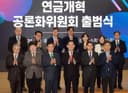
To succeed in pension reform, all efforts must be focused on securing accurate data along with political leadership. "There is a need to review pension-related information. Available statistical data and datasets must be secured, and missing data must be newly created. Pension discussions must not become a situation of blind men touching an elephant. The Special Committee will provide active support." This is why the request and determination expressed by Representative Kim Sung-joo, the opposition party's ranking member, after the meeting of the Advisory Committee to the National Assembly Special Committee on Pension Reform on the 21st are important.
Source: Hankook Ilbo (original article)