National Pension Reform That Young People Can Also Empathize With
[Hankook Ilbo · Opening the Morning · December 1, 2022]
Yun Suk-myung, Research Fellow at the Korea Institute for Health and Social Affairs (KIHASA) and former President of the Korean Pension Association
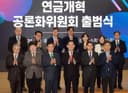
On the 3rd of last month, I attended as a discussant at the 'National Pension Reform That Young People Can Empathize With' event hosted by the Sound Finance Forum (Representative Choi Jong-chan, former Minister of Construction and Transportation). Ko Byeong-gyu, a student at Seoul National University, presented a 'National Pension Perception Survey of 110 Young People in Their 20s.' "Time bomb, old rope, bottomless pit, sandcastle on the beach, intergenerational conflict, passing the bomb around" — these were the answers to the question of what the most worrying problem regarding the National Pension is.
Responses stating that pension reform is urgent reached 81.9%. They say, "Everyone knows it will explode and when it will explode, yet no one is trying to dismantle it. It is a dereliction of duty by politicians and administrators." Stability (50%) and publicness (26.7%) were cited as important principles for the National Pension Fund, while the proportion for profitability was low at 23.3%.
In the subsequent debate, Baek Kyung-hoon, representative of Blueprint, who discussed the topic "The National Pension: A 'Time Bomb of Distrust' That Makes Legoland Look Trivial," said that what is needed now is the 'courage to be disliked.' He pointed out that since there are clear limits to the committee system as a channel for reflecting the voices of young people, the government needs to provide an open forum for deliberation. Considering the reality that discussions on the National Pension are ideologically and politically contaminated, he suggested preparing a 'green paper' containing the problems and public opinions, and a 'white paper' containing countermeasures through social consensus.
Lee Dong-hak, former Supreme Council Member of the Democratic Party of Korea, who discussed the topic 'Pension System for Intergenerational Equity and Coexistence,' diagnosed our demographic structure as a situation that creates cracks in the trust that the pension system can be sustainable. He criticized the political sphere for producing only conflict even in a situation requiring reform, creating a state where nothing can be done. He diagnosed the structure of our pension discussions as 'a situation where Chul-soo and Young-hee will end up paying for the meal, but they are left out while others go to eat expensive raw fish.' He proposes that reform should be able to occur automatically through a 'Pension Estimation Committee' independent of politics.
On the 26th of last month, I attended as a presenter at 'Deul-sseok Deul-sseok Tteo-deul-sseok: Idea Festival to Change the World,' a public forum on pension reform hosted by the 'Social Cooperative Parti.' The format involved voting for a preferred plan among the pension reform proposals of two presenters. Since voting continued throughout the event, changes in the participants' thoughts were reflected in real time. A notable point was that the voting results changed frequently depending on how the information was delivered. One participant said, "The more I hear, the more confused I get." Another elderly participant asked, "How can we actually achieve reform?" I replied, "I believe problem-solving will be possible if voluntary gatherings like this become active and social pressure grows to inform people of the situation our pension faces without distortion."
We live in a world where claims are rampant that the government can take on more national debt because its finances are relatively sound compared to other countries. In such times, proper expert opinions must be respected. "Considering the high automatic growth rate of mandatory fiscal expenditures that are difficult for the government to intervene in, such as pension expenditure, national debt has already reached a dangerous level. We simply have not yet seen that catastrophe with our own eyes." This is the stern advice given to me by Professor Lee Chul-in of the Seoul National University Department of Economics, who was elected as the next president of the Korean Public Finance Association.
Given this situation, we must not leave it solely to the political sphere. Only when the proportion of people joining the social demand to disclose all information regarding the reality we face increases will the government finances and the pension system be able to operate in a sustainable direction.
Source: Hankook Ilbo (original article)