Reflecting on a National Debt That Has "Reached the Level of Japan"
[Hankook Ilbo · Opening the Morning · November 3, 2022]
Yun Suk-myung, Research Fellow at the Korea Institute for Health and Social Affairs (KIHASA) and former President of the Korean Pension Association
Among the countries classified as advanced economies by the International Monetary Fund (IMF), it is reported that our national debt exceeds the average debt of non-reserve-currency countries, which do not use a reserve currency such as the dollar. There is a significant gap between the actual situation and the claims of politicians that "national debt is low, so we can borrow more."
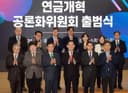
A few days ago, a "Fiscal Vision 2050" forum was held, attended by Choi Sang-dae, Second Vice Minister of the Ministry of Economy and Finance, and experts in related fields. The reason I am recalling this closed-door forum is that the remarks of the participants were shocking. This is due to the statement by Kim Jung-hoon, Director of the Fiscal Policy Institute, that "if fiscal reform and social insurance reform are not carried out, and if the current national burden ratio is maintained, our national debt has effectively already reached the level of Japan." Director Kim is an expert in this field who also served as President of the Korean Public Finance Association.
If it is true that our national debt has already reached the level of Japan—which has the highest proportion of older people in the world and whose social security schemes have entered a mature stage—it is a grave problem. Even though Japan operates a pension system that holds one year's worth of payments for the general public and government employees even 100 years from now, Japan's national debt ratio reached 262.5% as of 2021. For us, whose public pensions—unlike Japan's—are all unsustainable, this is a situation we would rather not even imagine.
Sweden is a country frequently mentioned when the issue of high national debt is discussed. This is because its national debt, which stood at 65.7% of gross domestic product (GDP) in 1993, fell to 36.8% in 2021. How was such a thing possible?
I first encountered Sweden in 1998, immediately after the IMF financial crisis, while conducting a project on social safety nets with financial support from the World Bank. My first impression of Sweden was not very good. The weather in late October, which is the autumn foliage season for us, was quite bleak. The foul smell of nitrogen oxides coming from car exhausts (driving through the city) also played a part.
As I tried to warm myself in the chilly weather, the heating in the hotel was below expectations. When I went to the front desk and asked them to raise the room temperature, they told me to cover myself with another blanket. I returned with the impression that "I heard it was a country with good welfare, but having come here, it seems just mediocre!" Afterward, I intentionally avoided business trips to the Nordic Scandinavian Peninsula. It was because of the bleak atmosphere. The reason I visited Sweden again was because of the Basic Old-Age Pension. Having attended as a testifier at two public hearings on the "Restructuring of the National Pension and the Basic Old-Age Pension" held at the National Assembly, I wanted to properly understand the reality of an advanced welfare state.
Mid-June in Stockholm, where I arrived without much expectation, was fantastic. It was completely different from late October. Perhaps because I was in a pleasant mood, the true side of Sweden came clearly into view. Subsequently, my interest in Sweden grew. In the midst of this, on the evening of September 9, 2013, I had an opportunity to have a proper debate with Lars Danielsson, the then-Swedish Ambassador to Korea, at the ambassador's residence in Seongbuk-dong. When I asked how such innovative pension reform was possible, the answer was "trust." He said that the trust in government policy built up over 100 years of development is the source of today's Swedish welfare model.
How can we restore our national debt, which is said to have already reached the level of Japan, to a sustainable level? As seen in the example of Sweden, the answer seems to lie in securing trust in government policy. This is why we must pay attention to the remarks made by Professor Kim Tae-il of Korea University at the "Fiscal Vision 2050" forum, that "for the government to gain trust, it must disclose all information."
Source: Hankook Ilbo (original article)