Irresponsible Pension Politics Rejected Even by the Beneficiaries
[Hankook Ilbo · Opening the Morning · October 6, 2022]
Yun Suk-myung, Research Fellow at the Korea Institute for Health and Social Affairs (KIHASA) and former President of the Korean Pension Association
Attention is focusing on the Basic Pension. This is because the Organisation for Economic Co-operation and Development (OECD) recently recommended that we overhaul and operate our Basic Pension, as its effect on alleviating elderly poverty is low relative to the costs invested. The OECD stated that we should operate the scheme to lower the high elderly poverty rate by reducing the number of beneficiaries and providing more to vulnerable older people.
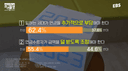
Before the ink on the recommendation had even dried, both the government and the ruling party and the opposition party mentioned increasing the Basic Pension amount. Regarding the details of increasing the pension amount, there is a significant difference between the plans of the government and the ruling party and those of the opposition party. The government and the ruling party say they will give more than now to 70% of older people. On the other hand, the opposition party says they will give more than now to all older people.
Why is this happening? It is because it is not a system operated by contributions paid by the insured. Since it is not money taken directly from monthly salaries, and since the method of operating the system is conducive to taking credit for promising further increases, such absurd things are happening.
There was a meaningful scene in our political history during the last presidential candidate TV debates. This was because candidates Yoon Suk-yeol, Lee Jae-myung, and Sim Sang-jung all readily agreed to Candidate Ahn Cheol-soo's proposal to reach an agreement on pension reform. At the time, the ease of the agreement was puzzling. It was because I wondered, "Could they agree on that difficult pension reform so easily?" It took less than a year for these concerns to manifest in reality. This is because they left aside the pension reform they said they would do and instead said they would give more from the Basic Pension, which sucks the marrow of the younger generation. It is also because they said they would expand it from 70% of older people to all older people.
According to the Survey of Household Finances and Living Conditions by Statistics Korea, a significant number of older people aged 65 and over are much wealthier than young people. Even so, why do they say they will give the Basic Pension to all older people? They are talking about a system that even advanced welfare states, which collect far more taxes and contributions than we do, gave up because it was difficult to maintain. It must be a calculation to gain more votes from older people. It means using taxpayers' money as a means of vote-buying to achieve political goals.
I would like to introduce a recent experience of mine that contrasts with this behavior of the political sphere. It is the cry of Kim Il-cheon, a former Director General at the Ministry of Health and Welfare who is nearing 90: "Dr. Yun. The country will be ruined at this rate. Sweden's universal welfare is a method of filling only what is lacking for each individual. We mistakenly believe that dividing equally by n is universal welfare." This is the sincere advice of a former official who was ousted three times for opposing government policies.
Joo Myeong-ryong, President of the Korea Association of Retired Persons (KARP), sent a text message: "Dr. Yun. The association held a debate on the Basic Pension yesterday, and contrary to expectations, the majority opposed providing the Basic Pension to all older people aged 65 and over." Instead, they say, "Provide public-sector jobs to older people who find it difficult to obtain jobs in the market on their own, but give the majority of older people who are capable of working the opportunity to work in market-based jobs." They are asking that in the era of a 100-year life, the political sphere should not provide the Basic Pension to all older people, but instead focus on creating market-based jobs that provide benefits allowing for a minimum standard of living.
In Japan, from which we learned our pension system, the basic pension can be received only by those who have paid contributions themselves. About 70% of older people in Japan are re-employed after mandatory retirement and keep working past age 65, receiving 30–50% of their pre-retirement pay. In our society, where the older population is increasing faster than anywhere else in the world, should we not concentrate our political capabilities on persuading labor and management so that market-based jobs for older people can be activated, instead of expanding the Basic Pension which drains the lifeblood of the younger generation? I say this because the behavior of politicians who claim to think of the country is beyond pathetic.
Source: Hankook Ilbo (original article)