The National Pension Financial Projection Expert Committee Must Be Reconstituted
[Hankook Ilbo · Opening the Morning · September 8, 2022]
Yun Suk-myung, Research Fellow at the Korea Institute for Health and Social Affairs (KIHASA) and former President of the Korean Pension Association
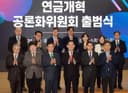
The Financial Projection Expert Committee for the fifth National Pension financial projection held its first meeting on August 30. The arduous journey of the fifth National Pension financial projection has set sail.
Since the first financial projection in 2003, there have been four financial projections up to the fourth in 2018. In the first, a System Development Expert Committee and a Financial Projection Expert Committee were operated under the Pension Development Committee. Because the system development and projection committees operated simultaneously, financial projections related to system improvements could be secured immediately. Conversely, in the second, third, and fourth, discussions on system improvement took place based on the results after the financial projection results were finalized. The channel for system development members to raise issues regarding the financial projection results was closed. It also became virtually impossible to secure various financial projection results according to the direction of the system overhaul.
To resolve the shortcomings of the operation of the three financial projection committees after the first, a Financial Projection Expert Committee was established under the Financial Estimation Committee, which is responsible for decision-making on the direction of the system overhaul, for the fifth financial projection. Since decision-making on the direction of the system overhaul is scheduled to take place within the Financial Estimation Committee, the intention was to operate the Financial Projection Expert Committee as a small, elite committee centered on experts to quickly provide neutral financial projection results. This is because, in the four years since the fourth financial projection in 2018, conditions for financial projection changed abruptly, such as the birth rate plummeting contrary to original expectations.
Under relevant laws, the National Pension Deliberation Committee is required to discuss the direction of the financial projection before it is fully implemented. However, at the Deliberation Committee meeting held on August 10, it was decided—contrary to the original intention—to compose the Financial Projection Expert Committee of members recommended by stakeholders. The original plan to operate it primarily with neutral financial projection experts fell through. Although the number of members in the expert committee was reduced to operate it centered on a small number of experts, as a result, experts recommended by stakeholders came to occupy the majority of the committee.
Consequently, experts in population, labor, and macroeconomics, who are essential for financial projection, were excluded. In particular, the fact that only one actuary—an expert directly related to financial projection—is among the 11 members must be taken seriously. It is difficult to unconditionally view someone as a financial projection expert simply because they were a member of a past Financial Estimation Committee or majored in economics, even if they are not a specialist in the relevant field. This is in the same vein as how I, despite having received a doctorate in economics specializing in pensions, can hardly be regarded as a pure financial projection expert.
If the Financial Projection Expert Committee was composed contrary to the original plan, it must be quickly rectified in a direction that minimizes the fallout. Public interest members, who can be considered relatively neutral, number only two in this committee's composition. This is a drastic reduction compared to the six members in past committees. Given this situation, even true projection experts who have performed financial projections for nearly 20 years were not included as members.
The composition of the Financial Projection Expert Committee, which will provide the supporting data for the National Pension reform that will determine the nation's rise and fall, must not be left as it is. If it is difficult to revert to the original intent, the committee's composition must be quickly reorganized, at least by increasing the number of neutral public interest members as in past Financial Estimation Committees. This is because many members recommended by specific interest groups are inherently unlikely to be neutral. This is due to the fact that most stakeholders are reluctant to increase the contribution rate or emphasize increasing the pension payment rate without any countermeasures.
Source: Hankook Ilbo (original article)