(Pension Future Forum Commentary) Chairman Yoon Young-seok of the Special Committee on Pension Reform Discloses the Unfunded Pension Liability of the National Pension (Korea Economic Daily Report, October 1, 2026)
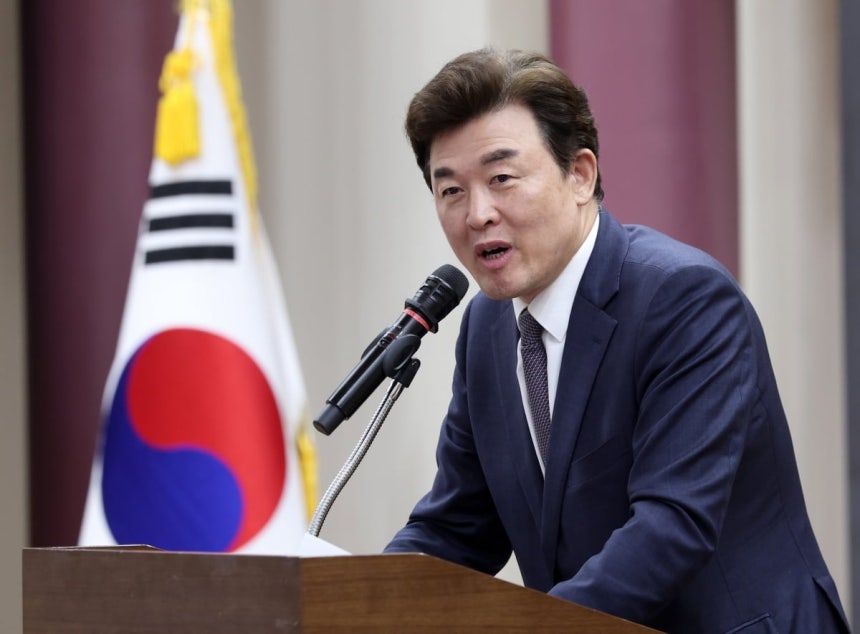
(On October 1, 2026, Chairman Yoon Young-seok
of the 22nd National Assembly Special Committee on Pension Reform disclosed
the unfunded pension liability of the National Pension.
We attach great significance to the fact that he obtained the figure from the Ministry of Health and Welfare and made it public,
and that, since the Roh Moo-hyun administration in 2007,
this is the first time in some 20 years
that the government has put an official figure
on the unfunded liability.
At the debate held on September 28, 2026,
and hosted by the National Assembly Special Committee on Pension Reform,
Committee Member Yun Suk-myung demanded
that, since the amendment to the National Pension Act of March 20, 2025,
codified the payment guarantee provision for the National Pension
and the National Pension's unfunded liability
has thus come to count as an official government liability,
the government, starting in 2027,
just as it does for the accrued pension liabilities of the Government Employees Pension and the Military Pension,
publish the unfunded liability
every year.)
Chairman Yoon Young-seok of the Special Committee on Pension Reform: "Pension Reform Is Not a Matter of Weighing Advantage and Disadvantage for the Administration in Power"
An official government calculation has found that the National Pension's unfunded liability amounts to 1,447 trillion won.
Unfunded liability refers to the difference between the total pension amount (liability) that the National Pension must pay to the insured in the future and the reserves (assets) accumulated to date plus future contribution income.
There are calls for the government to actively pursue structural reform of the pension system, if only to keep the fiscal burden on future generations from growing.
According to data that Representative Yoon Young-seok of the People Power Party obtained from the Ministry of Health and Welfare on the 1st, the National Pension's unfunded liability was put at 1,447 trillion won, assuming a fund investment return of 4.5%.
Representative Yoon Young-seok chairs the National Assembly Special Committee on Pension Reform.
While unfunded liability is not a debt that must be repaid immediately, it is interpreted as a potential liability that future generations must bear.
Until now, the government has not officially recognized unfunded liability on the grounds that it is not a fixed liability and could be mistaken for national liabilities.
However, bodies outside the government have often published reports on it. In 2021, the National Pension Research Institute estimated the unfunded liability at 1,735 trillion won over a 70-year horizon.
That this same government has now officially calculated the unfunded liability is seen as significant, in that it brings into the open the scale of a liability that had been discussed mainly among academics and experts.
The government officially recognized unfunded liability only once, when the Roh Moo-hyun administration carried out a parametric reform that phased down the income replacement rate from 60% to 40% by 2028.
Additionally, according to the long-term financial projection of the National Pension submitted by the Ministry of Health and Welfare, the projected date of fund depletion is 2064 when the return rate is 4.5%, and 2071 when it is 5.5%.
Chairman Yoon said, "The fact that the fund's lifespan is extended by only seven years even if the return is raised by 1 percentage point means that the National Pension's fiscal problems cannot be solved by investment returns alone," adding,
"Pension reform is not a matter of weighing advantage and disadvantage for the administration in power, but a matter of the fiscal responsibility the state must bear toward future generations."
He continued, "If structural reform is postponed now, the burden does not disappear; rather, future generations will only face a higher contribution rate and a heavier tax burden."
"Recent strong fund returns must not be used as a justification for delaying structural reform," he emphasized.
Reporter Nam Jung-min [email protected]