
(Column 1 That Provided the Basis for Introducing the Basic Pension. OhmyNews, November 6, 2005) Professor Kim Yong-ha (Posted September 8, 2026)
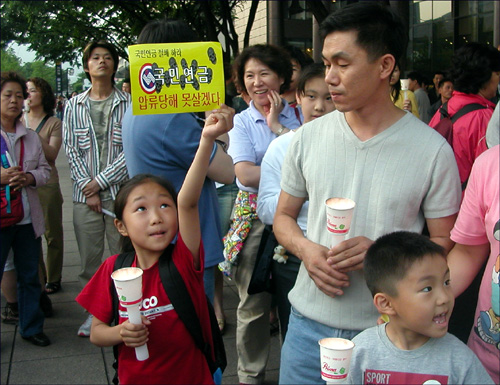
(As of the second half of 2026,
the most contested issue
in pension reform is
the introduction of the Basic Pension,
and what set it in motion was the
November 6, 2005
column by Professor Kim Yong-ha
in OhmyNews.)
The Basic Old-Age Pension Is a Defective Knockoff of the Basic Pension
Discussion of public pension reform has now been going on for more than three years, yet no breakthrough has been found. On the surface it looks as though the side arguing for the fiscal stabilization aspect and the side arguing for universal benefit adequacy are in opposition, but fiscal stabilization and universal benefit adequacy are both important, and a pension reform plan must take both into account.
The dual-track reform plan for the public pensions is this: through the Basic Pension, to ensure that anyone who is a citizen of the Republic of Korea is guaranteed the minimum income needed in old age, and through the earnings-related pension, to allow each person to design for old age in accordance with the particular characteristics of his or her occupational sector.
Here the Basic Pension is to be built in the form of 'one pension per person,' so as to respond to future changes in family structure, while the purpose of the earnings-related pension, in the form of 'one pension per earner,' is to allow people, through additional contributions, to prepare with greater latitude the funds they will need in old age.
This is meant to remedy a defect in the current public pensions: they are so arranged that only those enrolled in a public pension can receive the benefit of the enormous intergenerational income transfers, so that a person who has no income and therefore cannot pay pension contributions can receive no income transfer from future generations either.
"For Those Who Contribute Less Than 15 Years, a Level Below the Minimum Cost of Living"
In this respect, the Basic Pension system of 'one pension per person' can be described as a system that enhances the fairness of income transfers across generations. The Basic Pension therefore carries a significance that goes beyond a simple pension system: it transforms the burden of supporting parents, formerly borne at the level of the individual family, into a social system in which the working generation jointly supports the older generation.
What is pointed to as a problem with the Basic Pension is the excessive burden it places on future generations. This is because the Basic Pension is operated on a pay-as-you-go (PAYG) basis, and is therefore directly affected by population aging. The share of the population aged 65 and over stands at around 9% as of 2006 but will rise to around 37% by 2050, so the burden on the working generation will increase by that much.
However, the increase in the Basic Pension's burden is not a problem of the system itself, but merely reflects the increased burden that future generations will face as they confront an aging society.
Under the current National Pension system, or under the government's pension amendment bill, by 2050 those who have paid contributions for longer than a certain period will be able to receive a pension. Older people able to receive a pension are expected to number around 60% of all older people. Those who have not been insured for more than about 15 years, however, will receive an amount below the minimum cost of living even if they do receive a pension.
By then the finances of the National Pension will gradually shift into a structure that cannot be sustained on a contribution rate of 15.9%. A contribution rate of more than 30% will become necessary. Quite apart from this, our society contains a stratum that receives no income security from the National Pension or any other public pension, and a stratum that, even when it does receive such security, receives less than the minimum cost of living.
The Lower Strata Can Sort Out Their Own Old Age?
The problem lies in the fact that these strata are almost entirely the lower strata. If the problem of those with no pension and those on a low pension is to be solved by a scheme in the nature of public assistance, there too an amount corresponding at least to the minimum cost of living will have to be paid. Were that to happen, the state's burden of supporting older people, combining the cost of the public pensions and of public assistance, would become far higher than the budget for a Basic Pension.
For the public pension system to remain, as it is now, a system only for those able to pay contributions, a fundamental premise is required: one must draw out in pension only as much as one has paid in contributions. If instead the public pensions are so structured that people pay in little and receive much, shifting the burden onto future generations, then whether or not a person has paid contributions cannot be used as the sole yardstick of income security.
The main target strata of the public pensions at present are the middle and upper strata. The upper strata, however, are a group that can get by on their own even without a public pension. A social security system under which future generations shoulder a heavy burden to secure the income of these people, while the lower strata are told to fend for themselves and, failing that, to make do with public assistance, cannot bind the whole citizenry into a community of shared fate.
The burden of the Basic Pension is not the same as a cost burden such as general administrative expenditure. Because payment of the Basic Pension leads to a reduction in the burden households bear in supporting older people and people with disabilities, it has the effect of improving the inequitable structure under which, as at present, the burden is concentrated solely on households that include an older person or a person with a disability, by having the members of society share the burden of supporting older people and people with disabilities together.
If We Want a Sustainable Social Contract, Start With National Consensus
The Basic Old-Age Pension recently put forward by the government and the Uri Party is a proposal to pay a pension of 70,000–100,000 won, funded by taxes, to 60% of people aged 65 and over. This proposal appears at first glance to resemble the Basic Pension, but it is nothing more than a 'defective knockoff.' To begin with, the purpose behind introducing the Basic Pension lies in maximizing the effect of national integration by providing universal minimum income security to all older people.
Under the party-government agreement, however, the pension amount differs even as between high-benefit recipients of the Government Employees Pension, the Military Pension, the Private School Teachers Pension and the like; low-benefit recipients of the National Pension; recipients under the National Basic Living Security System; those in between who have no pension and receive nothing at all; and recipients of the Basic Old-Age Pension, so that there is a strong risk that a social security pension will instead amplify conflict among the public.
If a welfare state is defined as a state in which the problems of life are not left entirely to the individual, but the minimum problems necessary for a life of human dignity are solved together by all citizens, then the Basic Pension system is meant to build the framework of a welfare state by having citizens jointly confront social risks such as old age or disability.
What we need in this present age lies in the question of what social contract the older generation and the working generation are to conclude for intergenerational support that remains sustainable even in an era of population aging. Agreement must be built, step by step, on the concrete level of pension benefits, the level of the cost burden, and the methods for achieving them.

▲Professor Kim Yong-ha
Because the current public pension is a set of rules created, without any procedure of social consensus, in an era when the policymaking process was government-led, a new national consensus must now be drawn out at this point in time, when ordinary citizens too have come to understand what the pension system is.
This is a moment to reflect anew on the koan the Venerable Beopjeong posed: <Sharing is how we can become one, and both those who share and those who receive are filled.>
https://m.ohmynews.com/NWS_Web/Mobile/at_pg.aspx?CNTN_CD=A0000371357


