
A Position on the Solution for the Basic Pension (Seo Sang-mok, former Minister of Health and Welfare. March 13, 2026)
- #연금특위
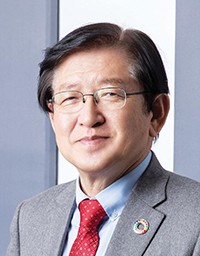
At the Pension Committee's Advisory Committee meeting held at the National Assembly on March 13, 2026, there was a sharp exchange regarding the Basic Pension overhaul.
(We are posting, in the Pension Future Forum website's resource archive, the opposing positions on the direction of the Basic Pension overhaul that were carried in the same outlet — 100 Se Sidae (The Age of 100) —
First,
we include the column by former Minister of Health and Welfare Seo Sang-mok, arguing that “the Basic Pension's coverage should be expanded to include all older people, and the National Pension should be converted into a proportional pension.”)
Reform of the Basic Pension can broadly be considered along the following two directions.
The first is a proposal to narrow the recipients to poor older people while instead raising the pension level.
This is the prescription of economic experts such as the Korea Development Institute (KDI), but the following counterarguments can be raised.
First, there is the issue of how to define the relationship with, and the overlap with, the existing National Basic Living Security programs for the poor.
With the enactment of the 'National Basic Living Security Act' in 1998, various programs for the poor are already being carried out, so the question is whether it is really necessary to add the Basic Pension on top of these.
However, a more difficult problem than this is the discontent of older people that would result from narrowing the Basic Pension's coverage.
In particular, given that the Basic Pension has, until now, mainly been used as an electoral strategy to win the support of older voters,
narrowing the Basic Pension's coverage is judged to be a policy proposal with very low political feasibility.
The second direction for Basic Pension reform is to expand its coverage to all older people and make its relationship with the National Pension clearer.
(Excerpt omitted)
Because Korea chose a Bismarckian social insurance system when introducing its public pension system, and in the concrete design process referred extensively to Japan's experience in particular,
we also need to refer to the experiences of Japan and Germany in setting the direction of our own Basic Pension reform.
Japan's public pension system has a two-tier structure consisting of the National (Basic) Pension, covering all citizens aged 20 to 60, and the Employees' Pension (Kosei Nenkin), covering employees.
For the Basic Pension, both the contribution and the benefit are flat-rate amounts, and the benefit is proportional only to the length of the enrollment period.
(Pension Future Forum Comment:
1. The Japanese Basic Pension referred to in this column — the National Pension — unlike our own Basic Pension, which is financed entirely through tax revenue, is premised on the payment of contributions during the working years, and is paid as a matter of right on that basis.
2. The Pension Future Forum can propose a Basic Pension overhaul plan that could be politically acceptable!)


