
(Edaily Report on the Pension Future Forum) The Basic Pension Keeps the 'Bottom 70%' Standard... Civic Groups Unanimous: 'Reform Falls Short' (September 1, 2026)
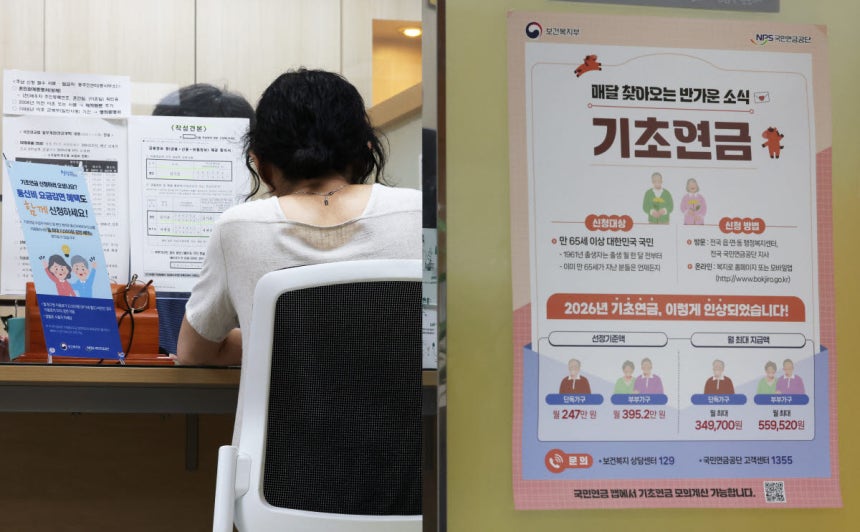
Keeps the bottom-70% eligibility threshold unchanged;
gives the bottom 30% a differentiated 370,000 won a month, but
"protection for poor older people isn't made more generous...
intergenerational equity problem" criticized
“Previous administration’s pledge of 400,000 won Basic Pension
being reversed” some also say
Civic groups and other organizations are raising objections to the government’s decision, in the ‘2027 Budget’ announced on the 1st, to keep the plan of paying the Basic Pension to the bottom 70% by income.
This is because, although discussion of the Basic Pension overhaul began with the aim of concentrating funds on impoverished older people, little sign of a solution has emerged.
In a statement released the same day, the Pension Future Forum’s Future Generations Network pointed out that “of next year’s budget, the Basic Pension budget alone will grow by 2.6 trillion won,” adding that “every decision to spend more has survived intact, while only the reform meant to correct who receives it has been erased.”
The Ministry of Health and Welfare announced an overhaul plan in this year’s budget that pays the Basic Pension to the bottom 70% of older people by income while differentiating the amount by income band. Those in the bottom 30% will receive 380,000 won, those from the 30th to the 45th percentile will receive 359,000 won, and those from the 45th to the 70th percentile will receive 350,000 won.
Also announced was a plan to reduce the reduction rate for low-income beneficiaries (bottom 45%) in couple households to 10%, and to pay the Basic Pension to low-income beneficiaries (bottom 45%) among recipients of the special occupational pension schemes.
The Future Generations Network stated, “This Basic Pension reform began not with ‘how much more to pay’ but with ‘to whom to pay it,’” and added, “The starting point of the reform discussion was to fix the 70% standard, which is out of step with reality, to rationally adjust who is eligible, and to use the savings to provide more generous protection for older people in need. But that core point has disappeared.”
It also pointed out that intergenerational equity cannot be guaranteed either.
The Future Generations Network said, “The Basic Pension is funded by taxes, not by an accumulated fund,” adding, “Young people must bear higher contributions under the National Pension while also shouldering the growing fiscal burden of the Basic Pension driven by population aging.”
It went on to say, “There are 1.17 million older people with a recognized income of zero won, yet under the same system, even older people with more than 2 million won a month receive a similar benefit — and this approach of giving everyone a little more is being called reform,” adding that
“They have abandoned the structural reform needed to help the poorest older people properly, while passing on nothing but its cost to the next generation,” it added.
![(연금연구회 성명서 보도. 노컷뉴스) [칼럼] 연기금 카지노 책임론?…'쉬운길' 선택의 결과일 수 있다 (2026.10.20.)](/_next/image?url=%2Fuploads%2Feditor%2F2026%2F10%2Fc6f13b0799b440d0874a9f72413c6f58-0004200449_003_20261020063615439-1.jpg&w=128&q=75)
![(연금연구회 성명서 보도. 중앙일보) [취재일기] 국민 노후보다 코스피를 지킨 국민연금 (2026.10.19. )](/_next/image?url=%2Fuploads%2Feditor%2F2026%2F10%2F7e92f70b0ec843bbb869a4cf46b01f72-0003558751_001_20261019052229249.jpg&w=128&q=75)