
Mobilizing Pension Funds to Defend the Exchange Rate Exposed a Vulnerability to Speculators
- #연금특위
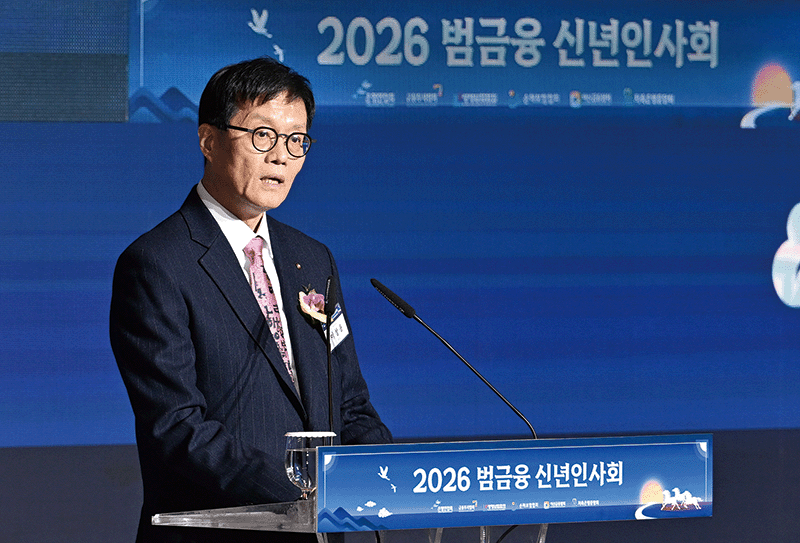
Bae Gwan-pyo, Professor at the Graduate School of National Policy at Chungnam National University and a civilian member of the advisory committee to the National Assembly Special Committee on Pension Reform, warned that this measure could set a dangerous precedent that fundamentally shakes public trust in the pension system.
Professor Bae observed, "At a time when distrust of pensions already runs deep amid low fertility and population aging, mobilizing the public's old-age savings as a policy instrument without public consent is a stark illustration that the fund's independence has gone missing."
He went on to note that "although a range of regulations and guidelines exists to safeguard the fund, the fact that the intervention proceeded without sufficient deliberation is a factor that erodes institutional trust," pointing out that the pension fund's decision-making structure is not free from state-directed control.
Professor Bae also flagged the enormous opportunity cost and the questionable effectiveness that this intervention would entail. "By locking up dollars to defend the exchange rate," he explained, "the fund was categorically shut out of the additional investment returns it could otherwise have earned," adding that "the unseen economic losses are likely to be substantial."
He further stressed, "This is an expedient born of necessity that repeats the old practice of mobilizing national assets whenever an economic crisis strikes, but a stopgap that turns a blind eye to the structural problems can, in the end, only yield short-term effects."
![(연금연구회 성명서 보도. 노컷뉴스) [칼럼] 연기금 카지노 책임론?…'쉬운길' 선택의 결과일 수 있다 (2026.10.20.)](/_next/image?url=%2Fuploads%2Feditor%2F2026%2F10%2Fc6f13b0799b440d0874a9f72413c6f58-0004200449_003_20261020063615439-1.jpg&w=128&q=75)

![(연금연구회 성명서 보도. 중앙일보) [취재일기] 국민 노후보다 코스피를 지킨 국민연금 (2026.10.19. )](/_next/image?url=%2Fuploads%2Feditor%2F2026%2F10%2F7e92f70b0ec843bbb869a4cf46b01f72-0003558751_001_20261019052229249.jpg&w=128&q=75)