(KBS TV News) Retirement Age Raised to 60 — National Pension and Health Insurance Benefits ↑ April 30, 2013 (7:16 a.m.)
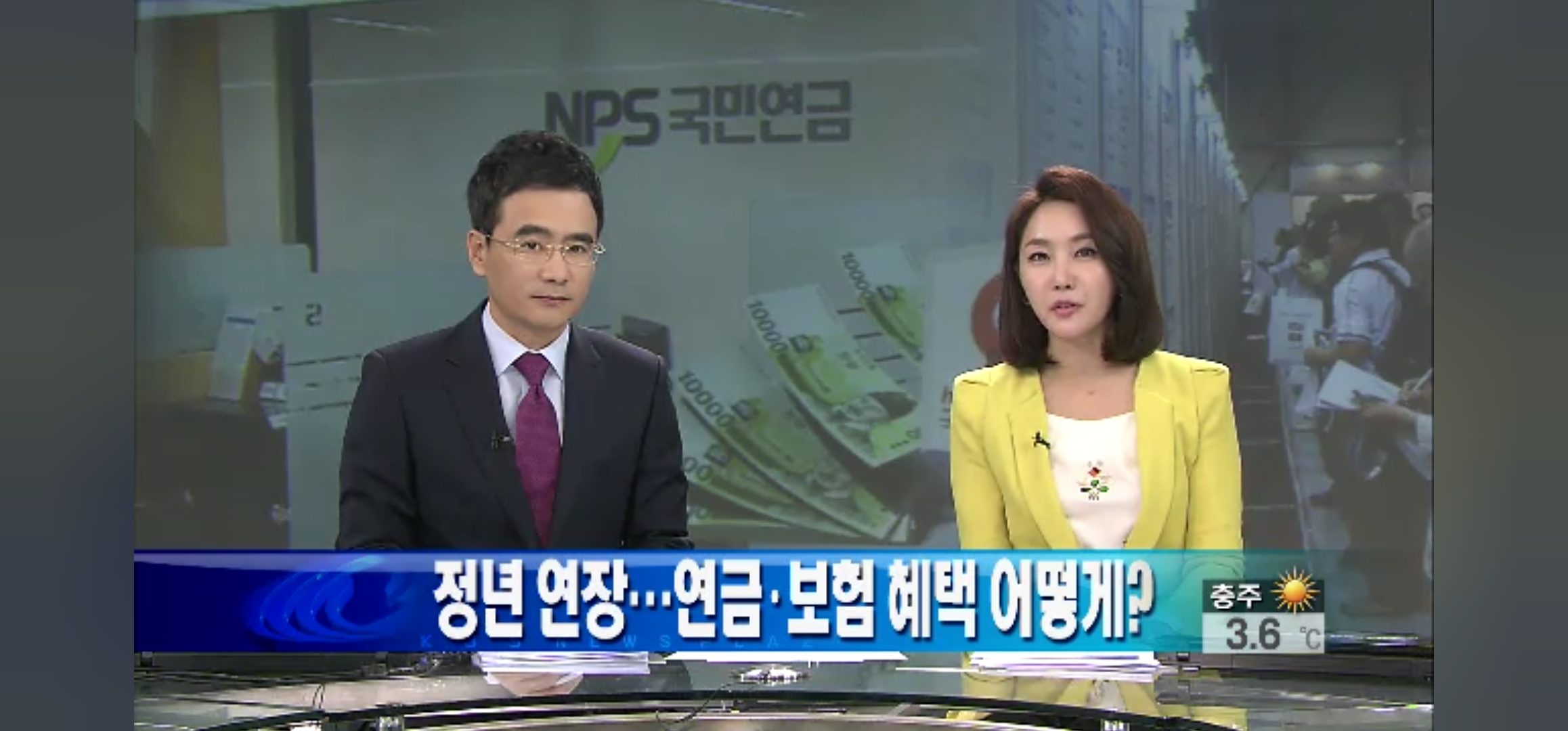
Anchor
Anchor
Three years from now, the era of a higher retirement age will arrive, will it not?
If the retirement age is raised to 60, the period of paying into the National Pension and the National Health Insurance will naturally grow longer.
As a result, the benefits contributors can receive will also grow larger.
Reporter Mo Eun-hee looked into how much people can receive, and how.
This is a team leader in their 40s who works at a cosmetics company.
The news of a higher retirement age is welcome, but the sense of being at a loss over when to retire and what income will look like remains unchanged.
<Interview> Jeong Hae-young (44): “I feel a great deal of anxiety about old age, and I have many uncertain thoughts about the future.”
Jeong has paid National Pension contributions since 1994.
How will the pension amount change from here?
Assuming departure from the company at 53, Korea’s average retirement age, Jeong would pay contributions for a total of 310 months and receive about 890,000 won a month.
By contrast, if the retirement age is raised to 60 and Jeong pays that much more in pension contributions, the expected pension would be 200,000 won higher, at some 1.1 million won.
Paying contributions for longer naturally means receiving more money.
Because the National Pension uses the average income over the entire contribution period as its basis, the amount received changes little even if a wage peak system is introduced.
The predicament of struggling for years with no income between retirement and the start of the National Pension will also ease.
That is because, once the retirement age of 60 takes effect from 2016, the pension will be paid almost as soon as people retire.
<Interview> Yun Suk-myung (Director of the Pension Research Center, Korea Institute for Health and Social Affairs):
“If the retirement age is extended to 60, I think this polarization of old-age income, particularly in the National Pension, could be reduced significantly.”
The benefits extend to health insurance contributions as well.
Because employers pay half of health insurance contributions, it has the effect of reducing the burden of paying 100% after retirement.
The problem is whether private companies, which account for the overwhelming majority of employment, will really honor the higher retirement age.
This has been Mo Eun-hee, KBS News.
Attachments
- Screenshot_20261122_024029_Samsung Browser.jpg(756.3 KB)ViewDownload
- Screenshot_20261122_023941_Samsung Browser.jpg(648.1 KB)ViewDownload
- Screenshot_20261122_023955_Samsung Browser.jpg(533.9 KB)ViewDownload
- Screenshot_20261122_024237_Samsung Browser.jpg(674.2 KB)ViewDownload
- Screenshot_20261122_024358_Samsung Browser.jpg(892.3 KB)ViewDownload