
(JTBC) Government Employees Pension: Pay a Little More, Receive Less — “A Reform That Fizzled Out” (May 2, 2015)
[Anchor]
So how will the contributions civil servants pay and the pensions they receive actually change? When we ran the numbers, the structure turned out to be “pay a little more, receive somewhat less,” and critics say this falls short for a reform plan that emerged after such long labor pains.
Reporter Lee Sang-hwa reports.
[Reporter]
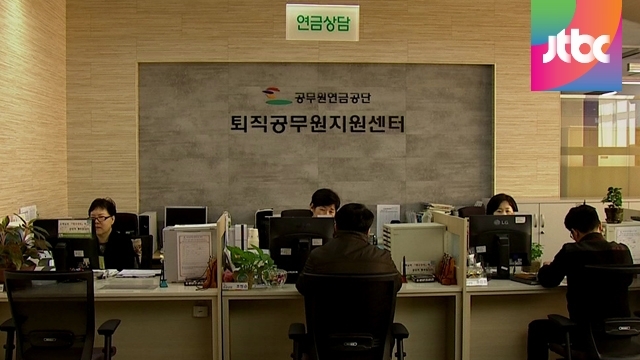
Let us calculate the contributions and pension of a civil servant who received an average monthly salary of 3 million won over 30 years of service.
As the contribution rate is raised from 7% to 9%, the monthly contribution rises by 60,000 won, from 210,000 won to 270,000 won.
On the other hand, the accrual rate, the figure that adjusts the pension amount received after retirement, falls by 0.2 percentage points from 1.9% to 1.7%, so the pension decreases by 180,000 won, from 1.71 million won to 1.53 million won.
Accordingly, the income replacement rate, the pension level relative to the current salary, also falls from 57% to 51%.
However, critics point out that because the accrual rate is lowered in stages, by an average of 0.01 percentage points a year over 20 years, the fiscal savings effect originally expected is minimal.
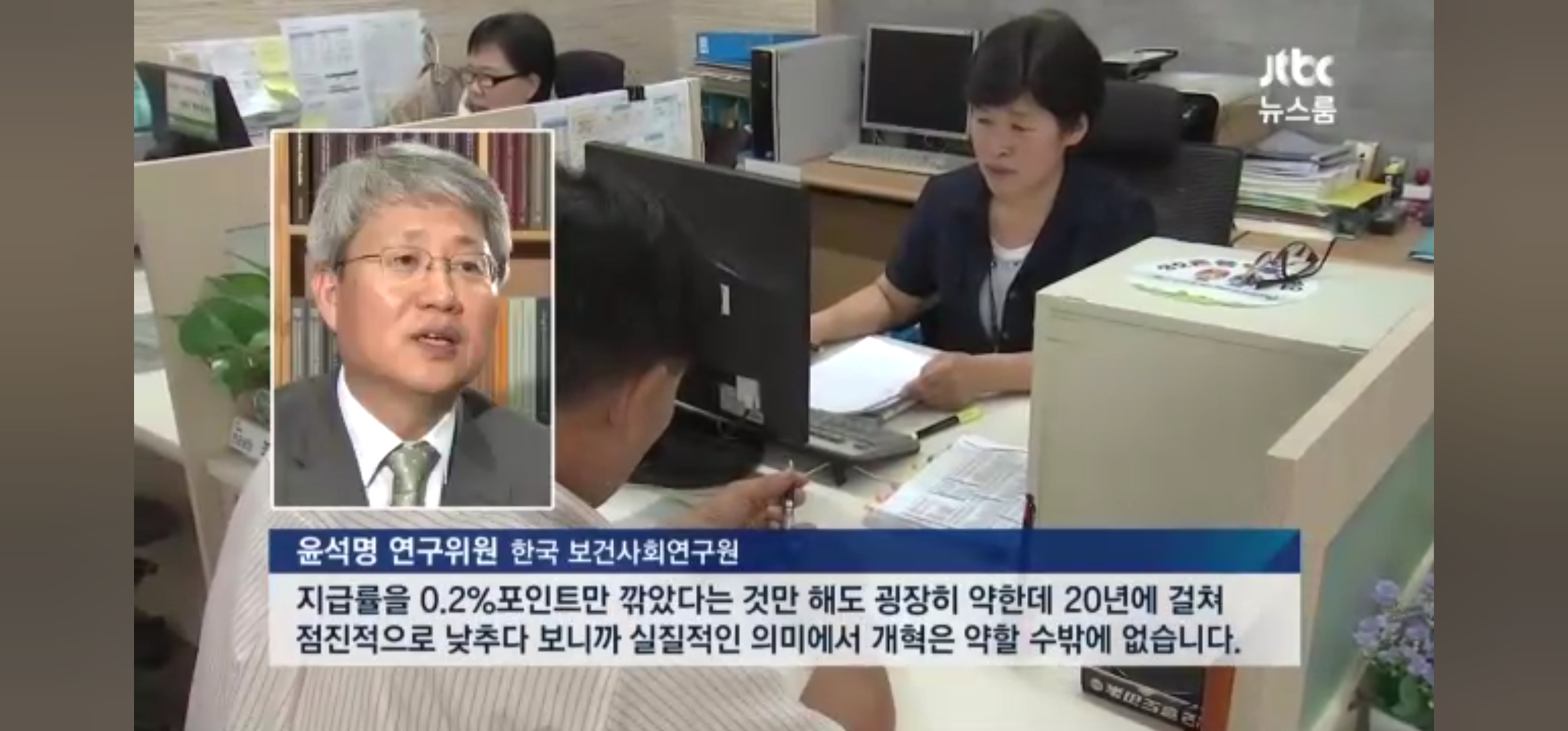
[Yun Suk-myung, Research Fellow / Korea Institute for Health and Social Affairs: Cutting the accrual rate by only 0.2 percentage points is already very weak, and because it is lowered gradually over 20 years, the reform can only be weak in any real sense.]
Moreover, in narrowing the gap between the National Pension and the Government Employees Pension, the primary goal of the Government Employees Pension reform,
it is assessed to have failed as well.
Assuming the same average monthly salary of 3 million won and 30 years of contributions, a civil servant receives 1.53 million won, whereas an ordinary citizen receives only 900,000 won.
Since the first reform in 1995, the approach of merely adjusting the figures without fundamental reform has been repeated four times, and it seems hard for this Government Employees Pension reform, too, to escape the criticism that it started big and fizzled out.
Attachments
- Screenshot_20261116_030934_Samsung Browser.jpg(762.2 KB)ViewDownload
- Screenshot_20261116_031000_Samsung Browser.jpg(348.7 KB)ViewDownload
- Screenshot_20261116_031016_Samsung Browser.jpg(351.4 KB)ViewDownload
- Screenshot_20261116_031024_Samsung Browser.jpg(341.3 KB)ViewDownload
- Screenshot_20261116_031031_Samsung Browser.jpg(639.7 KB)ViewDownload
- Screenshot_20261116_031042_Samsung Browser.jpg(739.8 KB)ViewDownload
- Screenshot_20261116_031056_Samsung Browser.jpg(526.8 KB)ViewDownload
- Screenshot_20261116_031107_Samsung Browser.jpg(646.6 KB)ViewDownload
- Screenshot_20261116_031130_Samsung Browser.jpg(569.7 KB)ViewDownload
- Screenshot_20261116_031134_Samsung Browser.jpg(443.8 KB)ViewDownload
- Screenshot_20261116_031140_Samsung Browser.jpg(384.8 KB)ViewDownload

![(KBS TV. 이슈&뉴스] 공무원 연금, '세금 먹는 하마'?...'사회적 합의' 절실 (2013년 10월 23일)](/_next/image?url=%2Fuploads%2Feditor%2F2026%2F11%2Fcfe4824d207e450c8cad3a7c73e2fb04-Screenshot_20261122_221550_Samsung-Browser.jpg&w=128&q=75)