(OhmyNews, August 25, 2025) The Welfare Policy Map Drawn by the State Affairs Planning Committee… What Will It Take for the Lee Jae-myung Administration's 'Blueprint' to Work? [Social Korea]
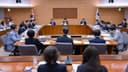
The Lee Jae-myung administration's plan for running state affairs over the next five years was released on the 13th. Its No. 1 task is constitutional amendment, and 123 tasks were presented, including reform of the power agencies and an equal-pay-for-equal-work policy. It is the result of two months' work by the State Affairs Planning Committee (the "Committee"), which said 210 trillion won in funding will be needed. These tasks are expected to be finalized later, after various discussions and a final review by the government.
Besides the public version, the national agenda also exists in a non-public version, the "detailed implementation plan," which spells out in detail not only concrete policy directions but also the missions the responsible ministries must carry out, such as year-by-year implementation schedules and risk management. In effect it serves as a "five-year policy map." Drawing on my experience of taking part in the process by which that map was drawn up at the Committee, I would like to discuss, with a focus on welfare policy, what the tasks are and what the points of contention and limitations are.
Community-based integrated care: regional disparities are the key
One of the core welfare policies this administration will push forward is "community-based integrated care" (hereafter "integrated care"). In Korea, which has already become a super-aged society, the greatest social risk is insecurity in old age, accompanied by crises of health and care. The aim of integrated care is to provide medical treatment and long-term care together, so that older people can go on living within the radius of their own daily lives.
The core of integrated care is to provide in an integrated way the various services — long-term care, medical care and services within the community — that have so far been designed and run in fragments, and to rebuild the capacity and authority of local governments, which have failed to perform any real function in the lives of local residents.
With the full-scale program scheduled to launch in March next year, the Committee created a body within the Ministry of Health and Welfare to oversee integrated care, including a pan-government policy task force to back integrated care responsibly. At the same time, it plans to actively fund the development and expansion of universal services for the first two years, and thereafter to differentiate budget support based on performance. It also laid the groundwork for supporting local governments in implementing policy efficiently. Dedicated units are to be set up at the city, county and district level, so that dedicated staff can be expanded substantially and existing community resources such as public health centers can be put to active use.
On the content of services, too, the plan expands existing home-based services and integrated home-care providers, and provides for home-based medical care and home nursing, home-visit rehabilitation and home-visit nutrition, and services for discharged patients. There were also discussions on supplementing the quantity and variety of services, which have so far been insufficient. Discussions on building cooperative relationships with the social insurance agencies (the National Health Insurance Service, the National Pension Service and others) and on the role of the Social Service Agencies in areas with weak service infrastructure are to be reviewed later.
The plan also includes ways to use various models of supportive housing for elderly care, such as "care-safe housing" and "halfway houses" for discharged patients. Eligibility is to be expanded within the term from older people to persons with disabilities and people with mental illness as well.
Although various measures were proposed, there are also points of concern. In the end, what matters for integrated care is that each element fits together well: ▲active administration by local governments ▲thorough identification of recipients' needs and smooth linkage to services ▲a sufficient variety and quantity of services within each region.
Measured against our reality, however, it is very hard to be confident that these will actually be possible. There is a strong chance that adequate services will be provided in sufficient measure only by local governments with strong overall capacity, while problems deepen elsewhere. The challenge for integrated care, therefore, is expected to be whether the problem of regional disparities can be properly resolved.
Public pensions: expanded state responsibility declared, and the battlefield shifts to the fund
One of the welfare keywords that generated the most heat last year was "pension reform," and it, too, has been included in the national agenda. The adjustment of the National Pension's "income replacement rate and contribution rate," debated for more than a decade, was settled in the 22nd National Assembly at a 43% income replacement rate and a 13% contribution rate, following citizen-participation public deliberation at the end of the 21st National Assembly, and there was also meaningful progress, such as the expansion of various credits and the codification of the state guarantee of benefit payment.
On this foundation, the Committee focused on further expanding public responsibility for old-age income and on ways to guarantee real old-age income. To ease young people's distrust of the pension, it decided to introduce new "support for young people's first-ever contributions." It also included reform proposals such as recognizing the military service credit for the entire period of service and applying the childbirth credit immediately at birth, and stated that it will pursue various efforts to close coverage gaps, such as contribution support for low-income individually insured contributors, including special-type workers.
The plan for running state affairs also includes improvements to the reduction of National Pension benefits for working older people and to the reduction of the Basic Pension for couples. It also states that tasks for building a multi-tiered old-age income security system will continue to be pursued in conjunction with the discussions of the National Assembly Special Committee on Pension Reform. While the will to strengthen state responsibility is clear, matters concerning the National Pension's finances and fund management were also selected as a separate task. This was not a pledge during the presidential election but was taken up in the course of discussing the national agenda. In particular, it covers ▲strengthening the role of state finances ▲raising returns and strengthening the fund's social responsibility, and it draws attention in that future social debate over pensions has become more likely to play out over the "fund" rather than over the system.
First, "strengthening the role of state finances" means, literally, expanding the state's substantive role in the National Pension's finances. Under the National Pension Act, the state merely "calculates" the finances and has injected almost no general revenue into the National Pension, evading substantive responsibility. Compared with health insurance, where the state has secured fiscal stability by providing a legally fixed level of state subsidy every year, the state has all but neglected the National Pension's finances. As a result, the fear marketing of the fund-depletion narrative ran rampant for more than a decade. Through this discussion, considerable debate will follow over how far the state's responsibility extends within the future financial structure.
"Raising returns and strengthening the fund's social responsibility" can be seen as meaning measures to comprehensively review and implement ways for each of the National Pension's asset classes to keep achieving excess returns, while ensuring that, in line with the stance of responsible investment, all asset classes are managed according to ESG principles (a term combining the initial letters of Environmental, Social and Governance, referring to the three core elements for achieving sustainability).
Stewardship activities in particular (a series of activities to manage the public's assets stably and to carry out the exercise of shareholder rights and responsible investment transparently in order to raise the value of those assets) can be seen as implying a major change. With regard to defending management control of chaebol conglomerates and responding to environmental and social issues, the National Pension's stewardship activities have run directly against their interests, and since the intent is to strengthen them further, the discomfort from capital's standpoint will only grow.
Among the matters discussed in the course of drawing up the national agenda, there was also a view that the National Pension's social investment needs to be considered. The National Pension Fund has been understood mainly as a "trust fund" and has focused simply on internal financial returns, with the result that it has invested 99.9% in the financial sector alone. The progressive camp has taken issue with this trend, arguing that the National Pension should also play the role of "social investment capital."
The concern is that in a situation like Korea's, where care and housing conditions are unstable and considerable funds are tied up in the real estate market, if the National Pension paid attention to social returns and invested a portion in public infrastructure such as rental housing, hospitals and care facilities, it could help, if only a little, to resolve the current problems. This was discussed at the Committee as well but could not be made official. Still, there appears to remain room for it to be fully reviewed and pursued later by the Lee Jae-myung administration.
How far has the Lee Jae-myung administration's vision of a "Basic Society" come?
The "inclusive welfare state" presented as the social policy vision at the launch of the Moon Jae-in administration was somewhat vague in meaning. Although the phrase "inclusive welfare state" was included at the stage of drawing up the national agenda at the time, there was no detailed explanation of what it implied or what its concrete strategy was. The Policy Planning Committee, set up afterward, put the controversy to rest by presenting a reform vision of an "innovative inclusive state," covering not only social policy but also economic policy, along with its tasks.
The new administration's welfare vision could be called the "Basic Society." It is a vision aimed at guaranteeing human dignity and worth and the right to pursue happiness, which can be described as constitutional rights. Through four major strategies, such as "services everyone enjoys without conditions," and ten core tasks, such as basic care, basic healthcare, basic housing and basic telecommunications, it aims for "a society where everyone is happy through a guaranteed basic life." In addition to a Basic Society Committee under the President, regional committees are to be set up at the provincial and city, county and district levels to draw up Basic Society master plans and strategic tasks and to work with civil society.
The key to pursuing the Basic Society is governance. In this regard, controversy may arise that the newly created Basic Society Committee could duplicate the functions of the existing Social Security Council. However, since the Basic Society Committee aims at a comprehensive approach that deals with a broader agenda and includes local governments, it is expected to enable more comprehensive policy discussion and planning than the Social Security Council, which simply serves as a meeting body chaired by the Prime Minister.
Yet there is no small skepticism about whether the Basic Society Committee can play a substantive role. While the vision of a "Basic Society" carries great declaratory significance in terms of guaranteeing constitutional rights, a sufficient explanation of what concrete tasks it will take on should also be presented to the public at an early date. For instance, it would be worth considering loading it with weighty strategic tasks that could significantly affect people's lives — at a minimum, ratifying the International Labour Organization's Social Security (Minimum Standards) Convention (No. 102) — so as to achieve real progress. It is also important to maintain balance in the composition and operation of its governance by involving experts from various fields and civic groups.
Welfare needs more of a helping hand from citizens
As always, the tasks of a newly launched administration are drawn up and presented with great ambition, but looking back as the term draws to a close, the results have often been so meager as to disappoint. It is true that there is much concern that this pattern may repeat itself, especially in the face of the compound crises Korean society must now work its way through. Integrated care, pensions and the Basic Society discussed above are also extremely difficult tasks, and I expect they will be hard to resolve through the efforts of a handful of politicians and bureaucrats in particular ministries alone.
If I may venture a suggestion, for the welfare map the new administration has drawn to actively serve as a guide, its purpose and process must be clearly set. It must be made clear that the purpose of the new administration's welfare policy lies in improving citizens' lives and benefiting society as a whole. At the same time, in the stages of implementing and developing policy, it must also show itself cooperating and sharing views with on-the-ground experts in each field, labor unions, civic groups and others. Last winter's impeachment and the June presidential election were both made by citizens. I hope welfare policy, too, will be recorded as a history of success built together with citizens.
About the author: Kim Jeong-mok is a labor movement activist in charge of social policy at the Federation of Korean Trade Unions (FKTU). Since joining the FKTU in 2014, Kim has worked on issues such as the welfare state, pension reform and care. Kim has sought to advance workers' interests as a member of various government committees, including the Committee on Improving the Social Safety Net of the Economic, Social and Labor Council, the National Pension Review Committee and the Health Insurance Appeals Committee. Recently, Kim has been focusing on exploring alternatives for realizing a welfare state through various activities, including as head of the Youth Task Force of the Public Pension Strengthening People’s Action and as a member of the Social Korea editorial board.
https://n.news.naver.com/article/047/0002485298?sid=10