(Newsis Report, October 13, 2026) [Exclusive] Paid 8.33 Million Won, Received Over 100 Million Won… 20,000 National Pension 'Tenfold Beneficiaries'
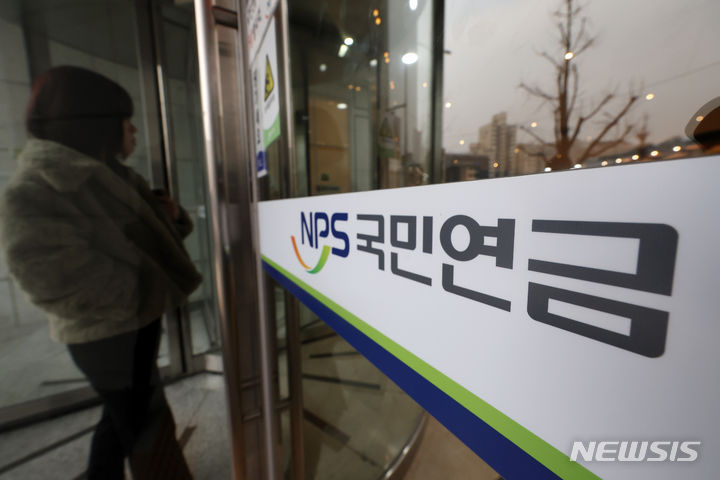
Representative Choi Bo-yoon releases data submitted by the National Pension Service
[Seoul=Newsis] Reporter Koo Mu-seo — It has emerged that nearly 20,000 of the insured paid less than 10 million won in National Pension contributions yet have received more than 100 million won in benefits.
According to data that Representative Choi Bo-yoon of the People Power Party, a member of the National Assembly Health and Welfare Committee, obtained from the National Pension Service and released on the 13th, 19,972 people have received more than 100 million won in pension benefits despite having paid 10 million won or less in contributions.
On average, they paid 8.33 million won in contributions and received a total of 111.9 million won in pension benefits over 260 months. In other words, they received more than ten times what they paid in contributions over their lifetimes.
Pension receipts on this scale are attributed to the effect of enrolling in the scheme's early years.
When the National Pension was introduced in 1988, it started with a 3% contribution rate and a 70% income replacement rate, partly to encourage enrollment.
Today, 10 years (120 months) of contributions are required to qualify for benefits, but in the scheme's early years a special old-age pension scheme, under which a pension could be drawn after a contribution period of only five years, was also operated on a temporary basis until 1999.
Yun Suk-myung, Research Fellow Emeritus at the Korea Institute for Health and Social Affairs (KIHASA), said, "Two pathways likely contributed: people who enrolled in the early years, when the income replacement rate was high, and people who have kept receiving a pension through the special pension," adding, "The number of insured persons who receive more in pension benefits than they paid in contributions will keep growing."
According to the data, at least 3,260,147 people have received more in National Pension benefits than they themselves paid in contributions. Of the 758,893 people who paid 10 million won or less in contributions, 202,486 received 50 million won or more in pension benefits, 104,156 received 40 million won or more, 105,168 received 30 million won or more, 124,938 received 20 million won or more, and 118,630 received 10 million won or more.
Of the 2,059,542 people who paid more than 10 million won and up to 20 million won in contributions, 1,294,563 received more than 20 million won in pension benefits. Of these, 329 received more than 200 million won.
Among those who paid more than 20 million won and up to 30 million won, 555,232 of 1,016,145 received more in pension benefits than they paid in contributions; among those who paid more than 30 million won and up to 40 million won, 268,774 of 509,080; more than 40 million won and up to 50 million won, 184,720 of 317,526; more than 50 million won and up to 60 million won, 81,404 of 230,268; and more than 60 million won, 205,256 of 621,832.
Broken down by contributions paid, beneficiaries who received 100 million won or more in pension benefits were most numerous in the bracket of more than 10 million won and up to 20 million won, at 116,226, followed by more than 20 million won (111,749), more than 30 million won (98,256), more than 40 million won (86,560), more than 50 million won (81,404), more than 60 million won (71,233), more than 70 million won (62,534), more than 80 million won (46,944), more than 90 million won (24,545), 10 million won or less (19,972), and more than 100 million won (3,518).
As concerns over the financial sustainability of the National Pension were raised amid rapid population aging and low fertility, the contribution rate was changed to 13% and the income replacement rate to 43% through parametric reform and other measures. Even so, the financial future of the National Pension remains uncertain.
According to the National Assembly Budget Office's reply analyzing the National Pension's financial projections by scenario, if the current system is maintained, the National Pension's balance of revenues and expenditures will turn to deficit in 2050 and the fund will be depleted in 2069.
At a pension reform policy forum held at the National Assembly on the 28th of last month, voices were also raised that further reform is needed, as the contribution rate required to balance contributions and benefits while paying a 43% income replacement rate reaches 21.2%.
The additional reform options now under discussion include raising the upper age limit for enrollment and the age at which benefits begin, introducing an automatic adjustment mechanism, injecting state funds in advance, and improving investment returns.
Representative Choi Bo-yoon said, "We need to closely examine the benefit structure and the financial situation so that the National Pension can fulfill its original role of old-age income security while operating as a sustainable system over the long term,"
adding, "We must devise reasonable measures to improve the pension system that respond to rapid demographic change and also take into account the burden on future generations."
Reporter Koo Mu-seo ([email protected])