Pension Reform Deliberations — Focus on "Figures," Not "Ideology"
[Asia Today · Yun Suk-myung's Pension Reform Stories · October 14, 2024]
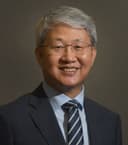
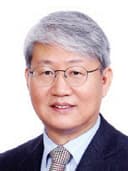
Yun Suk-myung (Research Fellow Emeritus at the Korea Institute for Health and Social Affairs (KIHASA), former President of the Korean Pension Association)
◇ Prime Minister Churchill's 'Principle of Balanced Revenue and Expenditure' for the National Pension in the UK
This is the assessment of a social welfare scholar observing the utterly absurd pension debate currently taking place in Korea. "At the time the UK introduced the National Pension in the early 20th century, Churchill supported the introduction of a social insurance system based on the 'principle of balanced revenue and expenditure'—a principle that seeks balance so that the total amount of contributions paid equals the total amount of pensions payable. This was because he understood that the sustainability of the pension system could only be guaranteed if 'actuarial soundness' was secured. In particular, he understood that in order to create a fiscally sustainable pension system from a long-term perspective, it is essential to ensure intergenerational equity and maintain a balance between revenue and expenditure to prevent fund depletion." This is a point frequently emphasized by Professor Kim Hak-ju of the Department of Social Welfare at Dongguk University, who is a member of the Pension Future Forum.
◇ Seeking "Burden for Others, Benefits for Me" Constitutes 'Legal Plunder'
Listening to the pension debate in Korea, especially the remarks of politicians, it seems they are advocating for the position that "we must shift the burden to others while we ourselves receive benefits, and receive them sufficiently." A representative example is the repeated demands from the political sphere, primarily the opposition party, to abide by the decision of the citizen representatives of the Public Deliberation Committee under the National Assembly Special Committee on Pension Reform last March. However, creating a system where one shifts the burden to others while seizing all the benefits for oneself—what is this if not the 'legal plunder' emphasized by the renowned economist Bastiat?
◇ The Government's Proposal for an Automatic Adjustment Mechanism Aims to Reduce 'Legal Plunder'
Jin Seong-jun, Chairperson of the Policy Committee of the Democratic Party, and others stated that the government's pension reform plan "goes against the national consensus to 'pay more, receive more' reached by the citizen representatives." Representative Kim Nam-hee of the Democratic Party and Representative Kim Sun-min of the Rebuilding Korea Party criticize the government proposal, claiming that the automatic adjustment mechanism will cut the pension amounts for young people more significantly, and that "the government plan focuses only on fiscal stabilization rather than old-age income security." In particular, they argue that "from the perspective of strengthening public pensions, it is difficult to accept an 'automatic adjustment mechanism intended to automatically cut pensions.'"
The reason for making such claims seems to be a failure to properly understand the background of the government's proposal for an automatic adjustment mechanism. This is despite the fact that it is intended "to reduce the disadvantages that young people and future generations will suffer, as the amount of pensions they would be legally plundered of could exceed imagination if the current National Pension system is left as is."
◇ Public Deliberation Committee Deleted "21.3 Percentage Point Gap in Contributions Between Generations" from Citizen Representatives' Learning Materials; Representatives Made Decision Unaware of This
Consequently, there is a need to re-examine the decision-making process of the citizen representatives. As Professor Kim Hak-ju emphasized, it is necessary to verify "whether they were sufficiently educated on the contents of pension reform that would allow for intergenerational equity and a balance between contributions and benefits, which are essential for creating a fiscally and politically sustainable pension system."
Under the '50% income replacement rate - 13% contribution rate' plan chosen by the majority of the citizen representatives, there is a difference of 21.3 percentage points in the lifetime National Pension contributions between those born in 2005 (14.8%) and those born in 2035 (36.1%).
The problem is that the citizen representatives made their decision without knowing this critical information. This is because the Public Deliberation Committee deleted this content, which was present in the initially printed learning materials, and the newly printed materials used to educate the citizen representatives omitted it. This fact was revealed by former Representative Yu Kyung-jun, the ruling party's secretary for the National Assembly Special Committee on Pension Reform. The following content is based on former Representative Yu Kyung-jun's press release titled 'Suspicious National Pension Citizen Representatives' Explanatory Material That Changed Within Three Days.'
◇ Citizen Representatives Likely Chose Without Knowing They Were 'Shifting More of the Burden to Future Generations'
The materials submitted by the Ministry of Health and Welfare included figures for the 'contribution rate for a balance between contributions and benefits' and the 'pay-as-you-go (PAYG) contribution rate' if the '50% income replacement rate - 13% contribution rate' plan chosen by the majority of the citizen representatives were adopted. The 'contribution rate for a balance between contributions and benefits' refers to the "contribution rate that makes the pension amount and contributions equal, assuming an individual joins the National Pension in 2024, contributes for 40 years, and receives a pension for 25 years."
In the case of '50% income replacement rate - 13% contribution rate,' "the 'contribution rate for a balance between contributions and benefits' is 24.8% if the contribution rate is immediately raised to 13% and the income replacement rate to 50% in 2024. This is 11.8 percentage points higher than the 13% contribution rate proposed for fiscal stabilization."
"The 'PAYG cost rate,' which refers to the contributions that the insured must pay in a given year to fund the pension payments for that year, will soar to 43.2% by 2078. This is 4.8 times higher than the 9% contribution rate paid since 1998." If the citizen representatives had learned this, would they have chosen the 'plan that shifts more of the burden to future generations,' unlike what they did before their education?
I have argued that they would not. This is also why the Pension Future Forum, to which I belong, held an emergency press conference in front of the National Assembly on April 3.
◇ 'Pension Reform Youth Action' Opinion Poll: Fiscal Stabilization Position (44.9%) 〉 Income Security Position (21.7%)
On October 13, the results of an opinion poll supporting this claim were released. These results were obtained through a survey of 1,001 citizens aged 18 and older, commissioned by 'Pension Reform Youth Action' — a gathering of youth organizations such as the 'Righteous Youth Alliance' — to a polling agency.
'Pension Reform Youth Action' asked respondents to choose the 'reform plan they most support among plans for the deficit-structured National Pension.' Options included 'focusing on increasing pension payments for income security (income security position),' 'focusing on reducing the debt of future generations for fiscal stabilization (fiscal stabilization position),' and 'resolving unfunded pension liability with the national treasury and abolishing the National Pension (National Pension abolition position).'
Forty-four point nine percent of respondents chose the fiscal stabilization position. Only 21.7% answered that the income replacement rate, which is 'the money received,' should be raised further to strengthen old-age income security. Twenty point seven percent supported the abolition of the National Pension. More than 'four out of ten' agreed that strengthening the pension finances is the top priority.
If those who supported the abolition position are considered to have done so with the intent of reducing the burden on future generations, the fiscal stabilization position reaches 65.6%. This is why 'Pension Reform Youth Action' interpreted the results as a far greater preference for fiscal stabilization over strengthening income security.
This is the exact opposite of the result from the public deliberation survey of the 21st National Assembly Special Committee on Pension Reform, where 500 citizen representatives chose the 'pay more, receive more' plan, which was the '50% income replacement rate - 13% contribution rate' plan.
◇ Opposite poll results depending on whether core information such as 'an unfunded liability of 1,800 trillion won' and 'a 35% contribution rate after fund depletion' is known
Why did opposite results emerge in just seven months? I judge that it is due to the difference in the information provided.
This is because the direction of pension reform was questioned after making respondents aware of the facts that 'more than 1,800 trillion won is insufficient compared to the promised pension amount (unfunded liability)' and 'the contribution rate will rise to 35% if converted to a pay-as-you-go system after fund depletion.'
This is the background for the conviction that whether core information is provided determines the direction of pension reform.
◇ The political sphere must also approach the pension issue through "figures," not "ideology"
This is the earnest advice of Professor Kim Hak-ju. "Experts must approach this with 'numbers,' not 'ideology.' The reform of the National Pension must be decided based on expert discussions grounded in data, rather than discussions buried in ideology."
When will our political sphere reach the level of Churchill's understanding of public pension operation, who supported the introduction of the social insurance system on the premise of the principle of balancing pension revenues and expenditures? If we wait, will they ever reach it? As things stand now, I feel frustrated because it seems unlikely.
Source: Asia Today (original article)