Pension Reform — Go Straight Ahead Like a Rhinoceros Horn
[Seoul Economic Daily · Op-Ed · August 25, 2024]
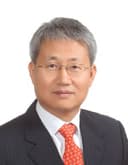
Yun Suk-myung, Research Fellow Emeritus at the Korea Institute for Health and Social Affairs (KIHASA) and former president of the Korean Pension Association
The pension reform discussions conducted until May are a disaster in themselves. This is because, despite the fifth financial projection last year diagnosing the National Pension as unsustainable, there were calls to choose a deterioration plan that shifts more of the burden onto future generations. According to the Pension Future Forum, which I lead,, the unfunded pension liability of the National Pension exceeds 1,825 trillion won (81% of the 2023 gross domestic product (GDP)). This means this amount is lacking to pay the pensions already promised.
The "44% income replacement rate—13% contribution rate" plan, which even the opposition leader and former National Assembly Speaker urged to pass, increases liabilities further. To avoid increasing liabilities under this plan, contributions would need to be collected at 21.8%. Since it collects 8.8 percentage points less, the liabilities will increase 3.5 times to 6,366 trillion won by 2050. Despite this, they urge for its quick passage. I wonder if they cannot distinguish between a reform plan and a deterioration plan, or if they are simply incarnations of populism. Experts from Norway, Finland, Australia, and Japan who attended the OECD pension experts meeting in June emphasized that even if the income replacement rate is maintained at 40%, contributions of more than 13% must be collected. The OECD Secretariat in Paris is also emphasizing the fiscal sustainability of the National Pension.
Mechanisms such as the automatic adjustment mechanism, which the presidential office is reportedly reviewing, are desirable directions for pension reform. 70% of OECD member countries have already introduced automatic adjustment mechanisms that automatically link changes in the fertility rate, life expectancy, and economic growth rate to pension finances. Sweden introduced it in 1999, and Germany and Japan did so in 2004. Even if introduced immediately, it is 20 years late. Nevertheless, critics only criticize it, citing the large gap between contributions and the income replacement rate for achieving fiscal stabilization, and expressing concern that introducing an automatic adjustment mechanism would lead to drastic cuts in pension amounts.
Twenty-five years ago, in "Reform of the Swedish Public Pension System and Its Implications (Health and Welfare Forum, September 1999)," I emphasized the necessity of an automatic adjustment mechanism. This is because it can secure intergenerational equity and the sustainability of the system. We need to consider a method that utilizes the Life expectancy Coefficient—a Finnish-style semi-automatic adjustment mechanism that maintains our defined benefit system—which has the effect of a 2 percentage point increase in the contribution rate. This would allow for a soft landing if operated from 2033 onward, when the eligibility age is extended to 65, while reforming the labor market over the next 10 years.
Extraordinary measures are necessary to reduce even a small portion of the massive unfunded liability that has already occurred. Contributions should be differentiated by generation; specifically, it must be made clear that even if middle-aged and older people bear more temporarily, their pension benefits are far greater than those of young people.
One-third of Basic Pension beneficiaries are not poor older people, yet they are paid the same as those who are not poor. The OECD recommended reducing the number of Basic Pension recipients while paying more to vulnerable older people to lower the high elderly poverty rate. All efforts must be made to achieve the OECD's retirement pension coverage standard, which recognizes it as a pillar of old-age income only if more than 80% of the target population is covered. This is because it would significantly increase the income replacement rate recognized by the OECD.
Recently, the Righteous Youth Alliance called for a "STOP to passing the National Pension bomb around" and announced that it would launch a campaign to defeat lawmakers who promote populism, as well as a petition drive for 10 million signatures. I hope the Yoon Suk-yeol administration separates urgent reform measures from mid-to-long-term tasks and goes straight ahead with pension reform like a rhinoceros horn.