Pension Experts From OECD Member Countries Evaluate Korea's Pension Reform <3>
[Asia Today · Column · July 14, 2024]
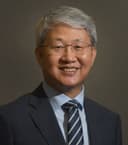
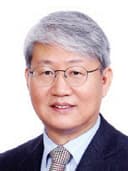
Yun Suk-myung, Research Fellow Emeritus at the Korea Institute for Health and Social Affairs (KIHASA), former President of the Korean Pension Association
The 2024 'OECD Economic Surveys: Korea 2024' was released on the 11th. The OECD has been involved in Korea's pension reform since its 2001 recommendation to introduce a universal Basic Pension funded by taxes. The problem is that the 2001 recommendation was the greatest obstacle to the Korean government's pension reform efforts at the time. I will deal with this in detail in subsequent columns.
Just as the 2001 OECD recommendation served as the trigger for introducing a tax-funded Basic Pension—which remains controversial today—there is content in this report that is open to misunderstanding. This is part of the 2024 OECD report: "Efforts are needed to ensure fiscal sustainability while improving the adequacy of pension benefits. This is because fund depletion is projected for 2055 according to the National Pension financial projection."
It also mentions that "reforming the labor market to allow people to work longer, on the premise of abolishing seniority-based wage systems, is the solution for ensuring fiscal soundness and adequate pension income." In addition, it emphasized that "while contributions—currently at the lowest level among OECD member countries—should be raised significantly, there is a need for raising relatively low pension income replacement rates in a financially sustainable way compared to other member countries."
The background for these recommendations is that "the effective income replacement rate for National Pension contributors is 36% of pre-retirement income, which is low compared to the OECD average of 61%, and the National Pension contribution rate is only 9%, half the OECD average, and the average contribution period for new National Pension beneficiaries in 2022 was very short at 19.2 years."
The part of the 2024 recommendation stating that "there is a need for raising relatively low pension income replacement rates in a financially sustainable way compared to other member countries" could be controversial. Along with the mention that pension reform failed in the Special Committee on Pension Reform of the 21st National Assembly, it states that the recommendations of the OECD report should be reflected in Korea's pension reform.
On the 19th of last month, the Pension Future Forum hosted an international seminar at the National Assembly. The majority of foreign experts attending the seminar emphasized that even if the National Pension income replacement rate is maintained at 40%, contributions must be raised to 13% or higher. They stated that to raise the income replacement rate further above 40%, contributions would have to be increased significantly more. How can we "raise the pension income replacement rate (benefit amount) while ensuring fiscal sustainability?"
This is why the presentation by Dr. Herman Kruse of Statistics Norway, who is convinced that the Korean pension system is no longer sustainable, draws more attention. These are the remarks of Professor Kim Hak-ju of the Department of Social Welfare at Dongguk University, who participated as an observer in the 18th OECD Pension Experts Meeting and served as the Moderator for the international seminar hosted by the Pension Future Forum. "According to Dr. Herman Kruse, the size of the Norwegian government's Government Pension Fund Global (GPFG) reaches 1.4 trillion dollars (1,700 trillion won). It is legislated so that the government can use funds within the limit of the expected real investment return of 3% per year. During the COVID-19 pandemic, it once increased up to 3%, but it is now on a downward trend."
Norway, with a population of 5.51 million, possesses the world's second-largest pension fund. Despite this, the Norwegian pension system—which pays an income replacement rate of only 42% while contributors bear a burden of 18.1%—offers many implications. This is because it stands in stark contrast to the debate in Korea, where—even though contributions are only about half the OECD member-country level and have not been raised by even one percentage point over the past 26 years—there are calls to inject taxes right away so that people can pay less.
Given this situation, it is necessary to look at the content of my presentation at last year's 17th OECD Pension Experts Meeting. "The reasons why Korea's pension income replacement rate is low by OECD standards are: first, because of the National Pension benefit method, which includes a strong income redistribution function unlike other OECD member countries; second, because the recognized income of the National Pension is very low compared to actual earned income; and third, because, unlike other member countries, the statutory mandatory contribution age for the National Pension is fixed at 59. Due to these three factors, the income replacement rate of the Korean National Pension does not even reach 32% by OECD standards."
Korea's low income replacement rate is "a problem that can be solved through improvements in system operation, rather than by raising the nominal income replacement rate (to 45% or 50%). It can be resolved by changing the National Pension into a fully earnings-related pension like other member countries, significantly increasing the recognized income of the National Pension to be similar to actual worker income levels, and extending the mandatory contribution age by another five years."
At the time of the presentation, when the Moderator asked Andrew Reilly, a pension analyst at the OECD Secretariat, if he had any rebuttals, he said he did not. This is why I believe the recommendation in this OECD report to "raise the pension income replacement rate so that it can be fiscally sustainable" should be understood as an increase in the effective income replacement rate, not the nominal income replacement rate.
In the same vein, attention should be paid to the remarks of Joo Myeong-ryong, President of the Korea Association of Retired Persons, who attended the seminar hosted by the Pension Future Forum. "Considering the annual reflection of inflation, the Basic Pension, which already exceeds 330,000 won, will likely reach 400,000 won within the term of the Yoon Suk-yeol administration even if left as is. It seems that the demands of labor and civic organizations since 2010 for the Basic Pension (10% income replacement rate) and the National Pension (45% income replacement rate) have already been achieved. This is because the income replacement rate of the Basic Pension is at the 12% level. Even if the National Pension income replacement rate is maintained at 40%, the combined income replacement rate of the two schemes becomes 52%, approaching 55%.
This is why I believe that depending on how the Basic Pension is operated, the National Pension income replacement rate could be lowered further than it is now. It is desirable to provide concentrated support through the Basic Pension to low-income older people, who account for 20–30% of all older people, while paying less to the remaining older people, and gradually raising the eligibility age from 65 to 70."
Is it only my opinion that this direction of pension reform proposed by the Korea Association of Retired Persons is better than that of the few pension experts who dominate our direction of pension reform?
Source: Asia Today (original article)