"Fear Marketing" and "Populism Marketing" in Pension Reform
- #국민연금법
Having participated in every Financial Estimation Committee from the first financial projection of the National Pension in 2003 through the fifth in 2023—with particular responsibility for the fiscal stabilization component—the author has come to be labeled with a certain term. The label is "proponent of fear marketing," meaning that in the author's excessive emphasis on fiscal stabilization, and in the effort to demonstrate its necessity, figures that generate public anxiety are deployed without hesitation. The following figures attributed to the author illustrate this charge: "If the National Pension system is left unreformed, the cumulative deficit of the National Pension will exceed 7,750 trillion won in present value terms by 2093. As of 2023, the unfunded liability of the National Pension has reached 1,825 trillion won, meaning that each contributor to the National Pension is carrying a debt of more than 85 million won."
A recent column in a daily newspaper, titled "The Missing Pension Reform—Let Us Summon Koizumi," demonstrates that the author's approach is not without precedent. The column attributes the success of Japan's 2004 pension reform—commonly cited as a successful example in Korea—to the Ministry of Health, Labour and Welfare's public release of a financial projection showing that, if the pension system were left unchanged, "the funds available to pay pensions would fall short by 480 trillion yen (approximately 4,330 trillion won) in 100 years." The background that made it possible to disclose such figures, the column notes, was Prime Minister Koizumi's conviction that even an elementary school student should be able to understand the difficult realities facing the pension system. Korea has a comparable precedent. The 2007 National Pension reform was made possible in part by the Roh Moo-hyun administration's appeal that, without reform, unfunded liabilities would accumulate at a rate of 80 billion won per day.
According to the memoir of former President Park Geun-hye, released recently, the Government Employees Pension reform succeeded despite considerable opposition because of the slogan: "Without reform, an additional 8 billion won in taxes will be required every day." Yet in Korean public discourse, whenever the author advocates disclosing the National Pension's unfunded liability and cumulative deficit, the counterargument is: given that the fund holds reserves of as much as 1,000 trillion won, what reason is there to publicize astronomical deficit figures and cause public alarm? This is the origin of the so-called "fear marketing" framing.
(Excerpt omitted)
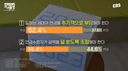
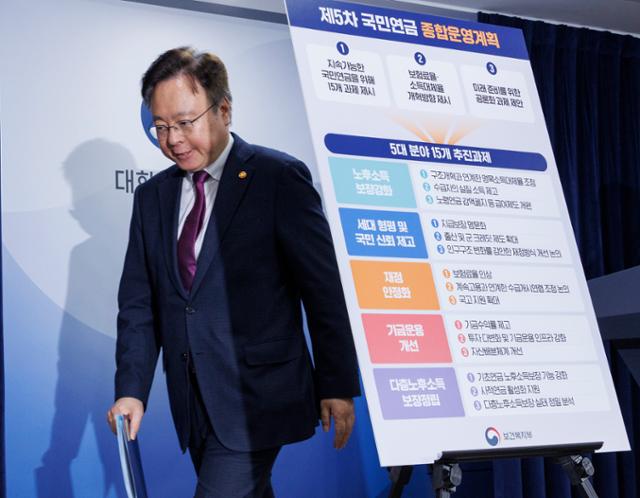
As noted above, the content of the "Comprehensive National Pension Management Plan (Draft)" (page 21) presenting the results of a public survey on the direction of National Pension reform is also difficult to comprehend. The document states that "compared with those in their 20s, those in their 50s show a higher preference for 'pay more, receive more' reform and a lower preference for 'pay less, receive less' reform"—while among the total of 2,025 respondents surveyed, 428 were in their 20s and 587 were in their 50s. Despite having conducted a survey in which the share of respondents preferring the "pay more, receive more" reform option was skewed upward, the document states that 38% of respondents prefer "pay more, receive more" reform, while 23.4% prefer "pay less, receive less" reform. Those defending "populism marketing" have accordingly not hesitated to declare, citing the government report, that the Korean public most strongly prefers the "pay more, receive more" reform option. The author raises this issue because this was precisely what an opposing panelist stated during a live television broadcast on which the author recently appeared.
Even more difficult to understand is the fact that the most important consensus reached by the Financial Estimation Committee—arrived at with great difficulty, including through the convening of additional sessions—is, for reasons that remain unclear, entirely absent from the "Fifth Comprehensive National Pension Management Plan (Draft)" submitted by the government to the National Assembly. At the 22nd and final meeting, held on October 13, the author requested that the cumulative deficit from after the fund's depletion through 2093—the terminal year of the financial projection—be recorded in present-value terms, on the grounds that the content of "Financial Projections by Contribution Rate and Income Replacement Rate Adjustment," prepared as the original meeting materials, risked conveying inaccurate information and signals to the public and the media. After extensive debate, a consensus was reached to express the cumulative deficit from the point of fund depletion through 2093 as a ratio to GDP.
The problem is that the cumulative deficit ratio discounted using the fund investment return rate—rather than the government bond interest rate that had been agreed upon—was included in the "National Pension Financial Estimation Committee Report" on page 39. When the contribution rate is raised by 3 percentage points to 12% and the income replacement rate is raised to 50%, the cumulative deficit ratio relative to GDP in 2093 as discounted by the fund investment return rate recorded in the report is 95%. However, if discounted using the government bond interest rate—which is applied in calculating the accrued liability of the Government Employees Pension, as originally agreed upon by the Committee—the cumulative deficit ratio relative to GDP in 2093 rises to approximately 180%, nearly double. Given this sensitivity to the discount rate, the author had argued for disclosing the raw cumulative deficit figures, as Japan does.
The problem is that the "Financial Estimation Committee: Financial Projections Related to Income Replacement Rate" section on page 29 of the "Fifth Comprehensive National Pension Management Plan (Draft)" submitted by the government to the National Assembly omits entirely the item showing the cumulative deficit ratio relative to GDP from 2093 onward—that is, from after the projected fund depletion in 2055. As the 2004 Japanese pension reform case demonstrates, the single most important item in the fifth National Pension financial projection is absent from the comprehensive management plan submitted by the government to the National Assembly. It is precisely this absence that allows ruinous populist policies to run rampant in Korean politics.
https://www.hankookilbo.com/News/Read/A2023110816020004003
![(A Column Criticizing the Composition of the Public Deliberation Committee's Advisory Group) The Direction the National Assembly's Pension Public Deliberation Committee Should Take [Opening the Morning] (February 29, 2024)](/_next/image?url=%2Fuploads%2Feditor%2F2026%2F09%2F0f71042c781c4ddc88219c0c242968f4-0000787991_001_20240229061156460.jpg&w=128&q=75)
![The IMF's Alarming Warning About the National Pension [Opening the Morning] (2023.12.07.)](/_next/image?url=%2Fuploads%2F2026%2F02%2F0000774057_001_20231207074901525.jpg&w=128&q=75)