
The President's Endorsement of a Bottom-Heavy Basic Pension — Will It Gain Momentum in the National Assembly Special Committee on Pension Reform? (March 18, 2026)
- #연금특위
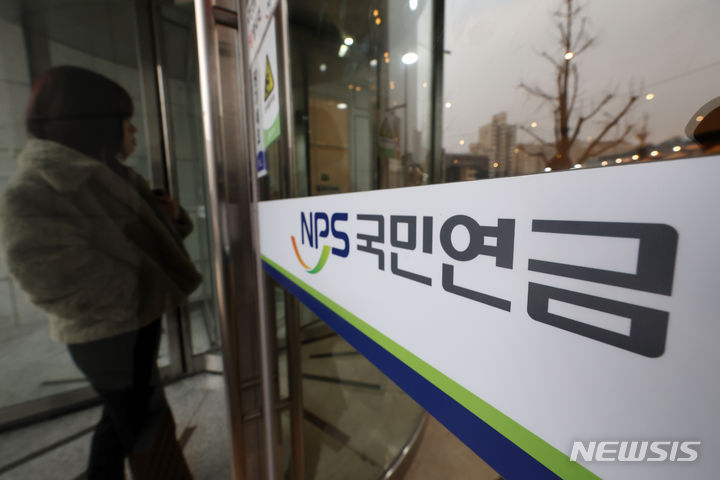
(The Pension Future Forum has long advocated for a direction of Basic Pension reform that would "maximize the poverty-alleviation effect per unit of expenditure" and "ensure consistency with other welfare programs.")
On the 13th, the Private Advisory Committee of the National Assembly Special Committee on Pension Reform convened a meeting, at which presentations on the Basic Pension were also delivered.
Professor Kim Hak-ju of the Department of Social Welfare at Dongguk University proposed concentrating benefits on the bottom 40% of income earners through targeted benefit increases to establish a poverty floor safety net, while
Professor Kim Won-sup of the Department of Sociology at Korea University opposed reducing the number of Basic Pension recipients, arguing that it should remain a universal welfare program.
(Excerpt)
Yun Suk-myung, Honorary Research Fellow at the Korea Institute for Health and Social Affairs (KIHASA), stated that "the President has courageously articulated a timely and sound policy direction," adding that
"under the current Basic Pension scheme, individuals with earned income exceeding 7 million won can still receive the benefit — how could this possibly be explained to younger generations?" he remarked.
In contrast, Professor Kim Won-sup argued: "If the National Pension were functioning well, it would make sense to discuss providing more of the Basic Pension to those who are not receiving it; however,
in a situation where 50% of beneficiaries receive 400,000 won or less per month, income security problems are unavoidable."
He further remarked: "The current benefit is in the range of 300,000 won — raising it to around 400,000 won while narrowing eligibility would worsen the poverty problem, and raising it to around 600,000 won would not yield significant fiscal savings either."
https://n.news.naver.com/article/003/0013828486?sid=102![(연금연구회 성명서 보도. 노컷뉴스) [칼럼] 연기금 카지노 책임론?…'쉬운길' 선택의 결과일 수 있다 (2026.10.20.)](/_next/image?url=%2Fuploads%2Feditor%2F2026%2F10%2Fc6f13b0799b440d0874a9f72413c6f58-0004200449_003_20261020063615439-1.jpg&w=128&q=75)
![(연금연구회 성명서 보도. 중앙일보) [취재일기] 국민 노후보다 코스피를 지킨 국민연금 (2026.10.19. )](/_next/image?url=%2Fuploads%2Feditor%2F2026%2F10%2F7e92f70b0ec843bbb869a4cf46b01f72-0003558751_001_20261019052229249.jpg&w=128&q=75)