(Seoul Economic Daily, May 31, 2026) Kim Sung-joo, Chairman of the National Pension Service: “Raising the Target Domestic Equity Allocation Is a Measure for Long-Term Returns, Not for Propping Up the Market” (Posted October 18, 2026)
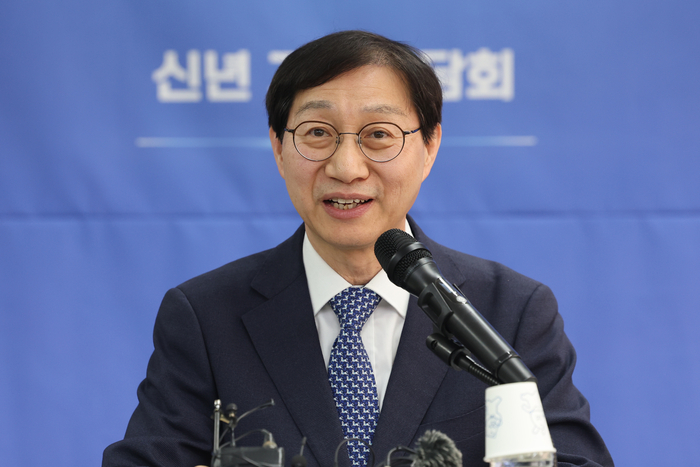
(The remarks made on October 14, 2026
at the parliamentary audit of the National Pension Service by
Chairman Kim Sung-joo, and the explanation of
May 31, 2026
given on Facebook,
appear inconsistent with each other — such is
the Pension Future Forum's position.)
Fund Management Committee Raises the Target Domestic Equity Allocation
from 14.9% to 20.8%
“The Allocation Is Already 24.5%…
a Measure to Reduce the Shock of Large-Scale Selling”
“Selling in a Rising Market Means Giving Up Expected Returns…
Contrary to the Principle of Long-Term Investment”
“It Went Through Three Stages of Independent Deliberation…
Neither Government Intervention nor a Breach of Principle”
As controversy arose over “propping up the market” and a “breach of principle” following the National Pension Fund Management Committee’s sharp increase in the target allocation to domestic equities on the 28th of this month, Kim Sung-joo, Chairman of the National Pension Service, has stepped forward to explain in person.
Chairman Kim explained that the decision to raise the target allocation to domestic equities from 14.9% to 20.8%, and to resume from July the rebalancing (asset readjustment) that had been temporarily suspended until the end of June, was a measure to reflect structural change in the domestic stock market and to secure long-term, stable returns in response to market volatility.
“A Realistic Measure to Prevent Forced Selling”
On the 31st, Chairman Kim posted on a personal Facebook account an item titled “On the Fund Management Committee’s Decision to Bring the Domestic Equity Allocation into Line with Reality,” squarely rebutting the view that the decision was “for propping up the market.”
The chairman asked rhetorically, “The domestic stock market has passed the KOSPI 3,000 mark within a year and is now above 8,000,” and “in a situation where there is even concern about overheating from too rapid a rise, would there be any need to push it up?”
Chairman Kim went on to say that, as of the end of February this year, the actual allocation to domestic equities was 24.5%, some 10 percentage points above the target allocation of 14.9%, explaining that “if the target allocation were left unchanged, large-scale selling would be unavoidable, which would deal a tremendous shock to the market and in the end leave the National Pension itself the loser.”
“Selling in a Rising Market Means Giving Up Expected Returns”
Chairman Kim also firmly rejected the criticism that “surely gains should be realized by selling now.”
The chairman said, “Experts judge that selling in a rising market rather than a falling one may amount to giving up expected returns.”
The chairman stressed, “The National Pension Fund is currently in an expansionary phase in which contribution income and investment returns far exceed pension payments, so there is no need to sell assets in haste in order to pay pensions,” and “the National Pension is not a short-term investor that buys and sells because it has made a small gain or loss, but a long-term investor pursuing long-term, sustainable and stable returns.” The chairman went on to stress that “there is no such dichotomy as realized gains being real and valuation gains being fake,” and that “it is the international standard to evaluate without distinguishing between realized and valuation gains.”
To the criticism that “surely it will lose out in a falling market,” the chairman answered, “Reducing holdings in anticipation of a decline could, if the opposite occurs, mean giving up gains.” Chairman Kim added, “That is why rebalancing — buying and selling once set thresholds are reached — is carried out, and with this Fund Management Committee decision the rebalancing temporarily suspended at January’s Fund Management Committee will resume from July, preparing for the possibility of market swings.”
“Neither Government Intervention nor a Breach of Principle”
To the criticism that the decision followed government pressure, Chairman Kim likewise rebutted, “Representatives of labor and management and representatives of the insured and of beneficiaries gather and make an independent decision.” The Fund Management Committee operates on a three-stage decision-making structure: an Investment Policy Expert Committee of nine private-sector experts, a Working-Level Evaluation Expert Committee of 21 representatives of labor, management and government, and then the committee itself, in which 21 members take part. The chairman said, “The participation of government members does not make it a decision by the government.”
To the criticism that it amounts to “shaking the asset allocation principle at will,”
Chairman Kim also drew a line, saying, “The principle has been kept; it is the standard that has been changed.” The chairman stressed, “The medium-term asset allocation system itself is a principle, but the target allocations within it and the strategic asset allocation (SAA) are standards that can be adjusted freely according to the times and to market conditions,”
and that “this decision was made in accordance with the principles of public purpose and liquidity, which require minimizing shocks to the domestic financial market while pursuing profitability and stability.”
Reporter Byun Su-yeon ([email protected])